admin
admin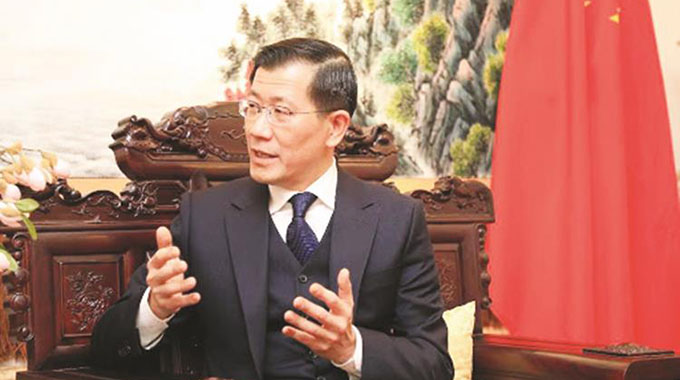
ON Monday Zimbabwe received its first batch of Covid-19 Sinopharm vaccinations from China. Our Political Editor Fungi Kwaramba (FK) sat down with the Chinese Ambassador to Zimbabwe Mr Guo Shaochun (GS) to get a clearer understanding on the doses that will see the country rolling out its vaccination programme starting this week, below are excerpts of the interview that also touches on the efficacy of the vaccines.
*******
FK: What is the criteria that China used in picking up Zimbabwe in a world with hundreds of countries?
GS: Zimbabwe holds a special place in the heart of the Chinese. Many in China remember vividly the days when we fought together against colonialism and imperialism. Many appreciate Zimbabwe for being a most steadfast friend of China on the international stage. Many get emotional when they think of the much-need support Zimbabweans gave us in early 2020 as China was among the countries hit by the first wave of Covid-19.
China remembers its friends and those who extended a helping hand. Not only in terms of vaccines, but in all kinds of assistance and support, the never-changing belief in China is that Zimbabwe must be given priority. Back in the 1960s, when China faced economic hardships at home, we assisted Zimbabwe as much as we could. The same spirit is still alive today. Yes, the vaccine supply is tight. But we cannot put our true friend on the waiting list.
FK: To what extent do you think this donation will bolster ties between the two nations?
GS: I have personally witnessed and shared the pain of many Zimbabweans who lost their loved ones in recent weeks. Some were dear friends to me as well. I hope in this moment of grief and trauma, China’s donation will bring some relief, both materially and emotionally. The ties between our two nations are already very strong. With the latest donation, I hope this message will get across to more Zimbabwean friends: You are not alone in this fight. China stands by you, as always.
FK: We understand Zimbabwe has purchased a further 600 000 jabs from China, when can we expect delivery?
GS: The Embassy and our colleagues in the Zimbabwean Government have been very busy these past few weeks, working hard to get the donation to arrive as early as possible and push forward negotiations on vaccine purchases. We are aiming for another delivery in a few weeks, but it is hard to say for sure as many uncertainties are involved. But you can trust me the Embassy and my colleagues in China are making every effort possible to make it soon rather than later. In fighting Covid-19, time is life. And it pains us to see any more losses of Zimbabwean lives.
FK: How safe are the vaccines, we have seen some raising concerns on their efficacy against emerging strains like the South African variant, have any tests been conducted?
GS: About the safety and efficacy of the vaccine, Chinese vaccine manufacturers have published their data in prestigious medical science journals such as the Lancet; those countries that have participated in the trials have also made their data available. It is better to consult these authoritative sources and health experts on the technical questions. I am confident the well-trained Zimbabwean experts will be able to address them.
To cite some figures from the Chinese experts, the rate of the vaccines’ mild adverse reactions, which include fever, sore arms and other symptoms, is six per 100,000 people. The rate of severe adverse vaccine reactions is one in a million, only one third of that of flu vaccines.
I can assure you that the Chinese government always regards vaccine’s safety and efficacy as the top priority. China’s vaccine R&D companies have been advancing their work and conducting international cooperation in strict accordance with scientific rules, regulatory requirements and relevant laws and regulations.
FK: Which African countries have used and reviewed the drug?
GS: By way of government assistance and commercial procurement, Chinese vaccines have been used in some African countries, including Equatorial Guinea, Egypt, and the Seychelles. Last month, President Wavel Ramkalawan of the Seychelles became the first African head of state to be vaccinated. Today (yesterday), the Equatorial Guinean President Teodoro Obiang Nguema Mbasogo received his first dose of Chinese vaccine. Talks are also underway between China and other African countries, such as Morocco and Niger, on purchases and vaccine cooperation.
FK: What have other countries said about the vaccine?
GS: China is providing vaccine aid to 53 developing countries and exporting vaccines to 22 countries. Chinese vaccine producer Sinovac has delivered more than 10 million doses to countries in Asia, the Mediterranean, Latin America and Africa. More than 40 countries are trying to place orders; the signed contracts are estimated to add up to over 500 million doses. The large numbers of orders are a vote of confidence themselves.
A number of heads of state expressed their deep appreciation. Peruvian President Francisco Sagasti said he would be among the first to receive the Chinese vaccine shots. An Egyptian health expert said he was very confident in the Chinese vaccine, because it uses the recognised traditional technology of killing the virus. Serbian health authorities said they “assessed the necessary documentation and scientific evidence in a highly professional and thorough manner according to all European Union and World Health Organisation (WHO) standards, which confirmed the quality, efficiency, and above all the safety of the Chinese vaccine.”
FK: In China, have you started the vaccination programme and what are the challenges that the country is facing?
GS: By February 9, China has administered 40.52 million doses at home. The programme is being rolled out across the country smoothly. The main challenge right now is insufficient production capacity. The government has taken a holistic approach to maintain stable performance of the production and supply chains.
FK: Going forward, how is China going to help Zimbabwe in the administration of the jabs?
GS: The Zimbabwean government has made good preparations for the rollout plan. We appreciate their professionalism and efficiency. In the meantime, the Chinese medical team in Zimbabwe and Chinese health and vaccination experts back at home are ready to provide necessary assistance. Throughout this fight, the health experts on our two sides have maintained good communication virtually. We will continue to do so to keep an unhindered flow of information.
FK: We have seen some countries nationalising the vaccines but China has been more multilateral, what informs this policy?
GS: We have always maintained that the virus knows no borders and humanity shares a common destiny. Solidarity and cooperation are the most powerful weapon to defeat the pandemic. If we all grab as many vaccines as possible for ourselves and leaving none for others, the only winner will be the virus itself.
This is consistent with our general foreign policy direction, which advocates international cooperation and multilateralism. In recent years, China has been repeatedly calling for a multilateral approach to global issues, as many countries turned inward. In January this year, President Xi Jinping in his Davos speech stressed again that no global problem can be solved by any one country alone and that there must be global action, global response and global cooperation. He said that multilateralism is about having international affairs addressed through consultation and the future of the world decided by everyone working together. We firmly believe this is the sure path to a better world for all.
FK: Now the Covid-19 has slowed down economies worldwide, how has China managed to cope and what are lessons that Zimbabwe can take from its friend?
GS: Before I talk about China’s lessons, I must give a lot of credit to the Government and people of Zimbabwe for acting swiftly and always following science in curbing the spread of Covid-19. HE President Mnangagwa never hesitated to make tough decisions to protect the life of Zimbabweans. And the Zimbabwean people are so resilient that you have shown great solidarity in observing a prolonged period of various levels of lockdowns.
The Zimbabwean approach of saving lives first and then livelihoods is very similar to China’s strategy. In order to protect our own people, the Chinese government also had to make enormous economic sacrifices. The Chinese people are very disciplined as well, consistently wearing marks, keeping distance, and avoiding crowds.
Surely, this approach will mean economic difficulties. But in China’s case, the economic losses we suffered in the beginning were soon recovered as the pandemic was losing its grip. And China became the only major economy to grow in 2020. Zimbabwe already has a good plan for the economy in the National Development Strategy 1. Implementing steps are being taken, too. I am confident once you are able to return to a certain degree of normalcy, things will soon improve. And as I said in response to earlier questions, you will not be doing this alone. China will be with you to put an early end to the pandemic and recover the economy. Already we are adapting our assistance to and economic cooperation with Zimbabwe in light of the new circumstances under the pandemic.



 Online Reporter