Online Reporter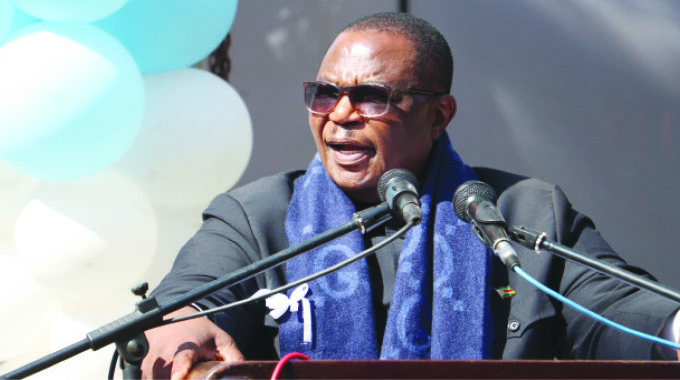
Nqobile Bhebhe, Zimpapers Writer
Zimbabwe “remains open for business, not for extraction,” Vice-President Dr Constantino Chiwenga has declared, while challenging the mining sector to shift from the export of raw minerals to local value addition and beneficiation.
Officially opening the 28th edition of the Mine Entra Conference in Bulawayo yesterday, Dr Chiwenga said the time has come for Zimbabwe’s vast mineral wealth to serve as a foundation for industrialisation, inclusive empowerment and sustainable development.
He said the country’s rich natural endowments should no longer enrich a few or foreign interests, but must instead be harnessed for the collective good through partnerships with responsible investors.
“It challenges us to re-imagine mining and to move beyond the traditional model of resource exploitation and embrace a future defined by beneficiation, innovation, and community empowerment. ‘Beyond Extraction’ demands that we move from exporting raw ore to exporting finished products,” said the Acting President.
He stressed that mineral beneficiation and value addition are now non-negotiable pillars of Zimbabwe’s mining strategy.
“Every tonne extracted must translate into jobs, industries and transformed communities. We must embed beneficiation and value addition as non-negotiable principles of our mining strategy,” said Dr Chiwenga.
He said as Zimbabwe transitions from National Development Strategy 1 (NDS1) to NDS2, the mining sector remains central to achieving Vision 2030, which aims to transform the country into an upper-middle-income economy.
Mining, the Acting President noted, continues to anchor the economy, contributing over 70 percent of export earnings, 14,5 percent of GDP, and sustaining thousands of livelihoods across the country.
He described this year’s conference theme, “Beyond Extraction: Sustaining the Future of Mining,” as both timely and visionary, capturing the need for a complete shift from resource dependency to value-driven growth.
“To the miners, you are the custodians of our mineral wealth. Handle it with integrity. Exploit it responsibly. Protect it as a national trust, not a personal gain,” he urged.
“To the processors and off-takers, the era of raw mineral exports must give way to beneficiation and value addition. Mining must now drive industrialisation, create jobs and support downstream sectors.”
The Vice-President reaffirmed the Government’s commitment to transparent, ethical and mutually beneficial partnerships with investors, saying Zimbabwe seeks partners who are ready to grow with the nation.
“To the investors, both local and international, Zimbabwe remains open for business, not for extraction. We seek mutual partnerships that ensure the minerals beneath our soil empower all our people,” he said.
Dr Chiwenga revealed that the Government is modernising the regulatory framework through the Mines and Minerals Amendment Bill, which enforces accountability, transparency and corporate social responsibility.
“It ensures that every investor operates ethically, every project benefits communities, and every operation protects the environment. Mining must translate into tangible benefits — schools, clinics, roads, and sustainable livelihoods,” he said.
Dr Chiwenga also issued a stern warning against corruption, illicit trading and leakages, describing them as “cancers” that erode public trust and deprive citizens of their rightful benefits.
“I challenge responsible authorities and MDAs to enhance transparency in licensing, monitoring, and compliance. Regular audits, community engagement, public reporting and whistle-blower protection will become integral to our governance architecture,” he said.
Commending recent milestones, Dr Chiwenga highlighted the commissioning of the Palm River Energy Metallurgical Plant in Beitbridge and the Zimplats Smelter Expansion and Abatement Project, describing them as examples of progress in beneficiation and energy self-sufficiency.
“However, our ambition goes further. We must build a fully integrated mining value chain that feeds into manufacturing, energy and export competitiveness,” he said.
The Acting President urged collaboration between mining houses and research institutions to harness geospatial mapping, artificial intelligence, and automation to enhance efficiency and sustainability.
“We should ensure that our mining operations are carried out in a sustainable manner that safeguards our environment and surrounding communities,” he said.
Dr Chiwenga reaffirmed that mining must align with the Africa Mining Vision (2009) and the SADC Protocol on Mining (1997) by integrating climate resilience and renewable energy.
The Acting President hailed Mine Entra 2025 as a game-changing platform for policy dialogue, partnerships and investment.
“This year’s Mine Entra is not just an exhibition, it is a launchpad for partnerships and policy alignment that will shape Zimbabwe’s mining future,” he said.
“The Second Republic remains committed to engagement and re-engagement. We welcome investors from all corners of the world who share our values of responsibility, transparency and shared prosperity.”
Speaking during the same event, Mines and Mining Development Minister Winston Chitando emphasised that there is no space for players who cannot follow the ethos of responsible mining.
He said Zimbabwe’s Responsible Mining Initiative has two phases, the first focusing on law enforcement, and the second on strengthening regulations and penalties.
The minister also called for greater local manufacturing of mining inputs and value-added products to boost industrialisation and employment creation.
The 2025 edition of Mine Entra takes place amid a resurgent mining sector.
Between 2017 and 2023, mineral export earnings rose from US$2.7 billion to over US$5.6 billion, with some estimates placing the figure near US$9,77 billion.
According to Fidelity Gold Refinery, Zimbabwe’s gold output surged 37 percent to 32.98 tonnes in the first nine months of this year, compared to 24.2 tonnes over the same period last year — putting the nation firmly on course to achieve its 40-tonne annual target.
The rally comes as gold prices hit an all-time high of US$4 000 per ounce, driven by global economic uncertainty, further strengthening Zimbabwe’s export earnings and the Zimbabwe Gold (ZiG) currency.
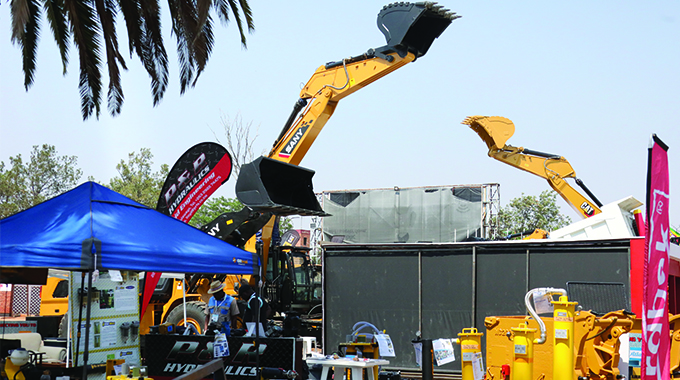
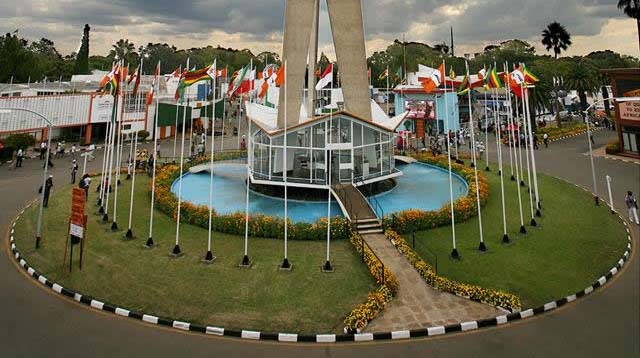
Organised by the Zimbabwe International Trade Fair (ZITF) Company, Mine Entra has evolved since its 1995 inception into one of Southern Africa’s premier mining, engineering, and transport exhibitions.
The expo has expanded from 5 115 square metres in 2021 to 7 828 square metres in 2024, attracting exhibitors from China, Germany, South Africa, and local industry players from Harare and Bulawayo.
Between innovation, investment, and policy dialogue, this year’s conference cements Zimbabwe’s ambition to transform its mining sector from a source of raw wealth into a springboard for industrialisation, jobs and sustainable prosperity.