Online Reporter
Peter Matika, [email protected]
ZIMBABWE has ratified the Southern African Development Community (SADC) Protocol on Employment and Labour, which aims to promote secure and fair labour practices throughout the region.
The SADC Protocol was signed on August 17, 2024 at the SADC Summit of Heads of State and Government and seeks to establish a regional framework for decent work.
Several countries have since embraced the protocol and have been urged to develop and implement comprehensive national employment policies aligned with national development plans and macro-economic policies.
The model framework for National Social Dialogue Institutions in SADC facilitates greater cooperation between governments, employers, and workers on labour market issues and socio-economic development.
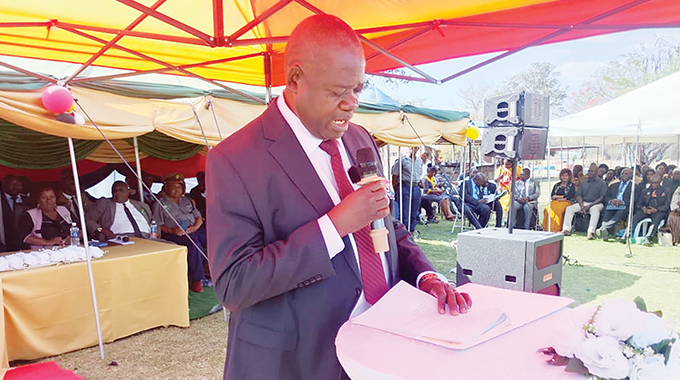
In a post-Cabinet media briefing yesterday, Information, Publicity and Broadcasting Services Minister, Dr Jenfan Muswere, said the protocol highlights the recognition of basic human rights, particularly those that link with labour laws and the domestication of international labour obligations.
“Cabinet considered and approved for ratification the SADC Protocol on Employment and Labour.
“The protocol emphasises on the recognition of basic human rights particularly those that link with labour laws and the domestication of international labour obligations,” said Dr Muswere.
Recently, SADC has actively been working on harmonising employment and labour laws across its member states.
Reports indicate that recent regional meetings have focused on developing and implementing national employment policies, addressing informality in the economy, and promoting decent work opportunities.
A key area of discussion is the formalisation of the informal sector to reduce poverty and achieve sustainable development.
In March this year, Zimbabwe hosted a SADC Ministers of Employment and Labour and Social Partners meeting, whose discussions centred on various employment and labour-related issues in the region.
Also discussed at the meeting was the signature and ratification status of the SADC Protocol on Employment and Labour; Declaration of the Promotion of Decent Work and the Elimination of Forced Labour in the fisheries sector in the SADC region; and Development of the Revised Regional Technical and Vocational Education and Training.
Other matters of prime focus were on addressing the challenges and opportunities presented by the informal sector in the region.
These include developing policies and strategies to formalise informal businesses and workers to promote decent work and reduce poverty.
According to a report, the high proportion of young people not in employment, education or training (NEET) is a major concern.
SADC is working on interventions to promote active and productive participation of youth in the labour market, including a youth employment project with the International Labour Organisation.
Discussions also addressed the impact of digital transformation on the labour market, including the need for skills development and the reduction of barriers to labour mobility within the region.
A revised SADC code of conduct on child labour was approved, and member states are urged to domesticate the new code and report on its implementation.
The SADC Labour Migration Action Plan (2020-2025) is being monitored and reported on, with a focus on promoting skills transfer and matching labour supply and demand.
The protocol is also focusing on creating safe and healthy working environments through national systems and programmes to prevent occupational accidents and diseases.
Meanwhile, Dr Muswere said the Government has also approved for ratification Convention 187: Promotional Framework for Occupational Safety and Health.
“Convention 187 provides for occupational health, safety and mitigating the effects of occupational injuries on productivity as well as on socio-economic development,” he said.
“The major objectives of the Convention are to promote continuous improvement of occupational safety and health to prevent injuries, diseases and death by developing a national policy, national system and national programmes; to achieve progressively a safe and healthy working environment; and to periodically consider measures to be taken to ratify relevant Occupational Safety and Health Conventions of the International Labour Organisation,” said Dr Muswere.
He also highlighted that Zimbabwe is one of the six countries in Africa selected and sponsored by UNESCO to take part in piloting the UNESCO Recommendation in deploying Artificial Intelligence technologies, and addressing the ethical risks in deploying Artificial Intelligence leveraging on the innovative Readiness Assessment Methodology (RAM) tool.
“Zimbabwe adopted the UNESCO Recommendation on Ethics of Artificial Intelligence in November 2021.
“The Recommendation provides an internationally agreed set of principles and comprehensive guidance to policymakers on ensuring that this game-changing technology benefits society and protects citizens against the associated risks,” Dr Muswere said.