Online Reporter
Theseus Shambare in MATOBO
FISH farmers are set to benefit from the newly commissioned fish hatchery at Matopos Research Institute, a milestone expected to produce at least 2.7 million fingerlings annually and anchor Zimbabwe’s expanding network of decentralised fish seed distribution hubs in Masvingo and Manicaland.
Zimbabwe targets to grow the fish sector to US$1 billion, driven by increased fingerling availability, expanded production capacity and strengthened public–private investment.
The country’s fish production currently stands at 31 000 to 33 000 tonnes per year, against a national demand of about 60 000 tonnes.
Government aims to double production to 60 000 tonnes by 2026, closing the supply gap and boosting local markets.
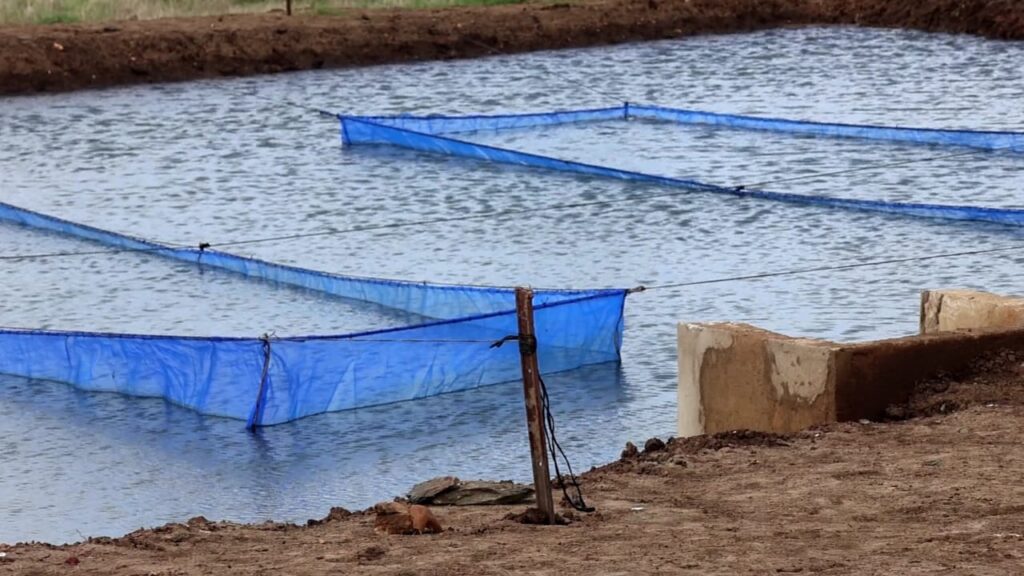
The new Matopos hatchery will be pivotal to achieving this target. It will supply the recently established fingerling hubs in Masvingo and Manicaland, which were launched late last year as part of a national strategy to decentralise access to fish seed and reduce mortality rates associated with long-distance transportation.
Per capita fish consumption in Zimbabwe is estimated at 3.2kg to 3.72kg per year, well below the Sub-Saharan African average of 8.9kg.
Through increased production, improved distribution and complementary imports, Government has set a target of lifting consumption to 6.7kg per capita.
Officially launching the hatchery, Lands, Agriculture, Fisheries, Water and Rural Development Permanent Secretary Professor Obert Jiri said the facility strengthens Zimbabwe’s push towards climate-resilient nutrition and enhanced rural incomes.
“This hatchery is a major investment in boosting domestic fish production, empowering communities and ensuring that quality fingerlings are available closer to farmers,” he said.
“It aligns with Vision 2030 and our drive towards a modern, sustainable and nutrition-sensitive agriculture sector.”
FAO Subregional Coordinator for Southern Africa Dr Patrice Talla said the Matopos hatchery is a flagship achievement under the FAO–Government Technical Cooperation Programme, which supports inclusive aquaculture value chains.
“This facility demonstrates what strategic partnerships can deliver.
“By producing millions of quality fingerlings annually, Zimbabwe is positioning itself as a competitive player in regional aquaculture, while lifting thousands of households into better nutrition and livelihoods,” Dr Talla said.
WFP Zimbabwe Country Director Ms Barbara Clemens said the project complements broader food and nutrition security interventions.
“Boosting fish production is not only an economic opportunity — it is a critical nutrition pathway for communities vulnerable to climate shocks,” she said.
Fisheries and Aquaculture Resources Department (FARD) director Mr Milton Makumbe said the hatchery is already operating at 75 percent capacity.
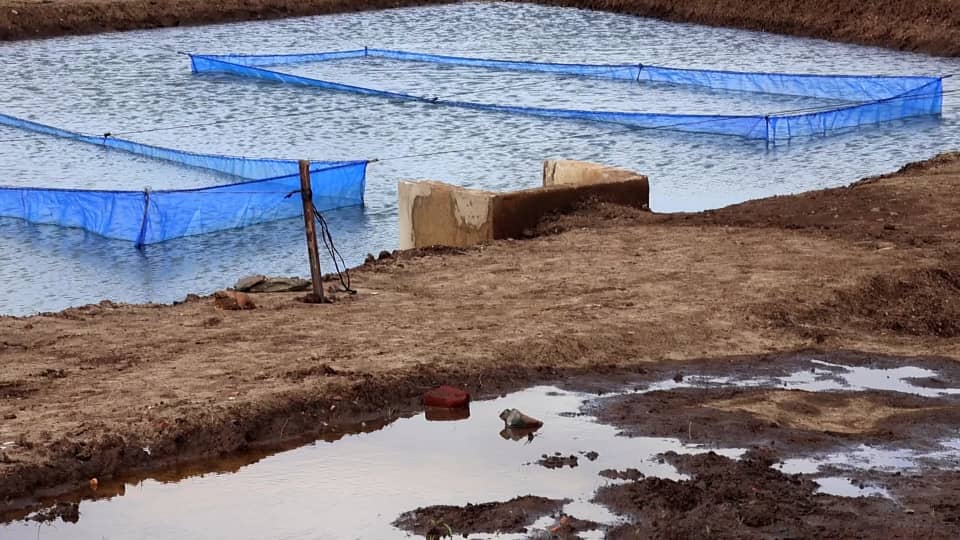
“Two breeding ponds and three resting ponds have been completed, and three boreholes — one already fully solarised — guarantee a continuous water supply,” he said.
“On commissioning day, we had stocked 525 male and 140 female brooders, supported by adequate starter and broodstock feed. At full capacity, we will produce 2.7 million fingerlings annually.”
FISH4ACP project coordinator Mr Paul Mwera said the decentralised hubs will dramatically improve survival rates.
“The launch of this hatchery is key to the value chain. This will be supplying our decentralised fingerling hubs where, for example, each hub has seven tanks of 19 cubic metres each, holding 60 000 fingerlings per cycle.
“Fingerlings from Matopos will be grown to between 5g and 20g at these hubs before reaching farmers, ensuring stronger survival in the field,” he said.
Zimbabwe National Fish Producers Association chairperson Mr Garikai Munatsirei welcomed the development, saying distribution challenges have long constrained production.
“Previously, farmers travelled to Kariba for fingerlings and by the time they reached Masvingo or Mutare, mortality was high and costs unbearable.
“This new system is the solution we have been waiting for,” he said.