Online Reporter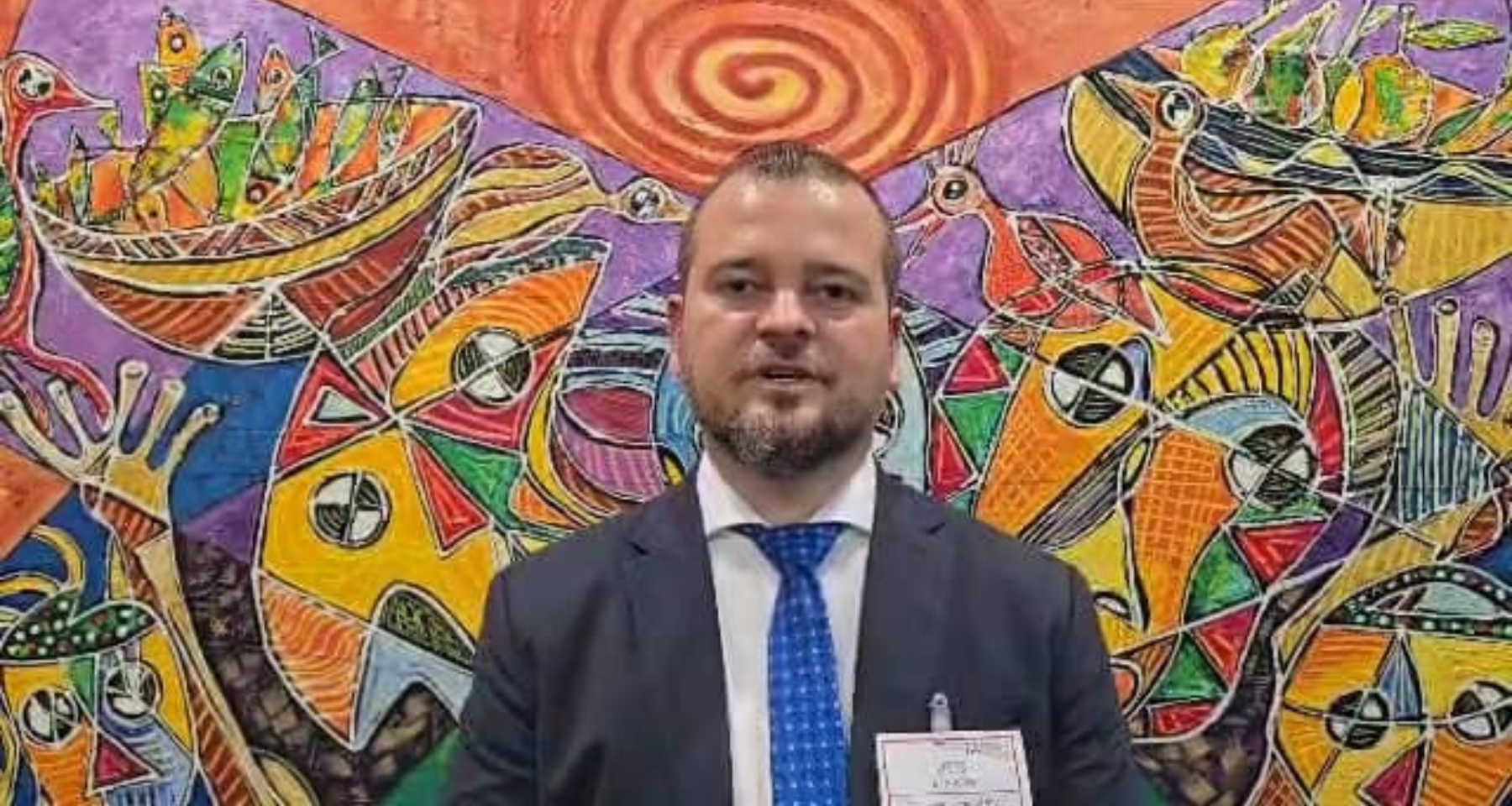
Theseus Shambare in Rome, Italy
ZIMBABWE is intensifying efforts to attract partnerships and investment aimed at accelerating rural development and enhancing value addition in agriculture, as part of its broader strategy to strengthen food and nutrition security.
Currently, approximately 221 000 hectares of land in Zimbabwe are under irrigation.
The government targets expanding this area to 497 000 hectares by 2030.
Despite this progress, over 70 percent of the country’s agricultural produce is exported in its raw state, leading to significant revenue losses.
According to FAO reports, this lack of value addition results in Zimbabwe missing out on substantial income that could be generated through processing and manufacturing of agricultural products.
In an interview on the sidelines of the ongoing 53rd Session of the Committee on World Food Security (CFS 53) in Rome, Italy, Lands, Agriculture, Fisheries, Water and Rural Development Deputy Minister Vangelis Haritatos emphasized the importance of strategic interventions to address these challenges.
“We are in Rome, Italy, where we form part of the Committee on World Food Security. It is the 53rd of its kind this year, 2025. We are doing a stocktake of how we are performing as Ministries in charge of food security around the world,” Haritatos said.
He highlighted the country’s recovery from a severe drought, noting that Zimbabwe achieved wheat self-sufficiency, which contributed to its improved food security status.
“We have done substantially well coming off of a very bad drought. Fortunately, we were wheat self-sufficient, which means we were able to recover,” he said.
Looking ahead, Deputy Minister Haritatos expressed optimism for the coming year, emphasizing the government’s commitment to ensuring food security.
“This year, we are seeing a very good year ahead, where we will push to ensure that our country is indeed food secure,” he affirmed.
Addressing global food security trends, Haritatos acknowledged that while hunger has been reduced globally, population growth presents ongoing challenges.
“As a world, we are doing quite well. Hunger has been reduced by just a little bit less than 1 percent, but we were told today that due to population growth, that this risk is indeed something that needs to be looked into,” he said.
In response to these challenges, Zimbabwe is prioritizing irrigation development to reduce dependence on rain-fed agriculture and mitigate the impacts of climate change.
“We are prioritizing irrigation development to ensure that we move our people away from rain-fed agriculture. And this is number one, fundamental in ensuring that we mitigate against climate change, which is a very big problem for us as a country,” Haritatos explained.
The Deputy Minister also highlighted the government’s Rural Development 8.0 programme, which focuses on establishing village business units to address food and nutrition security at the household level.
“Another intervention that we are doing as a government and as a country is our Rural Development 8.0 programme, where climate change is at the forefront. We are ensuring that every single village in Zimbabwe will have at least one village business unit so that we can answer the issues of food and nutrition security at household level,” Haritatos stated.
He emphasized that value addition is a critical component of the country’s agricultural strategy.
“When we aggregate these village business units, they’ll make massive impact and push our industrial, our rural industrial agenda, our rural industrialization agenda to ensure that all rural people can tap into the benefits of our village business units. So, again, we are looking at food and nutrition security, but we are also looking at rural industrialization. And this is the must, this is a must that value addition must come in as a next step,” he said.
Zimbabwe’s participation in CFS 53 underscores its commitment to global food security efforts and its proactive approach to addressing domestic agricultural challenges through strategic investments and partnerships.