Theseus Mauruki Shambare in RUSHINGA
ZIMBABWE aims to mobilise US$52,78 million to clear remaining liberation war landmines by December 2030, accelerating efforts to eliminate explosive hazards and unlock development in border communities.
More than 97 percent of the country’s contaminated areas have been cleared, with sustained domestic funding and international partnerships needed to meet the extended deadline under the Anti-Personnel Mine Ban Convention.
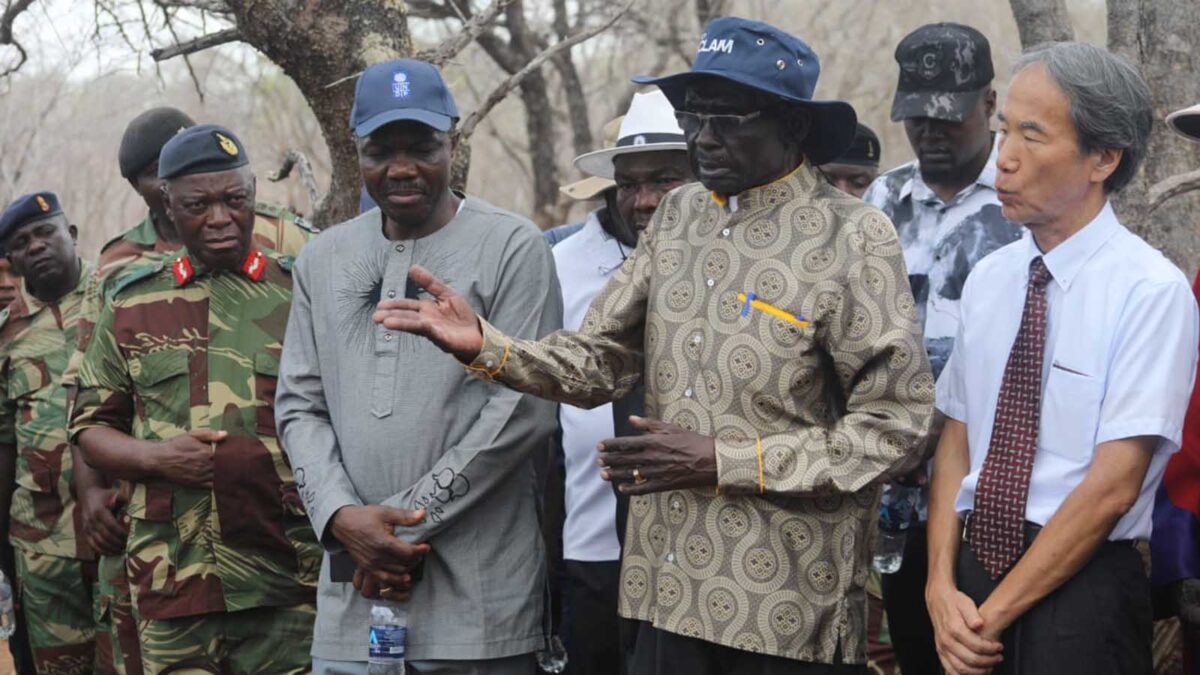
Speaking during a high-level field visit to Rushinga District in Mashonaland Central on Wednesday, Deputy Minister of Defence Brigadier General (Retired) Levy Mayihlome—representing Defence Minister Oppah Muchinguri-Kashiri—said Zimbabwe remains committed to achieving mine-free status.
“Through this enduring partnership, it is pleasing to note that over 90 per cent of the minefields inherited at independence have now been cleared. We are now working on the remaining 3 percent,” he said. “The Government of Zimbabwe is committed to continue funding the unit until the task is done.”
At independence in 1980, Zimbabwe inherited an estimated three million landmines laid by Rhodesian security forces across eight major minefields stretching roughly 850 kilometres along its borders.
United Nations Development Programme (UNDP) Resident Representative Dr Ayodele Odusola commended the country’s progress.
“Today, more than 97 per cent of the land that was once affected has been cleared. Zimbabwe is very close to meeting its new 2030 deadline under the international treaty that bans landmines,” he said.
Under Project RECLAIM—a US$3,35 million initiative backed by Japan (US$2,95 million) and UNDP (US$400,000)—demining teams in Rushinga and Mudzi have released 221,016 square metres of land and destroyed 2,746 anti-personnel mines. In Rushinga, the HALO Trust cleared 133,653 square metres and destroyed 1,981 mines, while the Mines Advisory Group (MAG) cleared 87,363 square metres and destroyed 765 mines in Mudzi.
HALO Trust Country Director Mr Oliver Gerard-Pearse noted the organisation recently destroyed its 250,000th landmine in Zimbabwe.
“In 2025, 25 000 landmines were cleared here in Zimbabwe, 20 000 of which were cleared by the HALO Trust. And that makes up 22 per cent of the global landmines cleared in 2025,” he said.
Japan’s Ambassador to Zimbabwe, Mr E. Maekawa Nobutaka, reaffirmed his country’s support for the programme, which is expected to directly benefit roughly 22,000 households.
“We are proud to support Zimbabwe in its journey to become a landmine-free nation,” he said.
Mashonaland Central Deputy Provincial Director for Coordination Mr Kudzayi Chimusoro, representing Minister of State for Provincial Affairs and Devolution Advocate Christopher Magomo, said demining is restoring safe access to agricultural land.
“The clearance of previously dangerous areas is restoring confidence among local people, allowing communities to safely access their land and creating opportunities for productive agriculture,” he said.
The Government will continue funding the Zimbabwe National Army’s National Mine Clearance Unit beyond 2030 to handle residual explosive ordnance emergencies. During the visit, Minister Muchinguri-Kashiri also donated 50 crutches and 25 walking sticks to landmine survivors.