Online Reporter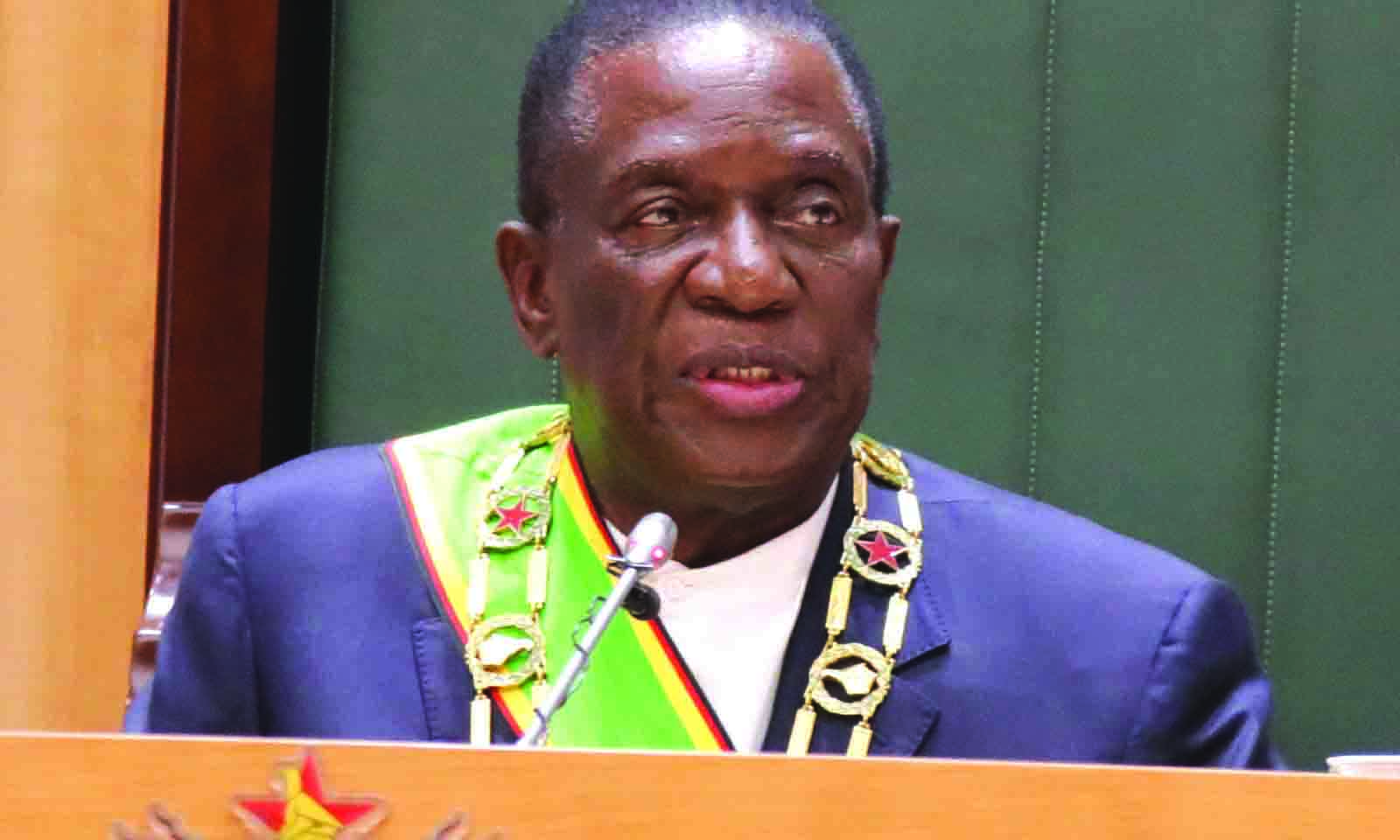
Business Reporter
PRESIDENT Emmerson Mnangagwa has reaffirmed the Government’s commitment to clamp down on irresponsible mining operations that pollute the environment, degrade land and damage key national infrastructure.
He said this at the official opening of the Third Session of the Tenth Parliament of Zimbabwe at the New Parliament Building in Mt Hampden yesterday.
According to President Mnangagwa, Zimbabwe continues to open its doors to both local and foreign investors and all mining players are expected to operate responsibly and within the confines of the law.
President Mnangagwa said those operating outside the law will face decisive action, given that the mining sector remains a key driver of Zimbabwe’s economic growth.
This development follows a widespread outcry by communities from around the country, particularly those in mineral-endowed areas, amid criticism over land degradation, the pollution of water sources and conflicts with local communities.
“The Mines and Minerals Amendment Bill has been gazetted and is expected to be finalised during the current session of Parliament. My Government is committed to weeding out irresponsible mining stakeholders who cause pollution, degradation of the environment and damage to critical infrastructure.
“As we welcome investors in our jurisdiction, we expect that they will adhere to the Constitution and laws of our country, while also respecting our people, customs and culture,” said President Mnangagwa.
The Mines and Minerals Amendment Bill seeks to modernise the country’s mining legislation, strengthen environmental protection mechanisms, and ensure that communities benefit from mineral resources extracted in their areas.
It is also expected to close loopholes that have allowed illegal mining and unsustainable extraction practices to flourish in recent years.
President Mnangagwa said Zimbabwe’s mining sector is experiencing renewed investor confidence, with a surge in capital inflows directed toward gold, lithium, iron and steel projects, as the Government intensifies efforts to promote responsible and sustainable mining practices.
This wave of investment has seen the commissioning of new processing plants, independent power generation units and energy parks across the country-developments expected to drive value addition, beneficiation and job creation while boosting gross domestic product (GDP) growth.
These initiatives have so far been pivotal in alleviating the pressure on the country’s main power utility, which still struggles to meet the growing energy demands of the mining sector.
One of the prominent examples is Zimplats, which is in the process of establishing a 185-megawatt solar power project, and partly launched 35 megawatts in July this year.
This venture is expected to significantly bolster the company’s energy autonomy while also contributing to its sustainability goals.
Similarly, Caledonia Mining’s Blanket Mine, located in Gwanda, successfully commissioned a solar plant with a capacity of 12.2 megawatts in 2023 at a construction budget of approximately US$14 million, while Turk Mine in the Bubi District launched a 4.4-megawatt solar farm, which is currently powering its mining operations effectively.
In another development, Dinson Iron and Steel Company in the Chirumhanzu District, has made strides towards energy self-sufficiency by developing an internal generation capacity of 50 megawatts.
Cement producer, PPC Zimbabwe, has also hinted at establishing two solar power plants valued at US$40 million.
These plants will have a combined capacity of 30 megawatts, with one facility located in Colleen Bawn generating 20 megawatts and the other in Bulawayo generating 10 megawatts.
This initiative aims to significantly enhance the energy supply to PPC’s cement factories, ensuring stable production and reducing reliance on the national grid.
“The commissioning of new plants, independent power generating units and energy parks, among others, are ensuring that all sectors achieve targets with regard to value addition, beneficiation, job creation and growth of our Gross Domestic Product,” said President Mnangagwa.
Mining remains a major pillar of Zimbabwe’s economy, contributing more than 60 per cent of export earnings and attracting significant foreign direct investment.
Lithium, dubbed “the new oil,” has become one of the most attractive sub-sectors, drawing interest from Chinese and Australian firms keen to tap into Zimbabwe’s vast reserves.
Meanwhile, renewed activity in iron and steel production, including the revival of key plants, is expected to anchor the country’s industrialisation agenda.
Zimbabwe has lately been attracting new investments as part of the vision to transform the mining industry from a predominantly extractive sector into a value-driven and sustainable contributor to the economy.