Online Reporter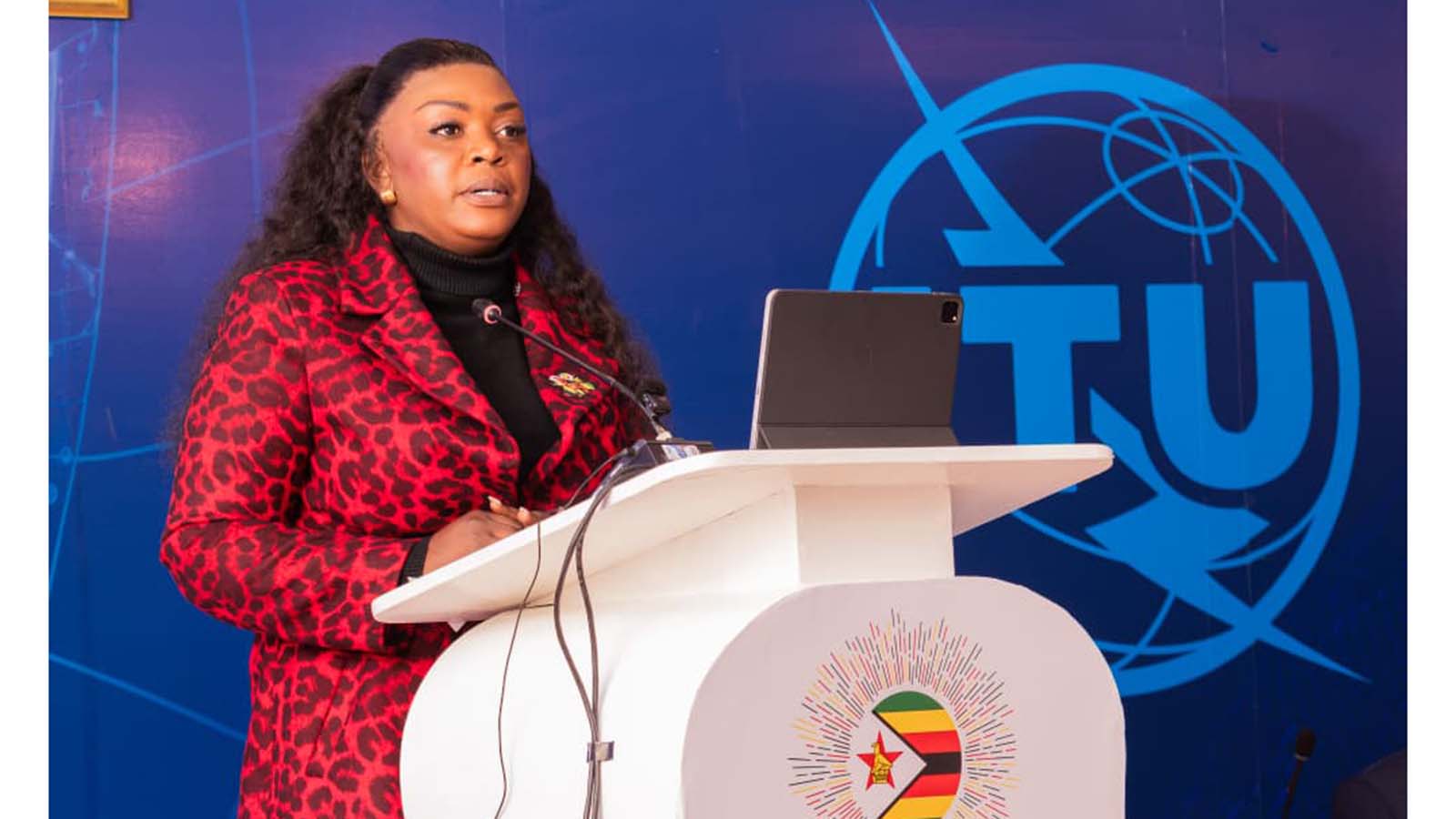
Ivan Zhakata
Herald Correspondent
The Government will establish a National Cybersecurity Authority and strengthen the country’s legal and institutional framework to counter rising cyber threats as Zimbabwe accelerates implementation of its digital transformation agenda.
Speaking at the official opening of the 2026 International Telecommunication union (ITU) Inter-Regional CyberDrill for Africa and Arab States in Victoria Falls on Wednesday, Information Communication Technology (ICT), Postal and Courier Services Minister Tatenda Mavetera said cybersecurity was now central to the successful implementation of the Smart Zimbabwe 2030 Master Plan.
The four-day CyberDrill has drawn cybersecurity experts, regulators, law enforcement agencies and delegates from across Africa and the Arab States to strengthen regional preparedness against emerging cyber threats.
Minister Mavetera said Government was finalising the National Cybersecurity Strategy 2026-2030, which provides for the establishment of a National Cybersecurity Authority to coordinate national cyber incident response, protect critical information infrastructure and enhance local cybersecurity capacity.
“Cybersecurity is not a side project to Smart Zimbabwe 2030. It is the bedrock on which the entire master plan rests. A digital service that citizens cannot trust is one that citizens will not use,” she said.
Minister Mavetera said Zimbabwe’s digital economy was expanding rapidly through initiatives such as fintech, smart agriculture, smart health and e-government services, making resilient cyber security systems indispensable.
She said Government has also launched the National Artificial Intelligence Strategy 2026-2030 and approved the National Child Online Protection Policy 2026-2030 to ensure emerging technologies are deployed safely while protecting vulnerable users.
Minister Mavetera warned against the growing threat posed by artificial intelligence-powered cybercrime and said deepfakes have emerged as one of the greatest risks confronting governments, businesses and citizens.
“I speak of deepfakes. They do not just steal data; they steal reality itself. We have already seen deepfakes being used to carry out sophisticated CEO fraud, draining company coffers with a single faked voice note,” she said.
“We have seen the faces of innocent women superimposed onto explicit content, a vile form of digital gender-based violence that destroys reputations and lives.”
Minister Mavetera said cybercrime has become a global economic threat with ransomware attacks occurring every 11 seconds and worldwide losses estimated at US$10,5 trillion in 2025.
“If cybercrime were a country, it would have the third-largest economy on Earth. That is not a statistic to file away. It is a warning to act on,” she said.
To strengthen Zimbabwe’s cyber resilience, Government will establish a National Cyber Incident Response Team, launch a national cyber hygiene programme targeting small and medium enterprises, create a National Deepfake Detection and Public Media Literacy Taskforce, train 10 000 cyber security professionals over the next three years, fast-track ratification and domestication of the African union Malabo Convention on Cyber Security and institutionalise an annual Zimbabwe National CyberDrill.
The minister said the proposed deepfake taskforce would deploy advanced detection tools and spearhead a nationwide public awareness campaign under the theme “Pause. Verify. Share.”
She also called for stronger regional collaboration and said cyber threats ignored national boundaries.
“Africa cannot afford fragmented, disconnected responses to one borderless threat,” Minister Mavetera said.
“We must shift decisively from a national-boundary mindset to one of continental coordination through shared threat intelligence, joint incident response, harmonised cyber legislation and mutual capacity-building.”
Minister Mavetera challenged delegates to use the CyberDrill to identify vulnerabilities and strengthen preparedness before real attacks occur and said enhanced cooperation among African and Arab countries was critical to securing the continent’s digital future.
Postal and Telecommunications Regulatory Authority of Zimbabwe (POTRAZ) Director-General Dr Gift Machengete said cyber resilience could only be achieved through strong partnerships among governments, regulators, industry, law enforcement agencies and international organisations.
“In cybersecurity, this truth is even more urgent because no single institution or nation possesses all the capability required to confront today’s evolving threats. Our strength lies in cooperation, trust and shared responsibility,” he said.
Dr Machengete said the participation of the ITU, FIRST, INTERPOL, national Computer Incident Response Teams (CIRTs), governments, regulators, law enforcement agencies, industry and partners from Africa, the Arab Region, Canada, Switzerland, the United States and India reflected a shared commitment to strengthening global cyber resilience.
“Cyber threats know no borders, and neither should our cooperation,” he said.
He said the involvement of the ITU, FIRST and INTERPOL highlighted the multidisciplinary nature of cybersecurity, which required sound policy coordination, technical incident response capabilities and effective law enforcement collaboration.
Dr Machengete said while artificial intelligence, cloud computing and digital connectivity were accelerating innovation and economic growth, they were also creating new vulnerabilities that demanded stronger collective defences.
He said advances in artificial intelligence have made it possible to create convincing fake audio and video capable of triggering financial losses, misinformation and national instability.
“Imagine a fabricated video of a Head of State announcing a national crisis, a falsified recording of a central bank governor destabilising financial markets, or a cloned executive’s voice authorising fraudulent transactions. Beyond financial harm, such manipulation undermines trust, spreads misinformation and poses risks to national stability,” he said.
Dr Machengete said cyber drills were critical because they enabled countries to test preparedness, strengthen institutional coordination and gain practical experience before actual cyber incidents occurred.
“Preparedness cannot be improvised during a crisis; it must be developed deliberately and collectively,” he said.
He said cybersecurity was ultimately about protecting people, particularly children, who increasingly faced risks in the digital environment.
Dr Machengete cited the example of schoolchildren’s photographs being manipulated using artificial intelligence to create explicit content for extortion purposes, saying such incidents demonstrated the need for stronger online child protection measures.
He commended Minister Mavetera for spearheading Zimbabwe’s Child Online Protection Policy and described it as a timely and forward-looking initiative that POTRAZ was committed to supporting together with other stakeholders.