Mukudzei Chingwere
Senior Reporter
TRADE between Zimbabwe and the United Arab Emirates (UAE) is projected to reach US$6 billion this year—up 20 per cent from US$5 billion in 2025—as the two nations pursue a Comprehensive Economic Partnership Agreement (CEPA) to unlock fresh investment opportunities.
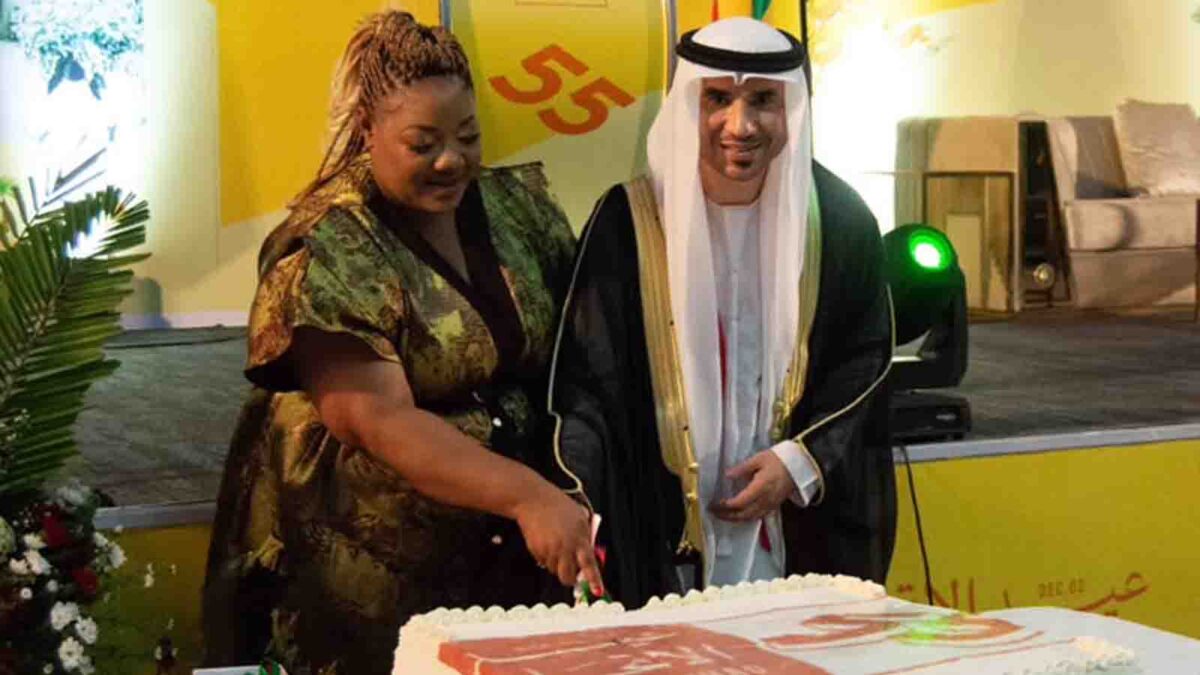
Speaking at celebrations marking the UAE’s 55th union Day in Harare on Thursday, UAE Chargé d’Affaires Mr Rashed Alshamsi said expanding commercial ties had laid a strong foundation for deeper economic, political and developmental cooperation.
“Trade growth reflects the strength of economic relations between the UAE and Zimbabwe. According to published official data and estimates, bilateral trade reached around US$5 billion in 2025 and is projected to rise to around US$6 billion in 2026,” he said.
“This growth creates opportunities to expand trade and investment and increase business participation in both countries.”
Mr Alshamsi confirmed that talks are underway on a CEPA to establish a formal institutional framework for bilateral commerce.
“We hope these discussions will lead to a framework that strengthens trade and investment, creates wider opportunities for goods and services, and supports partnerships between the public and private sectors in our two countries,” he said.
According to the Reserve Bank of Zimbabwe’s September 2026 Monthly Economic Review, released this month, the UAE accounted for 48,4 per cent of Zimbabwe’s merchandise exports in September, ahead of China at 31,8 per cent and South Africa at 7,3 per cent.
While gold remains the mainstay of Zimbabwean exports to the Gulf state, the proposed pact opens avenues for local producers to supply agricultural, horticultural and manufactured goods, while attracting Emirati capital in line with National Development Strategy 2 and Vision 2030.
Mr Alshamsi noted that bilateral cooperation now extends well beyond traditional trade.
“Promising areas for cooperation include agriculture and food security, energy, infrastructure, mining, logistics, tourism and technology,” he said.
“The exchange of expertise in education, health, innovation and government capacity building can also add new dimensions to our partnership and strengthen links between our institutions and peoples.”
Aligning with President Emmerson Mnangagwa’s engagement and re-engagement drive, existing agreements between Harare and Abu Dhabi cover investment promotion and protection, avoidance of double taxation and air transport services, alongside the Government Experience Exchange Programme—recently extended to 2030.
Mr Alshamsi added that a Memorandum of Understanding on political consultations, signed on the sidelines of the United Nations General Assembly in New York, marks another milestone in bilateral ties.
“It provides a framework for regular dialogue and the exchange of views on matters of mutual interest, while supporting further discussion of cooperation opportunities between our institutions,” he said.
“Our bilateral ties have developed significantly, and cooperation has expanded across a range of areas, reflecting our shared interest in building a broader partnership in the political, economic and development fields.”
He reaffirmed the UAE’s commitment to humanitarian and developmental support for Zimbabwe as well as global sustainability initiatives, noting that the UAE—in partnership with Senegal—will host the United Nations Water Conference in Abu Dhabi from December 8 to 10 this year.
Founded on December 2, 1971, under the late Sheikh Zayed bin Sultan Al Nahyan, the UAE has transformed into a global financial, logistics and innovation hub.
“We look forward to the continued development of UAE–Zimbabwe relations and to turning the friendship and understanding between our countries into broader cooperation and tangible opportunities for our peoples,” Mr Alshamsi concluded.