Online Reporter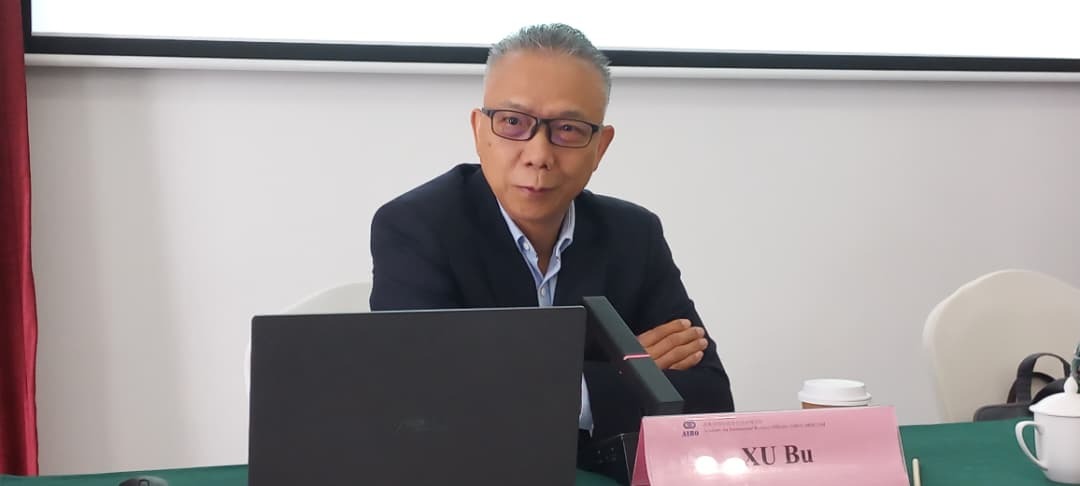
Nqobile Bhebhe in BEIJING, China
A senior Chinese academic has urged Zimbabwean Government institutions and companies to take the lead in identifying and pursuing strategic partnerships with China, saying focus must now shift from broad agreements to practical projects that deliver tangible benefits for citizens of both countries.
President of the Institute of International Development and Security Studies at Jiangsu University, Professor Bu Xu, made the remarks on Monday during a question-and-answer session following his presentation on “Building a Community with a Shared Future for Mankind and China’s Foreign Policy” at the Seminar for Media Professionals for Zimbabwe in Beijing.
The seminar is organised by the Academy for International Business Officials.
Prof Xu said Zimbabwe and China should prioritise practical cooperation capable of producing visible economic and social benefits.
“Both China and Zimbabwe need to determine how we can make concrete progress by having some projects that will produce good results for people in your country (Zimbabwe) and people of China,” he said.
Prof Xu said while African countries and China had long explored development pathways, meaningful progress would only come through frank discussions centred on national priorities and practical cooperation.
“African countries and China have been trying to find ways of development, while we understand each of us have our own conditions we must try to find a common ground,” he said.
“For example, which way you believe Zimbabwe can cooperate with China or what kind of new technologies, equipment Zimbabwe need most from China, what kind of joint venture can be set up upon Zimbabwe to make sure people will benefit from the kind of cooperation?
“That is really the question I hope to ask, what kind of projects Zimbabwe need most from China.”
His remarks come at a time when economic ties between China and Africa are expected to deepen following the implementation on May 1 of China’s zero-tariff policy for a wide range of African exports entering the Chinese market.
The arrangement is expected to create fresh opportunities for Zimbabwe’s export-led growth strategy, particularly in agriculture, mining and value addition.
Prof Xu said Zimbabwe should strategically utilise the zero-tariff framework to promote industrialisation and value addition instead of continuing to rely heavily on raw material exports.
“With zero-tariff, I am sure the quality of exported products to China will increase dramatically and at the same time we may think of how do we set up joint ventures not only to export raw materials but set up factories to make sure there will be more value-added products for exports,” he said.
Prof Xu challenged Zimbabwe’s ministries, State agencies and private sector players to proactively engage Chinese counterparts and present viable projects for collaboration.
“The concerned ministries or relevant companies need to come to their Chinese counterparts to discuss what kind of projects can be set up to make sure value added products are produced so that more people can benefit,” Prof Xu.
His remarks echo growing calls within Zimbabwe for increased local content, industrialisation and employment creation from the country’s vast natural resources.
Prof Xu’s intervention also reflects growing interest within Chinese policy and academic circles in ensuring bilateral cooperation produces visible and widely shared outcomes, strengthening long-term public support for Zimbabwe-China relations.
“We must try to find a common ground,” he reiterated, “to make sure people will benefit from the kind of cooperation.”