Online Reporter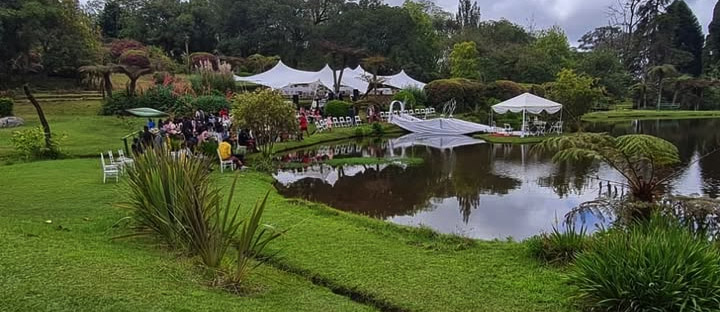
Liberty Dube
Tourism Correspondent
WHEN Forbes Magazine announced Zimbabwe as the World’s Best Country to Visit in 2025, the world listened with curiosity and then, awe.
While many minds leapt instantly to the mighty Victoria Falls or the legendary ruins of Great Zimbabwe, seasoned travellers know that it is in the quiet folds of the Eastern Highlands — where mist curls around mountains and rivers hum through emerald valleys — that the soul of Zimbabwe truly whispers.
Nestled in Manicaland Province, the Eastern Highlands stretch like a lush green ribbon along the country’s eastern border with Mozambique. Here, time seems to slow to the rhythm of mountain breezes and murmuring streams. It is a landscape far removed from the dry, golden plains of the country’s heartland—a place where nature’s palette bursts with life, and every trail leads to another revelation.
The lush charm of Nyanga
At the northern edge of the Highlands lies Nyanga, a region of soft hills, deep pine forests, and cool mountain air scented with wild-flowers. The Nyanga National Park, one of Zimbabwe’s oldest, feels almost ethereal. Mist hangs low over the rolling moorlands, and ancient stone terraces whisper of forgotten civilizations. At its heart, Nyanga Mountain, Zimbabwe’s highest peak, rises like a silent guardian. The mountain’s mood shifts with the weather—sometimes crowned in cloud, sometimes shimmering blue under the sun. Hikers here trace paths once walked by ancestors, reaching the Skyline Viewpoint where, on a clear morning, the world below unfolds in layers of green. The Pungwe Gorge, carved deep by a restless river, offers dramatic views that rival any found on the continent. It is this combination of natural drama and quiet reflection that makes Nyanga the perfect retreat for wellness travellers—those seeking balance and serenity in a world that moves too fast.
Mutarazi Falls: The Curtain of Dreams
Further south, Mutarazi Falls, Zimbabwe’s highest waterfall and the second highest in Africa, tumbles nearly 760 meters into a forested abyss. The view from the Mutarazi Skywalk, a suspended glass bridge that arches across the gorge, is not for the faint-hearted—but for those who dare, it offers an almost spiritual experience. You stand suspended between sky and forest, the roar of the falls beneath you, clouds drifting so close you could almost touch them. Travel experts note that destinations like this—where adventure meets awe—have propelled Zimbabwe’s ranking. The Eastern Highlands have become a cornerstone of “low-intensity travel,” where visitors are drawn not to crowds or resorts, but to connection—with the earth, with silence, and with themselves.
Bvumba: The misty mountains of magic
No celebration of the Highlands is complete without the Bvumba Mountains, often called The Mountains of the Mist. As the name suggests, mornings here begin wrapped in soft veils of vapor, through which sunlight gradually filters to reveal slopes dense with ferns, orchids, and towering trees. The Bvumba Botanical Gardens, a symphony of colour and fragrance, spread across rolling lawns overlooking valleys that seem to melt into Mozambique. Birdsong fills the air—especially that of the fiery-necked nightjar, whose haunting call has become the soundtrack of Bvumba nights. Nearby, Leopard Rock, a luxury resort carved into the hillside, has long been a favourite of both artists and adventurers. Its views—stretching across mist and mountain—capture the romantic heart of Zimbabwean wilderness.
Chimanimani: The sacred frontier
At the southern tip of the Highlands lies Chimanimani, a region that feels almost mythic. Its jagged peaks and secret caves hold centuries of spiritual meaning. The Chimanimani Mountains, part of an ancient quartzite range, are beloved by trekkers and mystics alike. Hidden waterfalls glisten between moss-covered rocks, and natural pools offer crystalline reflections of the sky. For travellers seeking wellness through wilderness, Chimanimani is unmatched. Yoga retreats, mindfulness hikes, and eco-lodges have flourished here, drawing those who seek healing from both nature and stillness. The area’s recovery from the devastating Cyclone Idai of 2019 has also become a symbol of resilience—both for the land and its people.
A symphony of stillness and wonder
What makes the Eastern Highlands truly extraordinary is, not just their beauty, but their balance. They offer everything modern travellers crave: ecological diversity, adventure opportunities, and deep, restorative peace. In a world often defined by noise and hurry, these highlands stand as a reminder that true luxury lies in space, silence, and connection. It is no surprise, then, that when the travel experts at Kayak considered wellness travel, city jumping, and low-intensity exploration, Zimbabwe’s Eastern Highlands became an irresistible case study in all three. From the thunder of Mutarazi to the tranquility of Bvumba’s gardens, Manicaland has quietly carried Zimbabwe to the top of the world’s travel lists. And perhaps that is the greatest secret of all—Zimbabwe didn’t win the title by shouting the loudest, but by whispering the most beautifully.