Online Reporter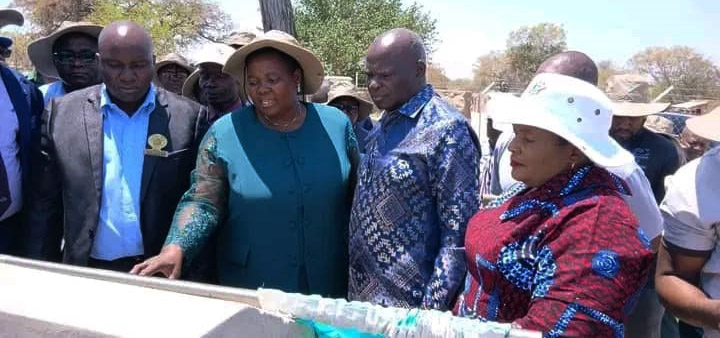
Lovemore Kadzura
Post Reporter
IN a landmark development, the Kazozo community in Nyanga North Constituency has finally gained access to clean electricity, bridging the gap in essential services and unlocking the area’s economic potential.
Rural Electrification Agency (REA) successfully connected grid electricity to key institutions under the Mangezi, Kazozo, Mopane, and Mukunza project.
The Fombe Large Anchor Project 1 has brought electricity to four institutions, including Mangezi Primary School, Kazozo Primary and Secondary schools, and Kazozo Business Centre. Local villagers now have the opportunity to power their homes and businesses with electricity, which is now readily accessible.
Under the REA initiative, rural communities pay only half the cost of installing electricity infrastructure, with the agency covering the remainder. Speaking at the project’s commissioning, Energy and Power Development Minister, Honourable July Moyo, highlighted the transformative impact of rural electrification on marginalised communities.
He said the availability of electricity has enabled the community to engage in high-value economic activities, promoting economic growth and development.
“The Mangezi, Kazozo, Mopane, and Mukunza project marks a new chapter in our journey towards a more connected and prosperous future, reflecting the Government’s commitment to leveraging technology for the socio-economic development of our rural communities. By expanding access to electricity and energy in general, we are empowering our communities to participate in the digital economy, fostering economic growth, and improving the overall quality of life of our people.
“Energy is a key driver of industrialisation, modernity, economic development, and improved living conditions for our people residing in rural communities in Zimbabwe. As a country, we cannot discuss successful agricultural production for food security measures, mining development, tourism, and commerce without the availability of electricity in all key sectors of the economy.
“Historically, electricity was mainly accessible in urban areas, large-scale commercial farms, and established ventures, while rural communities, where the majority of our population resides, were neglected. Consequently, rural communities lagged behind in meaningful development initiatives, despite possessing the potential and zeal to work productively.
“Villagers and smallholder farmers with a passion for agricultural production relied on rain-fed agriculture, despite having abundant water from dams and rivers in their villages and farms. This limited their yields due to the absence of irrigation farming, which is driven by electricity. The attainment of independence in 1980, following a protracted liberation struggle, ushered in a new era where the Government recognised the need to address imbalances in urban and rural electrification. While earlier efforts by the Zimbabwe Electricity Supply Authority (ZESA) to bring electricity to rural areas, initially targeting growth points, were progressing slowly, the Government established the Rural Electrification Fund (REF) in 2002 to facilitate rapid and equitable electrification of all rural areas in Zimbabwe,” said Minister Moyo. REA board member, Mr Tawabvira Kutamakufa said that since the establishment of the Fund, thousands of key institutions, chiefs’ residences, and private homesteads have been electrified, thereby bridging the urban-rural divide in terms of opportunities that require electricity.
“The provision of electricity in rural Zimbabwe has rekindled the hope of many hardworking communities who could not engage in meaningful business ventures due to lack of electricity. Many electrified rural centres have become hubs of activity, with rural entrepreneurs operating businesses such as welding, dressmaking, carpentry, and hairdressing.
“Our rural learners are competing favourably with their urban counterparts because their schools are modernised and technologically advanced, thanks to electricity. Rural health centres are also operating efficiently, and villagers who previously relied on firewood for energy are now using modern stoves for cooking, having benefited from grid electricity, solar, or biogas energy.
“We have electrified 11 138 public institutions, including 3 169 primary schools, 1 580 secondary schools, 1 061 rural health centres, 490 extension offices, 309 chiefs’ homesteads, 1 356 business centres, 881 small-scale farms, 305 village homesteads, and 987 other related institutions nationwide.
“We have also installed six community solar mini-grid projects in six rural provinces, supplying electricity, not only for lighting and entertainment, but also for business development and agricultural production through irrigation,” he said. Member of House of Assembly for Nyanga North, Honourable Chido Sanyatwe hailed the electrification of Kazozo as a dream come true for the community, which has long yearned for development.
She noted that electricity will empower locals to engage in small-scale manufacturing and irrigation activities.
“We are truly grateful to the Government, through the Rural Electrification Agency, for remembering Nyanga North. This constituency has some of the most remote areas in the province, and real development, such as electricity, was taking too long to materialise. Now that electricity is available, we will push for irrigation schemes along the Gairezi River and transform this area into a greenbelt.
“Our schools can now teach practical subjects like Science and Information Communication Technology, thanks to electrification. Professionals who previously shunned this area due to the lack of clean energy will now have reasons to stay,” said Honourable Sanyatwe.
Mrs Normally Chieza, a local villager, said the electrification of the area will improve health services at the local clinic.
“We are grateful to have our area electrified, and we anticipate that our lives will improve. Women will no longer use firewood for cooking, but can switch to electric stoves, which makes life easier. At the clinic, women used to deliver babies in darkness or candlelight, compromising health delivery, but this has now come to an end. We used to travel to Ruwangwe Business Centre or Nyanga Town for minor services that are not available here due to the lack of electricity, incurring transport expenses,” she said.