Chronicle Editor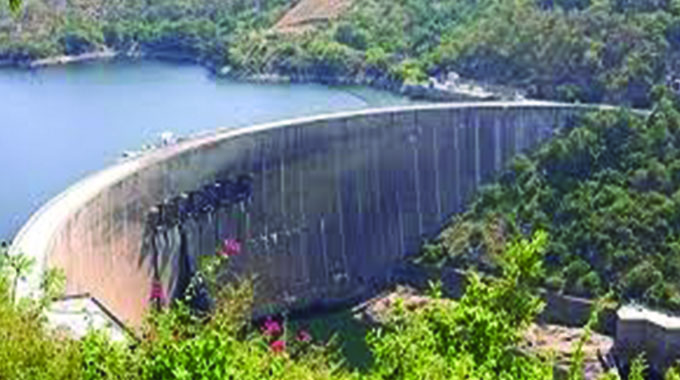
Farirai Machivenyika, Harare Bureau
Zimbabwe and Zambia, through the Zambezi River Authority (ZRA), have instituted studies on the feasibility of installing floating solar systems at Kariba Dam whose capacity to produce electricity from its hydro-electricity plants has diminished due to declining inflows of water as a result of the El-Nino induced drought.
Energy and Power Development Minister, Edgar Moyo told the National Assembly last week of the study, which is being done with the assistance of the African Development Bank.

The country is experiencing prolonged periods of blackouts of up to 14 hours due to depressed generation capacity at the country’s main power plants at Kariba Dam and Hwange Thermal Power Station.
“There is also a programme that we are working on through ZRA and as council of ministers which is a bi-national body bringing together Zambia and Zimbabwe. We have commissioned a study which is being financed by AfDB to look at the viability of floating solar systems on Lake Kariba.
“That is ongoing and it is our timeline that by the first quarter of 2025, that feasibility study will be complete and then that will help us to commence works on floating solar systems on lake Kariba. There are other programmes also on floating solar systems on Lake Kariba which are going to begin early next year. So, these are some of the things we are doing,” Minister Moyo said.
Floating solar systems allows companies to expand solar power plants without taking up more land and is environmentally friendly. Solar modules that are mounted on floating platforms promise high yields while their proximity to water could support the cooling of solar cells, thus enabling them to work efficiently even in hot weather conditions.
Kariba Hydro-electric Power Station has an installed production capacity of 1 050 MW but has been producing around 200 MW.

The minister also told the House the Government was also engaging the International Atomic Energy Agency (IAEA)to explore prospects of establishing nuclear power plants.
“As Zimbabwe, we have expressed our interest to the IAEA our desire to get into nuclear energy for peaceful purposes. They are with us and they are taking us through.
“Committees have been set up, which are looking into that and there are milestones that we have to meet as a country before we get to the stage of developing small modular reactors so that our contribution of clean energy mix is heightened. So, we hope these are some of the things, programmes and projects which are going to increase our contribution to the energy mix of clean energy,” Minister Moyo said.
Zesa executive chairman, Dr Sydney Gata last week said nine public and private power generation projects will be commissioned next year that will add 2 690 megawatts to the national grid and ease power cuts.
Some of the projects that will add power to the national grid include the 800 MW Hwange repowering project that is being developed by Indian firm, Jindal and will be complete by December next year. This project will bring all six older units at Hwange back onto the grid at full force. At present the six units are working at less than half their optimal capacity.
In addition, there are eight private stations being built. The private 720 MW Titan project, the 300 MW Zhong Jin Heli project and the 270 MW ZZE project, all in Hwange, are set to be delivered by end of next year.
Elsewhere, the private Jinan 200 MW station in Gweru, the 100 MW Xintai Station in Beitbridge, the 100 MW Afrochine Station in Chegutu, the 100 MW Dingneng Solar Station in Manhize, and the 100 MW Dingneng Solar project in Mamina, are also set to come on stream and add to the grid.



 Online Reporter