Online Reporter
Rutendo Nyeve [email protected]
ZIMBABWE and Zambia have taken a decisive step towards reshaping Southern Africa’s transport landscape after signing a Memorandum of Understanding (MoU) for the construction of a strategic railway line linking Lion’s Den in Zimbabwe to Kafue in Zambia.
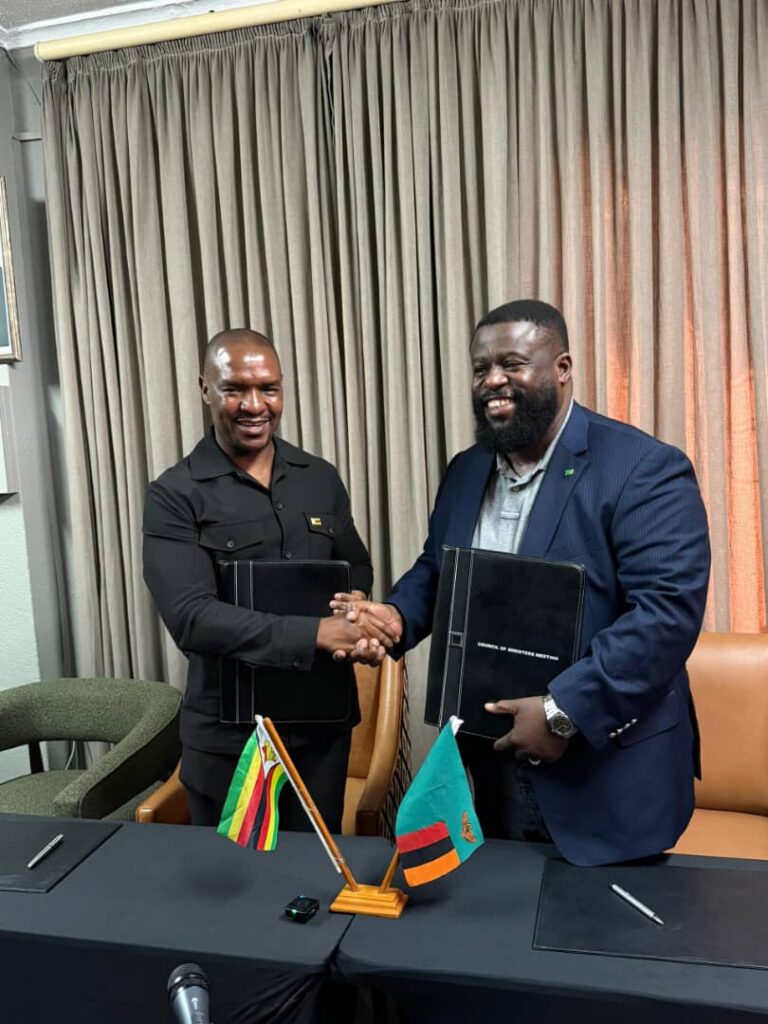
The MoU was signed on Saturday by Zimbabwe’s Minister of Transport and Infrastructural Development, Felix Mhona, and his Zambian counterpart, Frank Tayali, during the Emerging Railways Properties (Pvt) Limited Council of Ministers meeting in Victoria Falls.
The 311-kilometre railway line will pass through key areas in Zimbabwe, including Chirundu, Hurungwe National Park, Makuti, Denis and Chakuti, before reaching Lion’s Den, while on the Zambian side it will cover Kafue, Mazabuka, Chikankata and Chirundu districts. Of the total length, 217 kilometres will be in Zimbabwe and 94 kilometres in Zambia.
The project will follow the existing highway alignment and utilise the 1 067mm Cape Gauge, with provisions for future upgrading to Standard Gauge. A total of 16 stations and two marshalling yards will be constructed along the route.
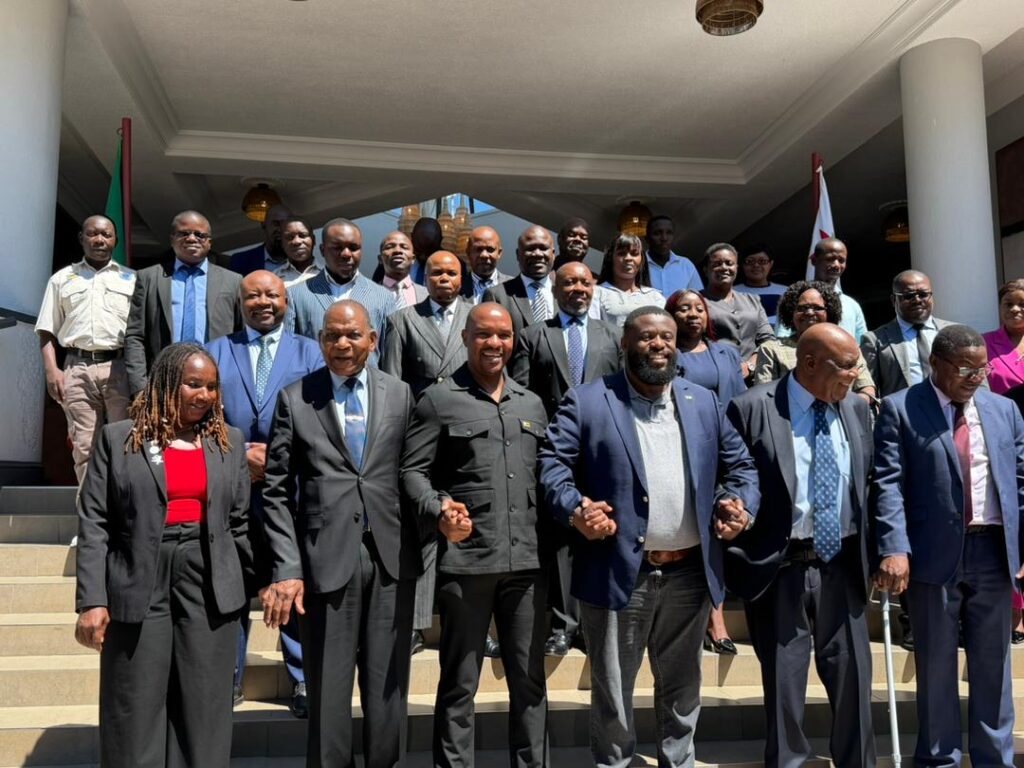
Permanent Secretary in the Ministry of Transport and Infrastructural Development, Engineer Joy Makumbe, said the railway would significantly reduce transit distances and logistics costs across the region.
“The railway route will reduce transit distances significantly — 800 kilometres shorter from Zambia to the port of Beira as opposed to going via the North-South corridor, 1 000 kilometres shorter than the distance to South African ports, and 500 kilometres shorter than the distance to the port of Dar es Salaam,” she said.
“This will lower transport and logistics costs and enhance rail competitiveness across the region.”
The project is estimated to cost US$2.18 billion.
Minister Mhona welcomed the agreement, describing it as a milestone driven by strong political will.
“I am delighted that I got my counterpart this year, my brother. We mandated, it was very clear from our two great leaders, and in particular, President Mnangagwa, our visionary leader. We have been championing the issues to do with the Vision 2030 agenda, where we are going to be having an upper middle income society as a map,” he said.
“We are not looking at our countries in isolation; we are looking at the entire corridor. In this particular case, we are looking at the Beira corridor. We had massive benefits attributed to that corridor as a result of logistics, so that anyone into logistics will favour that country.”
Minister Mhona also revealed that work on the Chirundu Border Post is set to commence in June as part of broader efforts to improve connectivity and ease of doing business.
“We are talking of ease of doing business in terms of lowering costs. If logistics costs are high, it goes back to the grassroots where you are impacted on the pricing model. We want to resuscitate our railway line so that we ease the burden on our roads. The cost of reconstructing our roads will be less because we will not have the routine maintenance — the burden will have been transferred back to the track,” he said.
Minister Tayali dismissed speculation that Zambia was not committed to the corridor, reaffirming his country’s support for regional integration.
“We must at all costs promote regional connectivity. There were rumours that we may not be interested in this particular corridor, but the contrary is what is actually true. Zambia will do everything possible to open up as many corridors as possible,” he said.
“Evidence is already there that the more we have put priority on other corridors, other than the traditional corridors, we have seen the cost of transportation actually come down.”
He cited growing competition between the ports of Dar es Salaam and Beira as evidence of how new routes can reduce costs, adding that Tanzania had already moved to offer concessions on port handling fees.
“The key to what we have done today is how we must now work very closely — Zambia, Zimbabwe together with Mozambique — to create this very unique corridor. Having signed this memorandum, we must now work on the modalities of operationalisation,” he said.
The railway line will ultimately extend 762 kilometres from Lion’s Den to the port of Beira in Mozambique via Harare and the Machipanda Border Post. This will require the rehabilitation of a 445-kilometre stretch within Zimbabwe to ensure seamless cargo movement.
Mozambique’s involvement is considered critical to delivering the project as a fully integrated corridor and avoiding potential bottlenecks.