

 Online Reporter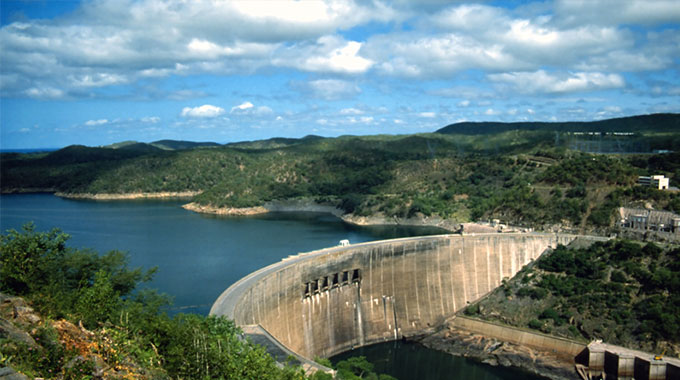
Debra Matabvu, Senior Zimpapers Reporter
ZIMBABWE and Zambia have agreed to remove all trade barriers between them, with the process expected to be finalised by March next year.
This development is set to strengthen economic ties between the two countries.
According to a joint communiqué issued after the inaugural Zimbabwe–Zambia Bi-National Commission held in Harare yesterday, the two countries also committed to finalising a Trade and Economic Cooperation Framework Agreement to guide future engagements.
Zimbabwe further agreed to support Zambia’s electricity import from the region, with Harare set to increase the limit on power transfer capacity to facilitate the arrangement.
The inaugural session was attended by President Mnangagwa and President Hakainde Hichilema, alongside senior Government officials from both countries.
The meeting also saw the signing of five Memoranda of Understanding (MoUs) covering Diplomatic Training; Immigration and Technical Cooperation; Labour and Employment; Cooperation in the Field of Agriculture; and Youth Development.
“The Parties recalled the decision of September 2025, to remove all barriers that affect trade,” the communique reads in part.
“To that effect, Zimbabwe informed the Meeting that its Cabinet had passed a decision to scrap transit duties on petroleum products, in particular, and measures on other barriers were factored into the country’s 2026 National Budget, which will come into effect on 27 November 2025. Both sides further agreed that technical-level discussions on the matter will continue on a quarterly basis, with finalisation by 31 March 2026.
“The Parties agreed to finalise the bilateral Trade and Economic Cooperation Framework Agreement, anchored on 5 existing regional and continental instruments, to guide structured engagement and deepen economic ties.
“Progress under the Simplified Trade Regime (STR) was acknowledged, with both Parties reaffirming their commitment to its full implementation to facilitate small-scale cross-border trade.
“The Parties welcomed the arrangement to support electricity imports by Zambia, from the region, through Zimbabwe and for Zimbabwe to progressively increase the limit on power transfer capacity.”
The communiqué also stated that the two countries agreed to implement 24-hour operations at the Chirundu and Victoria Falls One Stop Border Posts by the end of this year.
They underscored the importance of enhancing transport connectivity, noting that improved infrastructure is crucial for promoting trade and investment.
Zimbabwe and Zambia further highlighted the need for continued collaboration to ensure that shared assets are commercially viable and fully utilised for the benefit of their communities.
Additionally, both countries agreed to maintain regular engagements and dialogue on bilateral, regional and global matters.
“The Parties agreed to maintain regular engagements and intensify collaboration across existing and emerging areas of mutual interest,” the communique further reads.
“They further underscored the importance of sustained dialogue on bilateral, regional, continental, and global developments, with a view to advancing shared positions and strengthening strategic alignment. The Parties welcomed the proposal to hold the Second Session of the Bi-National Commission and agreed to convene it by November 2027, in Lusaka, Zambia.
“Zambia pledged to continue advocating for the removal of illegal and unilateral sanctions imposed on Zimbabwe, as they are hindering developmental efforts.”
Zimbabwe and Zambia also reaffirmed their commitment to strengthening peace and security cooperation at bilateral, regional and global levels.
They commended the progress made by their Surveyors General on the boundary reaffirmation exercise and encouraged continued reconnaissance along the shared border from Victoria Falls to Kazungula.
The two countries also agreed to install floating buoys on Lake Kariba to clearly mark and improve monitoring of the boundary.
The two parties agreed to have the second session of the Bi-National Commission by November 2027, in Lusaka, Zambia.


