Online Reporter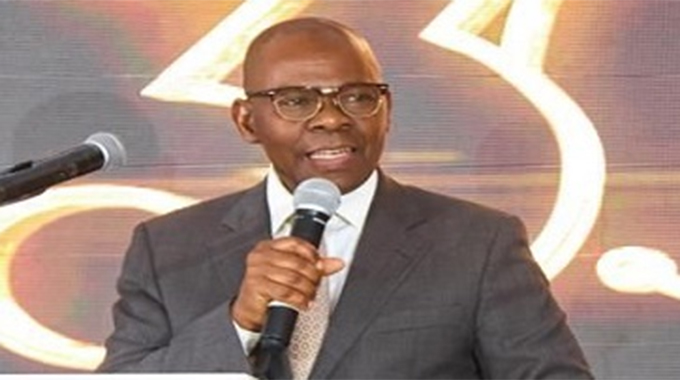
Rutendo Nyeve, Online Reporter
The central bank has expressed its commitment towards implementing stabilisation measures and the de-dollarisation roadmap aimed at fostering macroeconomic stability and sustainable growth.
This was revealed by the Deputy Governor of the Reserve Bank of Zimbabwe (RBZ), Dr Innocent Matshe, while addressing delegates at the recently held Zimbabwe Annual Mining Conference in Victoria Falls.
Dr Matshe said the mining industry plays a critical role in implementing stabilisation measures and the de-dollarisation roadmap.
“The global economy is characterised by greater uncertainty due to heightened geopolitical tensions, newly imposed trade measures, and escalating trade wars. These factors have led to revised global GDP growth projections downward to 2.8 percent in 2025 and 3 percent in 2026, with inflation expected to decline to 4.3 percent and 3.6 percent, respectively,” said Dr Matshe.
The Deputy Governor said the adverse effects of these global dynamics on Zimbabwe include lower commodity prices for most minerals (except gold), reduced capital inflows, and persistently high global interest rates.
“Global financial conditions remain tight, as advanced economies adopt a cautious approach to reducing interest rates, and this poses challenges for developing nations like Zimbabwe,” said Dr Matshe.
Despite these global headwinds, Dr Matshe expressed optimism about the nation’s domestic economy, describing it as resilient and poised for growth.
He said the economy is projected to expand by 6 percent in 2025, driven largely by agriculture (21.1 percent) and mining (2.9 percent).
“The mining sector continues to be a cornerstone of our economic stability because of its pivotal role in foreign exchange generation,” said Dr Matshe.
In 2025, the mining sector contributed US$1,402 million in foreign exchange inflows during the first quarter, a significant increase from US$1,088 million in the same period in 2024.
However, Dr Matshe acknowledged a decline in the sector’s contribution to total foreign exchange inflows from 49.5 percent in 2023 to 44.3 percent in 2024, attributing this to falling international commodity prices.
Dr Matshe said the mining sector further plays a role in stabilising the Zimbabwe Gold (ZWG) currency and supporting the de-dollarisation roadmap.
“The foreign currency generated through surrender requirements and in-kind royalties from mining is critical for liquefying the interbank market, meeting Government FX obligations, and building reserves to support de-dollarisation by 2030,” said Dr Matshe.
He urged miners to increase procurement in ZWG and source locally produced goods and services to bolster demand for the domestic currency.
“Sustainable de-dollarisation requires a collective effort. The mining industry can significantly contribute by embracing the use of ZWG in transactions,” said Dr Matshe.
He outlined the pillars of successful de-dollarisation, drawing lessons from other countries with durable macroeconomic stability, adequate foreign reserves, a sustainable fiscal position, and increased demand for the local currency.
“Since the introduction of the structured currency in April 2024, we have made significant strides,” he said.
Turning to the parallel market premium, Dr Matshe said it has been contained at around 20 percent, and the Real Effective Exchange Rate (REER) shows no significant over- or undervaluation of the ZWG.
He said the RBZ’s reserves now fully cover ZWG reserve money and deposits in the banking sector, providing a buffer against external shocks.
Transactional use of ZWG has risen from 26 percent in April 2024 to over 36 percent by April 2025, driven by Government measures such as higher tax payments in ZWG and the rollout of Point-of-Sale (POS) machines.
Dr Matshe projected a continued decline in inflation, with month-on-month rates expected to average below 3 percent in 2025 and annual inflation falling to around 30 percent by December 2025.
“The Reserve Bank remains committed to implementing sound monetary policies to anchor inflation expectations and sustain confidence in the ZWG,” said Dr Matshe.
He reiterated the need for a balanced approach:
“Our monetary policy stance must delicately navigate between reducing inflation and supporting robust economic growth, particularly in key sectors like mining,” said Dr Matshe.