admin
admin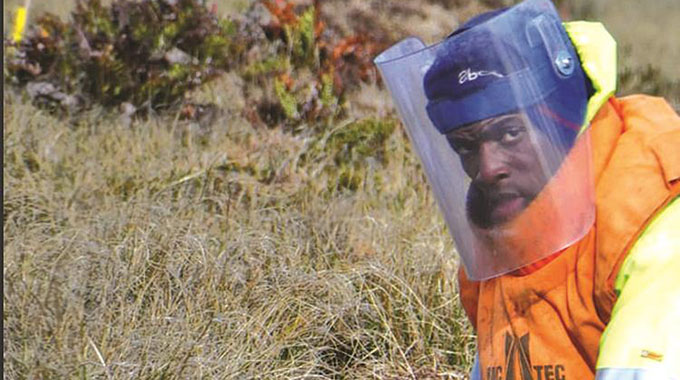
Herald Reporter
We are familiar with fellow nationals who populate far flung places such as Afghanistan, the British North Sea oil rigs, Haiti and China.
How further down the Southern Hemisphere has Zimbabwean expertise announced itself?
Not quite the Antarctic, but furthest in the South Atlantic Ocean.
A team of Zimbabweans somewhere at the tip of South America has just signalled “mission accomplished”, after successfully clearing the Falklands Islands of landmines.
Zimbabwean Phillimon Gonamombe, from Bikita in Masvingo Province, is among a team of experts that has been demining the Falklands.
And thanks to the contribution of the Zimbabwean team, the Falklands are officially free of landmines — 40 years after conflict over the South Atlantic islands ended.
In order to achieve its goal, the team struggled to cope with the islands’ challenging physical conditions and often having to work in remote locations and through unpredictable and sometimes extreme Falklands’ weather conditions.
Almost four decades after the end of the conflict during which thousands of exploding devices were laid, the Falklands are now finally free of lethal mine fields.
Gonamombe credits the success of the Falklands Islands landmine clearing assignment to 25 years of experience in demining.
“I am proud of the invaluable experience in Humanitarian Mine Action (HMA) projects.
“This is highly focused work, requiring a comprehensive knowledge and understanding of all HMA clearance management operations procedures such as resources control, site management, technical advice, environmental issues and training,” he told this paper.
The team’s achievement in demining, he explains, is in part due to a consistent track record of successfully employing best working practices that improve efficiency, reducing operating costs, while increasing productivity, “all executed according to tight timescales, and within budget”.
“I am mostly proud of the achievements to completing Explosive Remains of War (ERW) clearance in the Falklands Islands and also being part of the clearance team.
“Now the Falklands Islands are one of the countries that is going to declare free of landmines.”
Gonamombe says demining in the Falklands was very difficult due to some of the working areas being inaccessible because of bad terrain, weather conditions and a very tough ground that made it difficult to excavate.
The Zimbabwean team was funded by the United Kingdom under a programme that began in 2009.
Gonamombe and his colleagues have completed the dangerous mission of demining the islands in the South Atlantic, three years ahead of schedule.
The landmines were laid during the 1982 conflict between Argentina and the UK.
The removal of the mines, means the UK has now met its obligations set by the Anti-Personnel Mine Ban Convention.
Consequently, the warning signs about landmines and fences that have been a feature on the islands since the end of the conflict will be removed during a local event.
The removal of the last mine means there are not anti-personnel mines on British soil anywhere in the world.
The Falklands will mark the moment with detonation of the final mine and cutting down of fences, which will finally re-open their access to beaches.
Games of cricket and football will be played on the beach itself to mark and enjoy unrestricted access.
The demining team mostly made up of personnel from Zimbabwe worked with counterparts from British companies, SafeLane Global and Fenix Insight.
UK Minister with responsibility for the Falklands said of the successful demining mission by the Zimbabwean team: “This is a huge achievement for the Islands and we must pay tribute to the brilliant team of deminers who put their lives at risk day to day removing and destroying landmines to make the Falklands safe.
“Our commitment to ridding the world of fatal landmines does not end with our territories being mine-free.
“A further 36 million Pounds Sterling of UK funding will allow demining projects across the world to continue protecting innocent lives.”
The additional 36 million Pounds of funding has therefore been given to the UK-funded Global Mine Action Programme2, bringing the total to 124 million Pounds to continue demining projects in Africa, the Middle East and Asia.
The move is an acknowledgement that landmines continue to cause harm and damage lives, many years after conflicts are over.



 Online Reporter