Chronicle Editor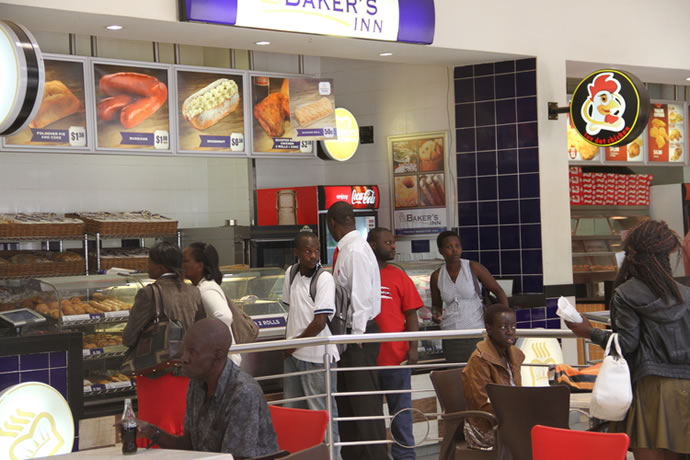
Problem Masawu
IT is lunch time on a typical Tuesday in Harare and many people are dashing to a food outlet and after an hour or so, they come out clutching two boxes of pizzas.Like the adage “feed the body that works”, Zimbabweans are fond of what is known as junk food.
“It is an ongoing promotion, they say you buy one and get one for free,” said one ecstatic consumer, Mufaro Gube.
A stone’s throw away, people can be seen just disappearing into a “corridor” and later they are seen with tooth picks.
Many people in Zimbabwe are spending quite a lot of money on fast foods and this has been attributed to the mushrooming of new food outlets and some “greasy” backyard restaurants which have sprouted in urban areas.
People have abandoned the culture of bringing a lunch box to work. While Innscor Foods Zimbabwe has been a dominant player in the fast foods business for the years, the coming on board of Chicken Slice and TN Grill has increased the appetite for fast food.
Competition among fast foods retailers means that consumers are spoilt for choice and in a bid to outplay each other; some companies have embarked on massive promotions.
This has seen many Zimbabweans spending big on fast foods. The Innscor unaudited financial statements for the year ending December 2012 showed that the fast food business in Zimbabwe was growing faster than in other regional countries.
“Overall, the business experienced a 5 percent growth in customer count against the comparative period. The store network continued to expand with five new counters being opened in Harare during the current period and two in Zvishavane,” reads the financial statement.
“The refurbishment programme also continued, with two food courts in Harare and one in Bulawayo receiving upgrades. Additional counters are currently in varying stages of progress in Harare, Chegutu, Chivhu, Kwekwe and Masvingo, and these include a new Fish concept, operating under the Fish Inn brand, with the first outlet scheduled to open in April 2013.
A new point of sale system is also in the process of implementation and this will assist in reducing ‘above-site’ overhead costs and improve profitability within the business.
“Regionally, customer counts in the fast foods operations increased by 3 percent against the comparative period and the overall results achieved were pleasing,” reads the statement.
It seems those who cannot afford to buy fast foods usually go to sit-in restaurants, the “greasy-spoon diner” in American terminology rather than the more ambient places that are so easy to find in the northern suburbs.
A snap survey in Harare showed that unlicensed food outlets have mushroomed in every street in the city centre and in almost every suburb. There are reports that the meat being served is of poor quality which makes them a potential health risk to consumers.
Some of the “restaurants” are not conducive for food retailing as they are located in the midst of other businesses.
For example, on Fourth Street, there is a food café that is housed in the same building with a hair salon and barber shop. This reporter visited the place and find out that there is no running water, hairdressers and cooks take turns to go and fetch water at a neighbouring premises using containers.
“The bulk of these shops and vendors are, however, operating in contravention of the Shop Licencing Act, which states that “no person shall carry out a trade or business without a valid licence”, said Dr Tendai Mahachi, Harare Town Clerk.
The city has also witnessed the mushrooming of backyard restaurants, posing a health threat to residents.
Dr Mahachi said that days were numbered for those who defied its directive, adding that council would, in conjunction with the police, conduct a blitz on all the illegal businesses.
“The City of Harare has also observed that there are people trading and operating with fake licences. It is an offence to operate with such licences,” he said.
The blitz is also expected to target the high-density suburbs in Harare where many supermarkets, bottle stores and nightclubs are operating without the requisite documentation.



 Online Reporter