Chronicle Editor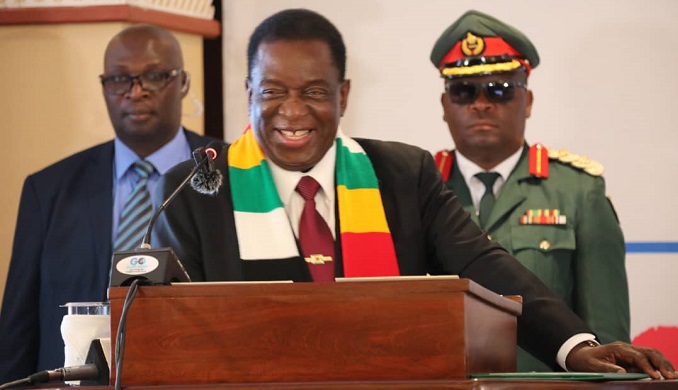
Rutendo Nyeve, Features Reporter
THE year 2023 has come and gone. It was a critical year for Zimbabwe as it saw the harmonised elections which were held peacefully with citizens exercising their democratic right of choosing their own leaders.
While squabbles within the opposition Citizens Coalition for Change (CCC) have seen this election period spill over to 2024, this year’s focus is, however, not on local elections but on broader regional and international programmes which the country is set to play a key role in one way or the other.
Zimbabwe will take over the Southern African Development Community (Sadc) chairmanship this August, a development expected to be a major highlight of 2024 for the country.
In August, Zimbabwe will host the Sadc Summit at the New Parliament Building in Mt Hampden, during which President Mnangagwa will take over the reigns as chairman of the regional bloc.
Preparations for the summit have already begun with a meeting between various ministries led by the Ministry of Foreign Affairs and International Trade and officials from the Sadc Secretariat being held on Thursday.
The summit is expected to run from 17 to 18 August.
The chairperson oversees the highest level of the governance structure of Sadc, and among others, has the overall mandate of providing policy direction, and controlling the functions of the regional bloc.
The Sadc chairperson also interacts with the Sadc Secretariat staff, provides guidance, and signs Sadc legal instruments during their tenure.
Delivering his New Year’s message at State House last Saturday, President Mnangagwa described Zimbabwe’s election as an honour and recognition of the nation as one of the founding members.
“Fellow Zimbabweans, on the diplomatic front, the election of Zimbabwe as incoming chairman of the Southern African Development Community is both a recognition and honour to the nation as a founding member of the organisation,” said President Mnangagwa.
The country is set to assume the chairmanship of the regional bloc after having been a member of Sadc since its inception in 1980.
The country has played a significant role in the community, particularly in the areas of trade, security, and development. In recent years, Zimbabwe has made efforts to strengthen its role in Sadc. The assumption of the chairmanship is significant for Zimbabwe, as it will allow the country to play a leading role in shaping the direction of Sadc and its policies.
According to political analysts, assuming the chairmanship of Sadc would give Zimbabwe a platform to engage with other regional and international actors on a range of issues.
“Zimbabwe could use its position to promote peace and stability in the region, particularly in countries like Mozambique and the Democratic Republic of Congo for example. In addition, the chairmanship could help to improve Zimbabwe’s relations with countries like South Africa and Botswana, which are important regional partners.
“The chairmanship of Sadc could help boost Zimbabwe’s economy, particularly in the areas of trade and investment. Zimbabwe is already a member of the Sadc Free Trade Area, which allows for the free movement of goods and services within the community. However, the country could benefit from increased trade and investment from other Sadc members if it assumes the chairmanship. In addition, Zimbabwe could use its position to promote regional integration and development, which could have a positive impact on the country’s economy,” said former Cabinet Minister Makhosini Hlongwane.
While assuming chairmanship will be a major highlight, President Mnangagwa is set to represent the country in various regional and international blocs as the country strengthens its re-engagement and engagement drive.
Next month, President Mnangagwa is set to attend the African Union summit to be held in Addis Ababa, Ethiopia. Zimbabwe will use this platform to accelerate the engagement and re-engagement drive through meetings with potential investors, African Heads of State and other delegates such as the Secretary-General of the United Nations.
Still on the diplomatic obverse, Zimbabwe is awaiting the outcome of its application to rejoin the Commonwealth, which is expected to come out this year before the Commonwealth Heads of Government Meeting scheduled to be held in Samoa in October.
According to international relations expert Ms Kufara Mpofu, there are a number of benefits that a country enjoys as a member of the Commonwealth or any regional bloc.
“First, membership in the Commonwealth provides countries with access to a network of resources and expertise that can be used to address common challenges and promote shared goals. This may include access to funding for capitalisation of projects and international financing for the growth of our businesses.
“Second, the Commonwealth offers opportunities for co-operation and collaboration on a range of issues, including trade, security, education, and sustainable development. Our industries rely on these factors for growth. It is easier to market in a friendly country than it is in a hostile one. Regional integration provides a platform for countries to share best practices and learn from each other’s experiences,” said Ms Mpofu.
She said industries may share innovations and catapult each other’s economies into success adding that the prospects of Zimbabwe joining the Commonwealth are high.
“There are a few factors to consider. First, Zimbabwe has a history of being a member of the Commonwealth, so it is not entirely new to the bloc. Secondly, President Mnangagwa has expressed interest in rejoining the community and thirdly, the Commonwealth has said that it is open to Zimbabwe’s membership if the country meets certain criteria. So, overall, I think Zimbabwe has a good chance of rejoining the bloc,” said Ms Mpofu.
She said this could help to improve the country’s image internationally and attract foreign investment. In addition, Zimbabwe could benefit from the Commonwealth’s development assistance and trade opportunities.
Zimbabwe pulled out of the Commonwealth back in 2003 after a fallout with Britain, which was not happy with Zimbabwe’s move to correct colonial injustices through land redistribution. However, under the Second Republic, the country is engaging and re-engaging the international community after adopting the “friends to all and enemy to none” philosophy.
The Minister of Foreign Affairs and International Trade, Ambassador Fredrick Shava recently told the media that the outcome of Zimbabwe’s application to re-join the Commonwealth is expected early this year ahead of the Commonwealth Heads of Government Meeting (CHOGM) scheduled to be held in Samoa in October.
“We have been engaging with certain countries and re-engaging with other countries as well. We have had a lot of meetings with the Commonwealth Secretariat and are hoping that in the course of early 2024 or mid-2024, we should get an answer of what their verdict is,” said Ambassador Shava.
Zimbabwe is expected to attend the BRICS Summit in Russia later this year after making an application to the bloc. BRICS, a grouping of Brazil, Russia, India, China and South Africa, recently admitted five other nations which include the United Arab Emirates (UAE), Saudi Arabia, Ethiopia and Egypt. The bloc is increasingly gaining global economic influence. – @nyeve14


 Online Reporter