Online Reporter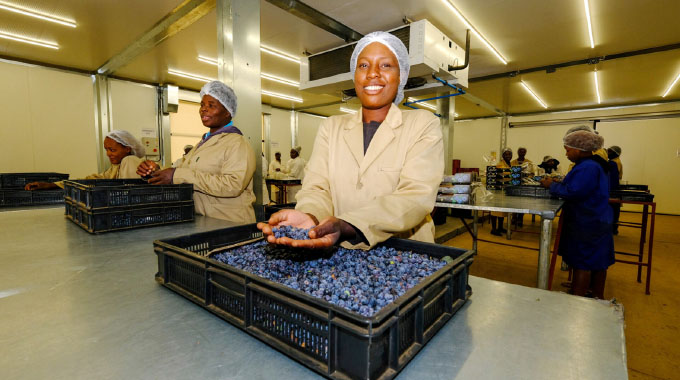
Tina Nleya
AS 2026 begins, Zimbabwe’s agricultural sector stood as one of the strongest pillars underpinning national economic recovery last year.
After a difficult 2023/24 season marked by the El Niño-induced drought, 2025 was defined by resilience, deliberate policy action and renewed confidence across agricultural markets.
Improved rainfall, targeted Government interventions and strengthened market coordination combined to restore production, revive exports and reinforce food security, placing agriculture firmly at the centre of Zimbabwe’s development agenda under Vision 2030 and the National Development Strategy 2 (NDS2).
The most immediate and visible turnaround occurred in staple crop production.
Maize, which had suffered severe yield losses during the drought, rebounded significantly in the 2024/25 season.
Improved rainfall distribution, together with continued adoption of climate-smart practices such as conservation agriculture and timely input distribution, enabled farmers to produce sufficient volumes to meet national consumption requirements.
This recovery allowed the country to rebuild strategic grain reserves and reduce reliance on imports, restoring market confidence for producers who had endured consecutive seasons of volatility.
Tobacco once again played a decisive role in anchoring agricultural growth.
The 2025 marketing season delivered a historic harvest exceeding 350 million kilogrammes, the highest output ever recorded in Zimbabwe.
Export earnings surpassed US$1 billion, providing critical foreign currency inflows and reinforcing rural livelihoods, particularly among smallholder farmers operating under contract farming arrangements.
Beyond volumes, the season demonstrated improved compliance with marketing regulations and quality standards, strengthening Zimbabwe’s reputation in international markets.
Horticulture emerged as one of the most dynamic growth areas in 2025, reflecting sustained investment in high-value, export-oriented value chains.
Blueberry production expanded rapidly, with output rising sharply compared to previous seasons.
A breakthrough was achieved through new market access arrangements that opened the Chinese market to Zimbabwean blueberries, positioning the country among a select group of global suppliers with preferential access.
This development significantly diversified export destinations beyond traditional European markets and underscored the importance of standards, traceability and phytosanitary compliance in accessing premium markets.
Floriculture also registered important gains during the year.
Zimbabwe successfully exported cut flowers to new destinations, including Asia, while overall export volumes and earnings showed steady growth.
Although still modest relative to historical highs, these improvements signal renewed investor confidence and align with national ambitions to reposition horticulture as a major foreign currency earner.
Together, blueberries, flowers, citrus and other horticultural products are increasingly contributing to diversification away from traditional commodities.
Perhaps the most strategic achievement of 2025 was the record-breaking winter wheat harvest. Production exceeded national consumption requirements, marking full wheat self-sufficiency for the first time in decades.
This milestone was achieved through deliberate expansion of irrigated hectarage, mechanisation support and improved access to inputs.
The wheat surplus not only reduced the national import bill but also opened opportunities for regional exports, reinforcing the role of agriculture in strengthening the balance of payments.
These production gains were underpinned by important policies and regulatory developments.
New statutory instruments regulating the importation of grain and oilseeds signalled a clear policy direction towards protecting domestic producers and strengthening structured markets.
By progressively requiring processors to source locally, the policy seeks to ensure that farmers benefit from improved market access while maintaining national food security.
Complementing this, the Agriculture Food Systems and Rural Transformation Strategy 2 (AFSRTS 2) articulated priorities around diversification, value addition, nutrition-sensitive agriculture and climate resilience, aligning the sector with Vision 2030’s goal of attaining upper middle-income status.
Internationally, Zimbabwe strengthened partnerships aimed at enhancing climate resilience and productivity.
Investments in irrigation rehabilitation and expansion, supported through bilateral cooperation, are expected to reduce dependence on rainfall and enable year-round production.
These initiatives are critical in the context of increasing climate variability and reinforce lessons from 2025, where irrigated crops consistently outperformed rain-fed systems.
Throughout the year, the Agricultural Marketing Authority played a central role in coordinating markets, enforcing regulations and promoting orderly agricultural trade.
Key interventions included farmer registration, monitoring of marketing arrangements, stakeholder engagement across value chains and implementation of new regulatory frameworks.
By strengthening market transparency and compliance, AMA contributed to restoring confidence among farmers, buyers and financiers.
Looking ahead to 2026, the outlook for Zimbabwe’s agricultural sector is cautiously optimistic.
Seasonal forecasts point to favourable rainfall, while ongoing investments in irrigation, mechanisation and market development provide a solid foundation for growth.
Farmers are encouraged to consolidate gains by aligning production with market demand, adopting climate-smart practices and participating in structured value chains.
At the same time, continued attention is required to manage risks associated with climate shocks, input costs and global market volatility.
In reflecting on 2025, one clear lesson emerges: when policy, production and markets move in alignment, agriculture can drive national recovery and long-term transformation.
The gains recorded this year demonstrate what is possible when farmers are supported, markets are regulated and opportunities are deliberately created.
As Zimbabwe looks to the year ahead, agriculture remains central not only to food security and exports, but to inclusive growth and sustainable development.
Tina Nleya is AMA’s marketing and public relations manager. She can be contacted on email: [email protected]. Word From The Market is a column produced by AMA to promote market-driven production.