


 Sundaymail Editor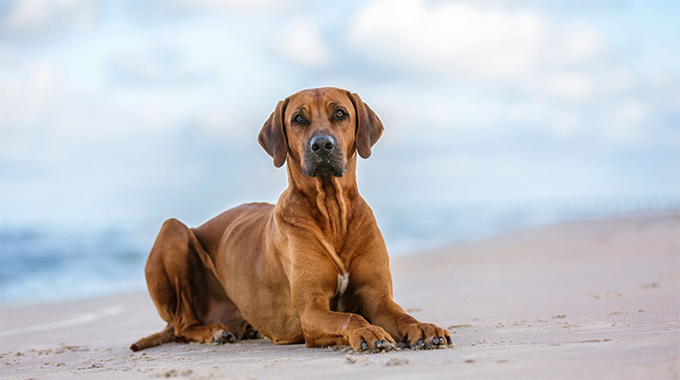
THE Rhodesian ridgeback is a dog breed developed in Rhodesia, now Zimbabwe.
Its European forebears can be traced to the early pioneers of the Cape Colony of Southern Africa, who crossed their dogs with the semi-domesticated ridged hunting dogs of the Khoikhoi.
It is called shumba imbwa in Shona because of its ability to keep a lion at bay while awaiting its master’s arrival to make the kill. These dogs were used by the Rhodesian Railways police to keep lions off the railway tracks.
They are agile, strong and have long bear-like claws.
The original breed standard was drafted by Francis Barnes in Bulawayo in 1922.
The Rhodesian ridgeback is easy to spot among a canine crowd: It is one with a tiny mohawk running down its spine.
It is largely considered an intelligent dog. The ridgeback is not known to be a barker and does not do well as an outdoor dog.
In the early 18th century, the first European settlers in Africa encountered the Khoikhoi people, who had dogs with an unusual characteristic: a ridge of hair along the spine. When the settlers wanted to develop an all-around dog that could hunt, guard livestock from predators, protect the family and withstand the harsh and changeable South African climate, they began breeding their own dogs – great danes, mastiffs, greyhounds, bloodhounds and others – with the native dogs of the Khoikhoi.
The result was a short-haired dog with the distinctive ridge and the courage to take on the king of beasts. The dogs became known as Rhodesian ridgebacks, after the country (now known as Zimbabwe) where they were developed.
Big-game hunters relied on them to distract lions. This allowed the hunter to take a shot. They also discovered that these canines made good bird dogs.
The Africa-savvy dogs were also tough enough and smart enough to avoid crocodiles and snakes.
Inventing good dogs and bad ones
Southern Rhodesia’s white settlers established kennel clubs in the first decade of colonial rule. Their mission was to teach Africans to keep fewer and “better” dogs, which meant imported “pure-bred” dogs.
Kennel clubs, animal welfare societies and city councils sustained Western regimes of dog-keeping up to independence in 1980. As middle-class Africans started moving into the (formerly whites-only) suburbs of Harare, so did “free-roaming dogs”.
This triggered complaints about malnourished, maltreated and misbehaving “bad dogs”.
Irate suburbanites spoke of “wretched animals” – which were not pets and were not walked on leashes, but did bark when they chose and freely roamed the leafy streets. They also complained of “mongrel bitches” introduced from rural areas, which threatened the purity of breed and sexual health of “well-bred male dogs”.
Such intense fears of “mixing” may have been a proxy for anxieties over racial and class order. Youthful dog breeders and owners associate owning particular dog breeds with being cosmopolitan and being part of modernity.
Young male African urbanites took up dog breeding as a new survival strategy.
They started breeding boerboels, German shepherds and rottweilers and sold them to security companies and anxious homeowners for as much as US$400. — Wires



 Bongani Ndlovu
 Online Reporter