dyton mupawaenda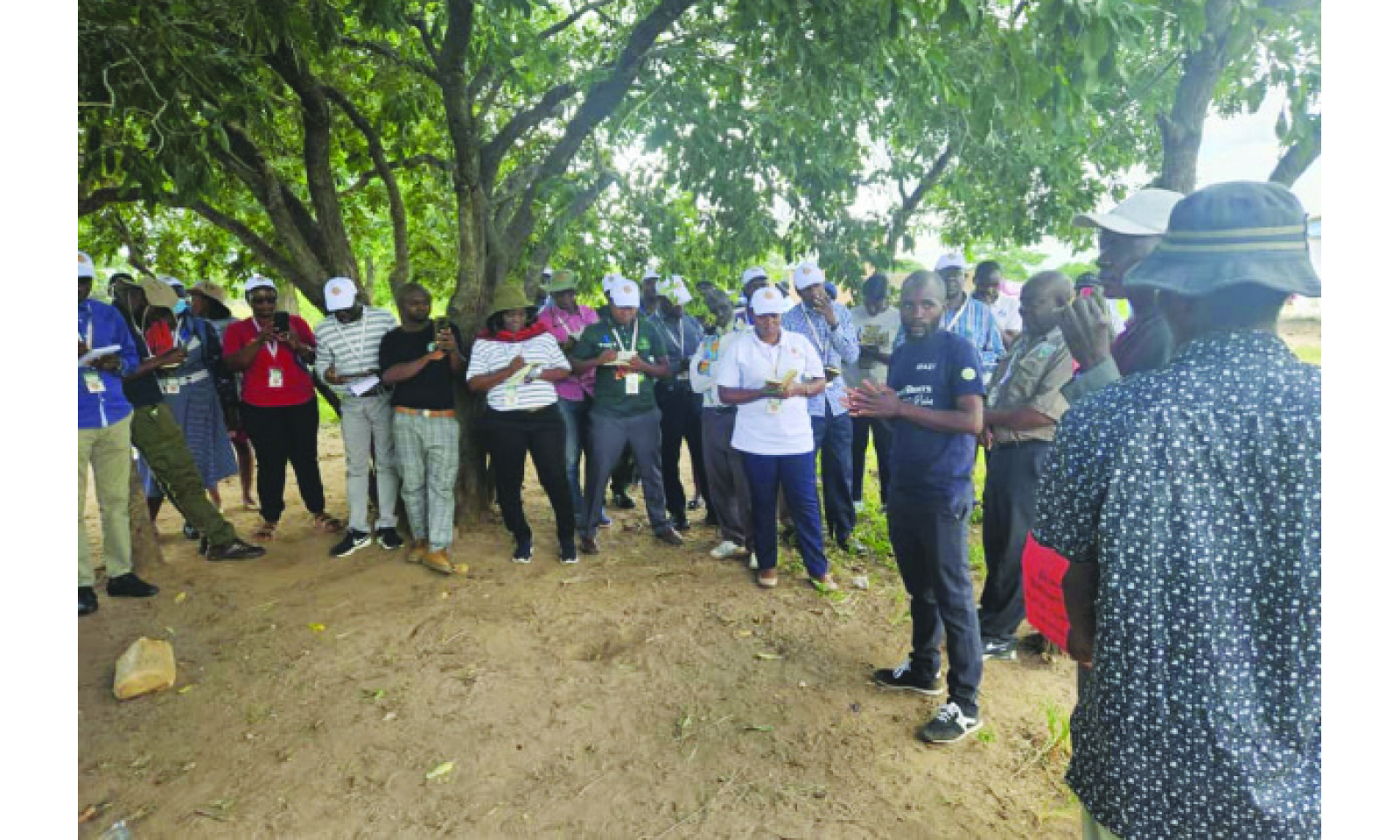
Sifelani Tsiko-Innovations Editor
For two days (March 25 – 26), Chimukoko Community Seed Bank in Mudzi, about 230km east of Harare featured a variety of engaging activities designed to stimulate interest and curiosity in all efforts to conserve indigenous crop varieties and increase farmers’ access to the seed.
The seed fair, which attracted smallholder farmers, plant breeders, gene bank curators, extension workers, academic researchers and members from different organisations working under the Dryland Sustainable Landscapes (DSL-IP) Community of Practices programme in six SADC countries, raised the country’s profile as a centre of excellence community seed banking.
Participants were drawn from Angola, Botswana, Malawi, Namibia, Tanzania and Zimbabwe under the DSL-IP Communities of Practice (CoP) programme coordinated by the Food and Agriculture Organisation of the United Nations (FAO) with support from the Global Environment Facility (GEF).
In many ways, the seed fair sought to promote the exchange of information between farmers and the programme stakeholders to enhance collective learning and expertise to realise true benefits of utilising agrobiodiversity effectively and efficiently within the SADC region.
“We are so excited to be here in Mudzi at Chimukoko Community Seed Bank where the Community Technology Development Organisation (CTDO), our implementing partner here in Zimbabwe is showcasing the importance of community seed banking in the conservation and utilisation of indigenous crop varieties,” said Winfred Nalyongo, regional coordinator for the Sustainable Forest Management Impact Programme on Dryland Sustainable Landscapes for the Southern Africa cluster in six countries.
“We are supporting this event to help other countries in the SADC region to learn from Zimbabwe’s successful community seed banking model. Zimbabwe has the experience and has been very successful in terms of operating community seed banks.
“We want our partners to learn a lot about the role of community seed banking systems given the devastating impact of climate change in our region.”
She said the DSL-IP programme is an important platform that offers people from the participating countries opportunities to learn more about seed exchange and agro-ecological practices in drought prone areas of Zimbabwe.
“We chose Zimbabwe as a lead country for community seed banking practices because of the vast experience the country has on this. Zimbabwe is our centre of excellence for community seed banking and we want other countries in the region to learn and initiate efforts to set up seed banks in various local communities in the region,” said Nalyongo.
Most of the seeds used by smallholder farmers in Mudzi are selected by them in their fields and constantly adapted to local conditions.
CTDO executive director, Andrew Mushita, said community seed banks guarantee the right to food and nutrition of rural communities in drought prone areas.
“We are so proud as Zimbabwe to showcase our Chimukoko Community Seed Bank to our partners from the region.
“This community seed bank, which was built by the CTDO with support of the local community, now serves as an important seed hub to showcase local community seed banking systems to farmers, plant breeders, gene bank curators, academic researchers, and other stakeholders from the SADC region,” Mushita said.
“Through learning and sharing experiences our farmers in the region can be more closely involved and empowered in the conservation and utilisation of agricultural biodiversity which is increasingly being lost.”
Community seed banks play a vital role to make sure that landraces are preserved for future usage, especially for seed improvement processes, such as participatory plant breeding, Mushita added.
“At this community seed bank, we bring scientists, farmers and other stakeholders to improve crop varieties, increase the conservation, improvement and sustainable use of plant genetic resources, essential for achieving food security and addressing nutritional requirements of present and future generations locally and nationally,” he said. “These Western varieties are not suitable and adaptable to local conditions. To fight the erosion of local seed varieties, it is important to set up more community seed banks.”
The Chimukoko Community Seed Bank has a storage room insulated to maintain relative room temperature ideal for seed storage, as well as a bulk seed storage room.
It holds more than 200 seed varieties, which include a rare collection of indigenous pearl millet, finger millet, sorghum, indigenous rice, okra, pumpkins, maize, groundnuts, beans, Bambara nuts, cowpeas, and a wide range of indigenous vegetables.
Mushita, a veteran agronomist and development expert, says recurrent droughts and climate change have put the country’s agricultural diversity at risk, a problem compounded by farmers abandoning their local varieties for new, high-yield, commercial seeds.
Dineo Gaborekwe, national project coordinator DSL –IP Botswana, said: “Coming here to this community seed bank in Zimbabwe will help us learn more about key aspects on how to set up community seed banks. In Botswana, we have not started yet, and I have learnt a lot of the important things that are required to set up a community seed bank.
“It has been an eye opener — on the importance of formalising community groups, having a constitution for CSBs, engaging the local community leadership and collaborating with key government agencies.
“Community consultation is vital and it promotes social cohesion as we are learning here in Zimbabwe.”
From the Zimbabwean experience, she said, the insights gained would help her roll out community seed banks in Botswana.
Apart from the community seed bank visit, regional partners also visited a farmer field school at Jumbe Primary School in Mudzi where they also learnt a lot on participatory plant breeding activities on sorghum and pearl millet.
Community seed banks are places where seeds are stored primarily to share, through seed swaps or other events. Farmers often donate seed to the community bank after a good harvest. When they don’t have enough seed for planting, they borrow from the seed bank.
When they grow plants in a season, they can return the seed plus an interest (in seed form) to help grow seed stocks in the community bank. Seeds are at the heart of agriculture and smallholder farmers plagued by hunger, poverty and insecurity can use seed banks to source seed at a lower cost.
Most traditional varieties and other wild species are being lost through genetic erosion, as farmers adopt Western varieties and cease growing the varieties they have nurtured for generations.
Eventually, they lose these varieties, leaving most crop and wild species threatened with extinction, as their habitats are destroyed by human disturbance.
CTDO and other partners are working to ensure the long-term preservation of crop seed biodiversity as a part of national, regional and global strategies for the conservation of crop genetic resources.
Agricultural experts say fewer crop species are feeding the world than 50 years ago, raising concerns about the resilience of the global food system.
They warn that loss of diversity means more people dependent on a few key crops, leaving them more exposed to harvest failures. Higher consumption of energy-dense crops could also contribute to a global rise in heart disease and diabetes, they added.
According to the UN Food and Agriculture Organisation, the diversity of cultivated crops declined by 75 percent during the 20th century and a third of today’s diversity could disappear by 2050.
Zimbabwe and other African countries are losing plant genetic material. Experts say plant genetic materials facing extinction in the region include labour-intensive crops such as Bambara, green gram, sesame, round potato (Zulu potato), and a wide-range of indigenous maize, sorghum and millet varieties.
Agricultural experts say the world’s agro-biodiversity is disappearing at an alarming rate, and for several major crops, up to 80-90 percent losses in variety over the past century have been reported.
Seed collections start at the community seed bank before they are moved to the Genetic Resources and Biotechnology Institute, formerly the National Gene Bank of Zimbabwe, and the SADC Plant Genetic Resource Centre in Zambia, which sends them to the global seed vault, which opened on the Svalbard archipelago between Norway and the North Pole in 2008.
The SADC Plant Genetic Resource Centre now holds more than 18 000 diverse crop and wild relative accessions as the bloc steps up efforts to conserve germplasm collections and to deal with problems associated with a changing and unpredictable climate.



 Online Reporter