

 Online Reporter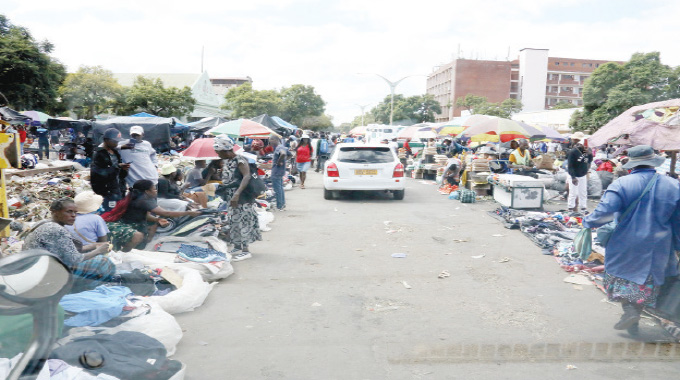
Tedious Ncube, Correspondent
ZIMBABWE’S economy is now officially larger than previously estimated, after the Zimbabwe National Statistics Agency (ZimStat) announced that the country’s Gross Domestic Product (GDP) has been rebased to US$44,4 billion for 2025, up from the earlier figure of US$35,2 billion. This upward revision reflects the significant role of the informal sector, which now accounts for approximately 76 percent of economic activity.
The informal sector encompasses a wide range of activities, from street vending — often seen as the face of informality in urban areas — to the real drivers of the economy: small-scale agriculture, artisanal mining, and micro-manufacturing, particularly prevalent in rural areas. Importantly, these sectors are informal but not illegal, and Government interventions have proven effective in boosting productivity and, crucially, in gradually drawing them into the formal economy. In recent years, the degree of informality in these sectors has reduced significantly, thanks to Government initiatives that have created strong linkages between informal actors and the state. Central to this has been incentivising formalisation and giving informal operators a stake in their own activities.
In rural Zimbabwe, agriculture is deeply woven into daily life, with over two million households engaged in informal farming. Historically, many of these households practised subsistence farming, but there has been a marked shift towards commercialisation, with families increasingly producing surplus for the market. This transition is evident in sectors such as tobacco and livestock, where informal farmers are gradually formalising their operations. Tobacco farming, in particular, stands out as a cornerstone of Zimbabwe’s agricultural success, supporting over 145 000 farmers — about 70 percent of whom are smallholders. These farmers, though often classified as informal, play a crucial role in the sector’s output.
Government initiatives such as Command Agriculture, Pfumvudza/Intwasa, the National Agricultural Policy Framework (NAPF), and the AgriTech Strategy, among others, have been instrumental in enhancing agricultural productivity by providing targeted support to informal sector players, fostering a more formalised and productive agricultural landscape. These programmes have enabled households to commercialise surplus produce, increasing outputs in sectors such as tobacco, wheat, and horticultural crops, and contributing substantially to GDP growth. Even smallholder farmers now trade their surplus locally and in urban markets. Travelling past growth points, one can observe the influx of rural produce — tomatoes, cabbages, watermelons — clearly signalling a sharp rise in productivity and wealth creation.
Growth in agriculture has also had a spill-over effect on manufacturing. The oversupply of agro-products has created opportunities for agro-processing, while increased agricultural value has generated demand for custom-made equipment, packaging, and other inputs. Local markets now feature a growing number of locally manufactured goods, reflecting a positive trend towards industrialisation and value-addition. This demonstrates how informal rural activities are now stimulating broader economic development and employment creation beyond agriculture.
The mining sector has also experienced substantial growth, with significant investments in projects such as the Hwange Power Plant expansion (over US$1,5 billion) and the Manhize Steel Plant (over US$2 billion). These developments have enhanced production capacities and contributed directly to GDP growth. At the micro level, artisanal mining has flourished, with many miners now operating within the informal sector. Over the past five years, the reduction or removal of barriers to entry has facilitated this growth, increasing participation and daily output. Estimates suggest that over two million artisanal miners are actively contributing to the economy, generating substantial value from gold, chrome, and gemstone extraction, as well as stimulating local trade and service markets.
The biggest takeaway from this GDP increase is that Zimbabwe is on an upward trajectory, with promising prospects of attaining upper-middle-income status by 2030. An upper-middle-income economy is defined as one where Gross National Income (GNI) per capita exceeds roughly US$4 500-US$5 500. Zimbabwe’s per capita income stands at about US$3 000, with projections suggesting it could surpass US$5 000 by 2030. However, it is important to note that these figures do not mean each person holds US$3 000 in cash, as some commentators might suggest. That interpretation is misleading. GDP growth reflects economic capacity, not cash in pockets, giving the Government more fiscal space, improving debt sustainability, and enhancing the country’s ability to attract investment.
For example, the larger GDP now allows for an increased national budget, as the budget-to-GDP ratio rises. It also improves Zimbabwe’s debt-to-GDP ratio, which drops from around 60 percent to 45 percent, easing pressure on fiscal authorities and facilitating debt restructuring and access to development finance. This underscores the broader benefits of growth beyond individual cash holdings.
The substantial contribution of the informal sector to Zimbabwe’s GDP is a testament to the resilience, ingenuity, and productivity of its people. Rather than viewing informality as a challenge, the government recognises it as a cornerstone of economic activity. With a more accurate understanding of the sector’s size and impact, the path forward is clear: increased support, incentives for formalisation, and policies that integrate informal enterprises into the broader economy. This approach strengthens the economy and ensures that the benefits of growth are widely shared, paving the way for a more inclusive and prosperous future.
Tedious Ncube is a public policy analyst and PhD candidate.




 derick.khumalo