

 Online Reporter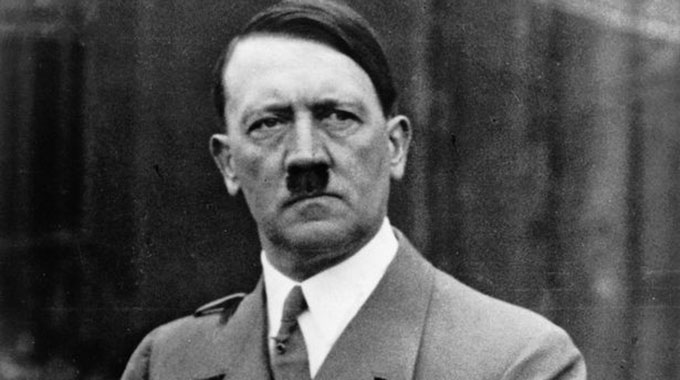
UK GUARDIAN — Australia has formally recognised Palestine as a sovereign and independent state, marking a significant shift in its foreign policy amid the ongoing Israel-Gaza conflict.
Prime Minister Anthony Albanese moved ahead with formal recognition, effective from yesterday, in coordination with similar declarations by UK Prime Minister Keir Starmer and Canadian Prime Minister Mark Carney.
The move is intended to inject fresh momentum into efforts for a two-state solution in the Middle East, including a ceasefire in Gaza and the release of hostages taken during the October 7, 2023 attacks orchestrated by Hamas.
In August, Australia announced it would join the international initiative led by France, a decision that drew sharp criticism from Israel’s leader Benjamin Netanyahu and threats of possible retribution from US President Donald Trump.
Albanese’s announcement came after his arrival in New York for the UN General Assembly and a major conference on a two-state solution to the Israel-Hamas conflict this week.
Albanese stated that Australia recognised “the legitimate and long-held aspirations of the people of Palestine to a state of their own”. The establishment of an embassy and active diplomatic relations will follow once the Palestinian Authority meets reform commitments sought by the international community.
These include recognition of Israel’s right to exist, commitments to hold democratic elections, and significant reforms to finance, governance, and education.
Governments recognising Palestine have insisted that Hamas must have no role in any future Palestinian state.
Albanese and Foreign Affairs Minister Penny Wong emphasised that Trump’s leadership was vital to securing “a credible peace plan”. They said the White House and the Arab League could play key roles in the reconstruction of Gaza and in guaranteeing Israel’s security.
“Australia will continue to work with our international partners to help build on today’s act of recognition and to bring the Middle East closer to the lasting peace and security that is the hope, and the right, of all humanity,” the pair said in a statement.
Trump, who opposes recognition and has already threatened retaliation against Canada, is expected to be a prominent presence in New York this week. Albanese is seeking his first face-to-face meeting with the president, even as a group of 25 of Trump’s close allies warned that Australia’s recognition of Palestine could trigger “punitive measures” from the US.
The group, including Trump loyalists Ted Cruz of Texas and Elise Stefanik of New York, wrote to Albanese, Starmer, Carney, and French President Emmanuel Macron at the weekend, urging them to reconsider.
Meanwhile, Israel’s government finds itself increasingly isolated on the world stage, particularly over its latest military offensive targeting Gaza City. The continued expansion of Israeli settlements in the occupied West Bank has also drawn international condemnation.
A United Nations independent international commission of inquiry found last week that genocide is occurring in Gaza. The report accused Netanyahu and other senior Israeli leaders of incitement to genocide. Israel’s foreign ministry categorically rejected the findings and called for the commission’s abolition.
There is currently no timeline for the International Court of Justice hearing into Israel’s compliance with the international convention on genocide, though observers expect it is unlikely to take place before 2027.
Netanyahu has labelled Albanese a “weak” leader over the move towards recognition of Palestine, claiming the Australian prime minister has “forever tarnished” his reputation. The hardline Israeli leader argued that recognition was wrong, stating that Hamas had used its power “for murder, pillage and monstrous crimes” and must not be rewarded. He described Australia’s decision as “appeasement” and even compared it to Adolf Hitler’s invasion of Czechoslovakia in 1938.
Albanese has long been a vocal supporter of Palestinian statehood, with Labour’s national platform calling for recognition to be a priority for Australian governments.
The White House has moved to block senior Palestinian representatives from travelling to the UN this week for talks, denying members of the delegation visas.
Opposition leader Sussan Ley criticised Labour for extending recognition of Palestine before crucial conditions had been met.
“Hamas still holds Israeli hostages, seized during the terrorist raids of 7 October 2023. Hamas is still in power in Gaza and continues to attack Israel. The Palestinian people can see no hope of democratic self-governance while Hamas is in power,” she said. — Guardian UK


 derick.khumalo