Online Reporter
Business Reporter
ZIMBABWE’S foreign currency reserves have climbed to US$900 million, buoyed by a US$2.2 billion surge in forex inflows, according to the Reserve Bank of Zimbabwe (RBZ). The announcement followed the bank’s latest Monetary Policy Committee (MPC) meeting held on Friday.
This growth brings the reserves within reach of the symbolic US$1 billion threshold, which many economists regard as pivotal for underpinning currency and financial stability.
The country is building its foreign currency reserves to support the gold-backed ZiG currency, maintain exchange rate stability, service international debt obligations, cushion against global economic shocks, and enhance credibility with lenders and investors.
Reserves enable the RBZ to intervene strategically in the foreign exchange market, helping to stabilise the exchange rate and manage inflationary pressures. They also serve as a crucial buffer against global disruptions such as recessions, pandemics, or commodity price volatility, which can constrain foreign currency availability for importers.
According to the RBZ, total foreign currency inflows reached US$10.4 billion by August 31, up from US$8.2 billion over the same period in 2024. The 26.8 percent increase was largely driven by robust export earnings, particularly from gold and tobacco.
RBZ Governor Dr John Mushayavanhu stated after the MPC meeting that the improved inflows had strengthened the current account balance — defined as the difference between forex inflows and outflows — which is projected to close the year at US$1.3 billion, up from approximately US$500 million last year.
“The combination of prudent money supply management, increased inflows, and reserve accumulation has resulted in continued price and exchange rate stability,” said Dr Mushayavanhu.
Economist Dr Prosper Chitambara said the growing reserves signalled increasing resilience in Zimbabwe’s external sector.

“For years, Zimbabwe grappled with minimal or non-existent reserves, leaving the economy exposed to external shocks. Surpassing the US$900 million mark is more than symbolic — it bolsters confidence in the exchange rate regime and supports trade finance,” he said.
The MPC also highlighted strong domestic economic growth, with second-quarter gross domestic product estimated to have expanded by 11 percent year-on-year, driven by agriculture and mining.
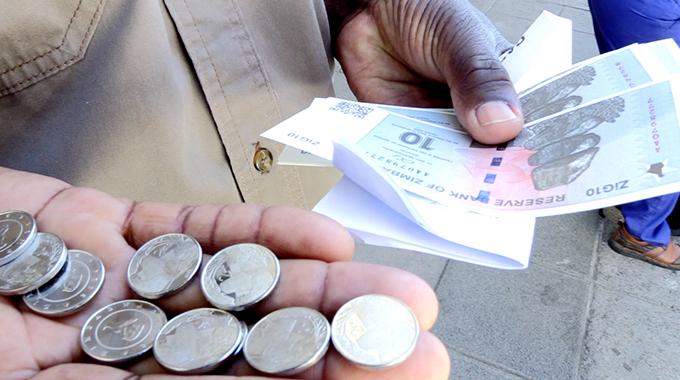
Foreign currency buffers have played a key role in stabilising the ZiG currency, introduced in April last year to replace the inflation-eroded Zimbabwe dollar. Since then, month-on-month inflation has averaged just 0.6 percent between February and August.
Annual inflation, which began to ease in August, is projected to fall towards 20 percent by year-end — well below the bank’s initial target of 30 percent.
However, banker Mr Raymond Madziva cautioned that while the forex reserves position is encouraging, it remains modest compared with regional benchmarks.
“To sustain confidence, reserves should ideally cover at least three months’ worth of imports. At current levels, Zimbabwe is heading in the right direction, but further diversification of exports and increased foreign investment inflows are still needed,” Mr Madziva said.
Reflecting this outlook, the MPC maintained its benchmark Bank Policy Rate at 35 percent. The statutory reserve requirement rate was also left unchanged at 15 percent for savings and time deposits, and 30 percent for demand and call deposits in both local and foreign currency.
Market participants note that the improved forex position has eased pressure on the interbank market, particularly the Willing Buyer Willing Seller system. The stronger current account surplus is also contributing to more stable liquidity conditions.
Nonetheless, the MPC flagged potential risks stemming from global economic uncertainties and emphasised the importance of maintaining monetary discipline through the next quarter.
Economic analysts believe the combination of stronger inflows, subdued inflation, and stable policy rates reinforces the RBZ’s commitment to sustaining currency stability.
“The next step,” Dr Chitambara added, “is to leverage these reserves to catalyse investment in infrastructure and industry, so that stability translates into durable growth.”