Online Reporter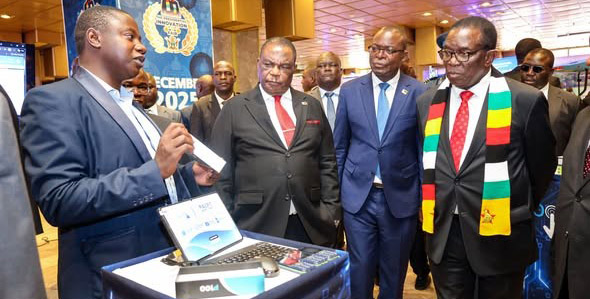
Lloyd Makonya
Correspondent
LAST week marked a defining moment in Zimbabwe’s innovation landscape, as the country hosted two major high-impact technology and innovation platforms that collectively underscored a clear national shift towards an innovation-led development model.
The third Presidential Innovation Fair and the Econet E-Novate Expo did more than showcase inventions; they signalled Zimbabwe’s growing confidence in innovation as a strategic driver of economic growth, industrialisation and global competitiveness.
The 3rd Presidential Innovation Fair, hosted in Harare, brought together the country’s most advanced innovations and technologies developed under the Heritage-Based Education 5.0 policy framework.
Running under the theme: “Innovation for economic growth: From prototype to commercialisation”, the Fair showcased cutting-edge inventions from universities, polytechnics, individual innovators and start-ups, many of which demonstrated strong potential for industrial uptake and market scalability.
According to the Ministry of Higher and Tertiary Education, Innovation, Science and Technology Development, the Fair celebrated Zimbabwe’s rapidly maturing innovation ecosystem while highlighting the commercial promise of home-grown solutions.
The official opening of the Fair by President Mnangagwa, who also presented prizes to outstanding innovators, was a powerful demonstration of top-level political will and leadership support as the country accelerates implementation of the National Development Strategy (NDS2).
Beyond the ceremonial significance, the Fair provided an interactive platform where the media and the public engaged directly with innovators, explored exhibitions, witnessed live demonstrations and experienced first-hand the country’s most promising scientific and technological breakthroughs.
Permanent Secretary for Higher and Tertiary Education, Innovation, Science and Technology Development, Professor Fanuel Tagwira, aptly described the Fair as a reflection of Government’s commitment to building an innovation-driven economy aligned with Vision 2030. He noted that innovation must translate into tangible economic value through job creation, industrial growth and enhanced productivity.
Earlier in the same week, the Econet E-Novate Expo further reinforced this innovation momentum.
As an annual flagship technology and innovation event hosted by Econet Wireless Zimbabwe, the Expo brought together technology professionals, business leaders and innovators to interrogate emerging technologies and their role in driving Zimbabwe’s digital transformation.
Held under the theme: “Future Ready Tech-Synergies”, the Expo explored frontier technologies such as Artificial Intelligence, Robotics, Virtual Reality, Augmented Reality and 5G, while fostering dialogue on how human creativity and technology can jointly shape the future economy.
Taken together, these two platforms reflect a deliberate and increasingly coordinated national effort to reposition Zimbabwe as a knowledge-based, innovation-driven economy. This trajectory mirrors the development pathways of countries such as China and South Korea, which transformed their economies through intentional, long-term investments in innovation systems. In both cases, the State played a catalytic role by funding research and development, strengthening university-industry linkages, incentivising technology commercialisation and embedding innovation within national industrial policies. Crucially, these countries also built robust intellectual property (IP) regimes that protected innovators, attracted investment and enabled the monetisation of ideas.
For Zimbabwe, the lesson is clear: innovation thrives where creativity is protected, rewarded and commercialised. As the country continues to nurture its innovation ecosystem, strengthening intellectual property policies, regulatory frameworks and enforcement mechanisms becomes critical.
Effective IP protection, not only safeguards inventors and institutions, but also builds confidence among investors, industry players and international partners. Without such protection, innovations risk remaining at prototype stage, vulnerable to misappropriation and unable to attract the capital required for scale-up.
Zimbabwe has already made commendable progress through Education 5.0, innovation hubs and increased public-private collaboration. The next frontier lies in deepening IP awareness, streamlining patenting and registration processes, capacitating institutions responsible for IP administration and ensuring that innovators can translate intellectual capital into sustainable economic value.
The convergence of the Presidential Innovation Fair and the Econet E-Novate Expo within a single week was therefore not coincidental, it was symbolic. It reflected a country in transition, steadily aligning policy, leadership, academia and industry around a shared vision that innovation is no longer optional, but central to Zimbabwe’s economic future.
If supported by strong intellectual property protection and consistent investment, innovation can indeed become one of Zimbabwe’s most powerful engines for inclusive growth, industrial renewal and long-term prosperity.