Online Reporter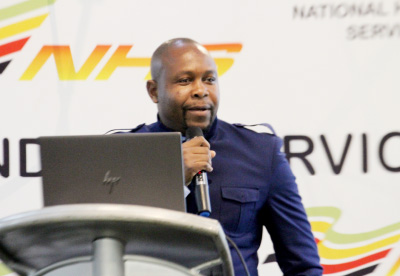
Sikhulekelani Moyo, Zimpapers Business Hub
THE Zimbabwe Dry Port in Namibia recorded 6,1 million Namibian dollars (N$) (US$343 418) profit during the first half of the year, attributable to controlled expenditure and high revenue during the period under review.
A dry port, sometimes referred to as an inland port, is an inland intermodal terminal, directly connected by road or rail to a seaport, operating as a centre for the transshipment of sea cargo to inland destinations.
President Emmerson Mnangagwa officially opened the dry port on July 26, 2019.
Built by the National Handling Services at Walvis Bay, the dry port was built on approximately 19 000 square metres and leased to the country by Namibia for 50 years.
Zimbabwe established the dry port in Walvis Bay to create a strategic and cost-effective gateway to the Atlantic Ocean for its imports and exports, facilitating trade with Western Africa, Europe and the Americas
In his presentation during the National Handling Services’ mid-year strategic review, Zimbabwe Dry Port general manager Mr Theodore Chinyanga said the financial performance of the facility was improving on controlled operation expenses.
The organisation is working on operationalising the dry port by the end of this year.
Mr Chinyanga said the dry port was currently getting significant business from an oil and gas company, which is occupying much of the space for storage.
“For the first quarter, we recorded N$6,1 million revenue and in the second quarter we recorded N$5,5 million,” said Mr Chinyanga.
“We largely get our revenue coming from a company called Afrishore, which is into oil and gas, and what we are doing is that the equipment that they use in drilling is the one that is covering about 15 000 square metres of our 18 384 square metre space.”
According to Mr Chinyanga, the Zimbabwe Dry Port recorded a cumulative N$11,7 million in revenue during the first-half of 2025, while expenditure totalled N$5,5, resulting in the N$6,1 million profit.
Mr Chinyanga said the dry port enhanced its performance during the period, which saw the facility surpass its targeted revenue for the period.
However, he said the anchor tenant, Afrishore, initially expected to vacate its rented space at the end of July 2025, had requested a demobilisation extension to remain on site until December 31, 2025.
Meanwhile, the dry port is working on a N$2 million transit bond to be funded from its cash reserves. Mr Chinyanga said the bank required an updated company registry reflecting current shareholders and directors as part of the funding guarantee.
When the anchor tenant vacates the premises, Zimbabwe Dry Port will appoint a clearing agent to operate the transit bond in compliance with customs regulations that prohibit dry ports from operating as clearing agents.
Mr Chinyanga said the Zimbabwe Dry Port purchased an off-loading ramp, which is already in use and generating revenue for the company.
“Following the completion of the 2024 external audit, the dry port now intends to engage banks to seek funding for the acquisition of operational equipment. Dry port intends to use proceeds from the above-mentioned projects to settle its loan facilities with the bank.
“The dry port is appealing to the Government of Zimbabwe that the dry port be the priority of importation for all the ministries and all State-owned enterprises,” Mr Chinyanga said.
He said that through the Ministry of Foreign Affairs and International Trade, the Zimbabwe Dry Port engaged ZimTrade to explore collaboration on fast-moving consumer goods trade and equipment procurement.
A project proposal and MoU were drafted to formalise this partnership.
He said the dry port engaged with the Central Mechanical and Equipment Department (CMED) to collaborate in the acquisition of equipment for the dry port and is awaiting the expression of interest.
In an interview, NHS board chairperson said Advocate Godwin Nyengedza said, “We really have an ambitious project that we are running in Walvies Bay where we would want to have funding in terms of operationalising the Zimbabwe’s Dry Port.”
“We have other many state enterprises that would want to come in under the able leadership of our Minister, the Transport and Infrastructural Development, Minister Felix Mhona.,
“We are quite hopeful on that side and we are also looking forward to partnering the private sector where there are quite a few entities knocking at our door and come this time next year we would have managed to operationalide the Walvis Bay Dry Port.”