Chronicle Editor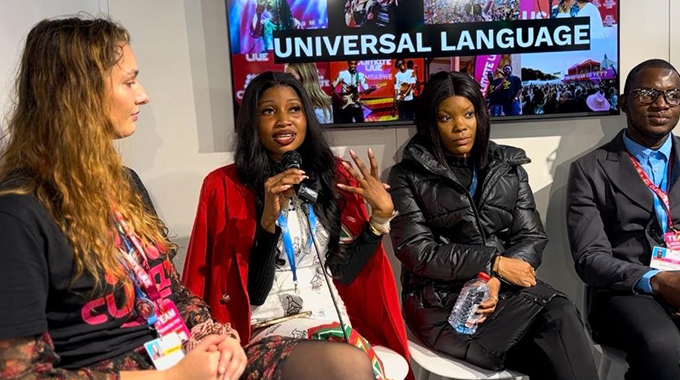
Leonard Ncube – [email protected]
As the curtain falls on the 29th United Nations Framework Convention on Climate Change (COP29) this Friday, with a massive call for every party to step up, pick up the pace, and deliver, the participation of young leaders has injected renewed energy and hope into the global climate discussions.
One such dynamic young leader is Miss Nozinhle Evelyn Gumede (22), a Bulawayo climate action champion who has positioned herself as a change advocate through her organisation, Mainah Trust.
Her first appearance at these climate meetings was COP27 in Egypt in 2022, where she endeared herself to the world, which led to her role as coordinator for Zimbabwe’s Climate Live at COP28 in Dubai. Climate Live is a youth-led initiative with a presence in over 40 countries worldwide, including Zimbabwe and its SADC neighbours. It featured a pavilion where young people used music to communicate the climate action message to the world.
COP29, which started on 11 November, will end today, 22 November, in Baku, Azerbaijan.
An accredited Zimbabwe Youth Delegate and founder of Mainah Trust, Miss Gumede has left an unforgettable mark on this year’s conference. She spoke at a series of high-level engagements, including panel discussions and negotiations, representing Zimbabwean youth at the event.
One of her standout moments was her contribution to a Climate Live Panel Discussion, where the Bulawayo-born activist articulated the urgency of youth inclusion in climate processes.
Her interventions underscored the essential role of youth in driving adaptive strategies and advocating for equitable climate finance.
“We are not just participants, we are stakeholders in the climate crisis. Young people bring innovative ideas and ground-level perspectives to solutions,” she said.
Slowly growing into a negotiator, Miss Gumede closely followed pivotal discussions on the Global Stocktake and Adaptation, which was the cornerstone of COP29 as states assessed progress made since the Paris Agreement.

Miss Gumede emphasised the significance of the global stocktake to developing nations like Zimbabwe, where adaptation is crucial for building climate resilience.
“Adaptation is not an afterthought; it’s a lifeline for communities in Zimbabwe and across the Global South. We need urgent, grant-based funding and tailored solutions that prioritise the most vulnerable,” she said.
Her insights on adaptation finance, informed by her work with rural farmers in the Matabeleland region, provided a practical perspective on why locally led and youth-driven initiatives matter.
She expressed gratitude to the Government of Zimbabwe for supporting youth participation at COP29.
In a follow-up interview, Miss Gumede said a sustainable future should not be without young people.
She implored governments and organisations to capacitate youth change-makers.
“Being in Baku was not just a personal milestone but a testament to Zimbabwe’s commitment to empowering its youth. Such opportunities allow us to amplify the voices of our communities on a global stage. We are ready to lead, but we need the platforms and trust to do so effectively,” she said.
“Climate action requires everyone at the table. Young voices are not just the future; they are the now, and we need integrated dialogue. Governments should invest in youth capacity-building and create pathways for sustained engagement in climate governance, ensuring that adaptation, loss and damage, and gender equity remain central to financing mechanisms, enabling young people to step forward, share stories, and demand accountability,” she added.
Miss Gumede has called for addressing climate change in Zimbabwe through education, sustainable agriculture, and renewable energy solutions, demonstrating the transformative potential of empowered youth in the fight against climate change.
The presence of young people at COP29 was a reminder that investing in young leaders can yield powerful results for global climate action.
In the build-up to COP29, Miss Gumede attended a three-day Don’t Gas Africa Strategy meeting in South Africa, where climate diplomats and activists from across Africa strategised against the expansion of the gas industry while promoting sustainable and equitable energy development.
They sought to formulate a comprehensive advocacy plan for renewable energy initiatives as the continent drives efforts towards reducing emissions and achieving net-zero targets as set by the Paris Agreement.
Africa is at a pivotal moment, with over 20,000 km of gas pipelines and approximately 30 gas extraction zones in various stages of planning and development. Much of the gas is destined for export, yet gas should be a transitional energy source for addressing climate change impacts.
This expansion threatens the global commitment to reduce global warming to 1.5°C, according to the event organisers, Powershift Africa and Don’t Gas Africa, in partnership with 350Africa.
-@ncubeleon


 Online Reporter