Chronicle Editor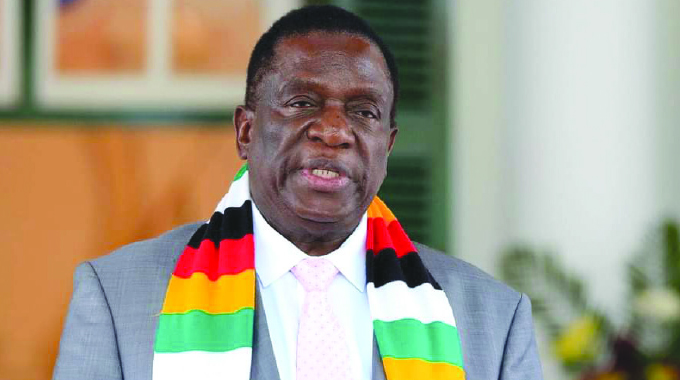
Sikhumbuzo Moyo, [email protected]
THE Government has asserted that the imposition of illegal sanctions by the United States and its allies had inadvertently spurred the country’s economic growth and innovation.
The illegal sanctions have forced Zimbabwe to reconsider its economic model by reducing its reliance on exports and foreign powers.
The embargo was imposed in the early 2000s in response to Zimbabwe’s land reform programme, which sought to redistribute land to the landless black majority that had been deprived of their right to their natural resources.
The sanctions impact extends far beyond Zimbabwe’s borders, prompting the 39th SADC Summit of Heads of State and Government held in Tanzania in August 2019 to declare every October 25 as a day of solidarity against these illegal sanctions and to call for their unconditional removal.
This year’s Anti-Sanctions Day theme is “Embracing Innovation Towards Vision 2030: The Relentless Fight Against Illegal Sanctions”.

Despite these pressures, Zimbabwe has refused to surrender and has instead embraced innovation to achieve its Vision 2030 goal of becoming a prosperous nation. Through the Ministry of Higher and Tertiary Education, Science and Technology Development’s Heritage-Based Education 5.0 policy adopted in 2018, the country now seeks to produce graduates who solve national challenges, rather than being job seekers for foreign-owned businesses.
This five-mission model of teaching, research, community service, innovation, and industrialisation expects institutions of higher learning to lead in research and innovation in the utilisation of local resources to promote national development.
President Mnangagwa envisions a knowledge-driven economy by 2025 by transitioning from traditional modes of learning to innovation-led.

The President wants to see higher and tertiary education institutions playing a more significant role in national development and providing the essential knowledge and skills needed for the production of quality goods and services for the industrialisation and modernisation of Zimbabwe.
The National Development Strategy 1 (NDS1) outlines these goals to guide Zimbabwe in achieving its mission to modernise the nation.
“We continue to call for the unconditional removal of these illegal sanctions for the simple reason that they are illegal, politically biased, and never targeted as claimed by those behind them. However, we take pride as a country that the sanctions have actually helped us not only to think outside the box in terms of being self-sustaining, but also to reduce our export bill,” said Deputy Minister of Higher and Tertiary Education, Science and Technology Development, Simelisizwe Sibanda.
Deputy Minister Sibanda said the Second Republic under President Mnangagwa, has taken a deliberate stance of empowering young and innovative Zimbabweans at the country’s State Universities and colleges by establishing think tank departments known as innovation hubs.
The President directed the Ministry of Higher and Tertiary Education, Innovation, Science and Technology Development to engage with all its universities, polytechnics, industrial training colleges, industry, and commerce to inform the nation on the status and needs of the human capital development sector.
The ministry subsequently ratified the Higher and Tertiary Education Doctrine Framework, an evidence-based framework consciously developed to reconfigure the national educational design from one centred on teaching, research, and community service to one anchored on a Heritage-Based Education 5.0.
The philosophy behind the model is to contribute to Zimbabwe’s national strategic intent of attaining the status of an upper-middle-income economy by 2030 through the production of tangible goods and services.

“For a country to prosper, higher education institutions have a pivotal role to play. Our Government has created space for young people to come up with ideas, and as Government, we administratively, socially, and even politically support them as we move towards achieving Vision 2030, that of an upper-middle-income economy.
“Make no mistake, we are well on course to achieving that, regardless of these illegal sanctions which we continue calling for their unconditional removal; a position fully supported by all progressive-minded allies. Asibuyeli emuva,” said Deputy Minister Sibanda.
He argued that the sanctions have created a challenging environment that has necessitated a shift towards self-sufficiency and local production. This, in turn, has led to the development of new industries and the promotion of domestic entrepreneurship.
Writing for our sister paper, The Herald, Mr Tapiwa Muruviwa, said the country’s internal politics from 2000 was pigeon-holed as the period of Zimbabwe’s defiance to neo-liberalism.
He said the land reform exercise was politicised and demonised by the US and its allies, and the country’s financial assistance from international financial institutions immediately ceased, leading to the breakdown of relations with the US and the West.
Sanctions on Zimbabwe were enacted by the US through the Zimbabwe Democracy and Economic Recovery Act (Zidera). The US Congress put in place restrictive measures and withheld all the financial funding that was previously provided by the European Union (EU) to Zimbabwe.
“To counter sanctions, the key idea that has been evolving over the years is the paradigm of “engagement and re-engagement”. Since assuming office in 2017, the Second Republic’s administration has called for re-engagement with Western powers. The change of language and conceptual approach is critical; it often creates constructive re-engagement platforms, which after so many years are showing potential for the removal of all sanctions.
“Most importantly, the availability of notable and encouraging headways, for instance, Zimbabwe’s possible readmission to the Commonwealth and its participation in multilateral summits, unequivocally makes an important case for Zimbabwe to persist on this pathway. Likewise, Zimbabwe can take advantage of President Mnangagwa’s SADC chairmanship position to garner collective support from African counterparts and allies across the world and amplify a coordinated diplomatic push for the removal of all sanctions,” said Mr Muruviwa.


 Online Reporter