Online Reporter
Zvamaida Murwira
Zimbabwe’s road revolution yesterday reached new heights following the commissioning of the Trabablas Interchange, which is not just a construction endeavour but a catalyst for progress, connectivity, and growth, heralding a new era of infrastructure development.
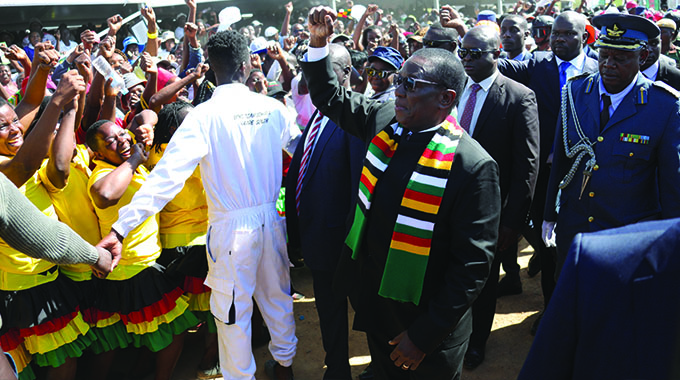
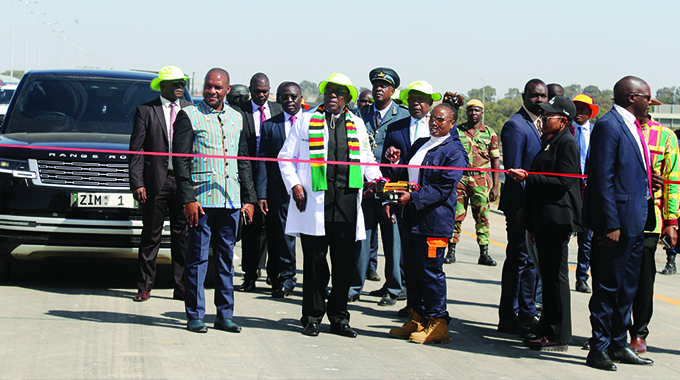
In a landmark event that underscored his commitment to modernising the country’s infrastructure, President Mnangagwa officially commissioned the Trabablas Interchange, marking a significant milestone in the nation’s ongoing efforts to enhance the road network and alleviate traffic congestion.

The Trabablas Interchange, strategically located at the Mbudzi roundabout, has been designed to address one of the most notorious traffic congestion points in the country by transforming the driving experience at this crucial point through organised traffic flow and reducing the risk of accidents caused by anxious drivers.
The interchange is expected to bring extensive economic benefits by enhancing regional connectivity, improving logistics and supply chain efficiency, attracting investment, stimulating local economies, boosting trade and tourism, and significantly contributing to Zimbabwe’s overall growth and prosperity.
President Mnangagwa, in his address during the commissioning ceremony, highlighted the importance of this project in the broader context of Zimbabwe’s infrastructure development.
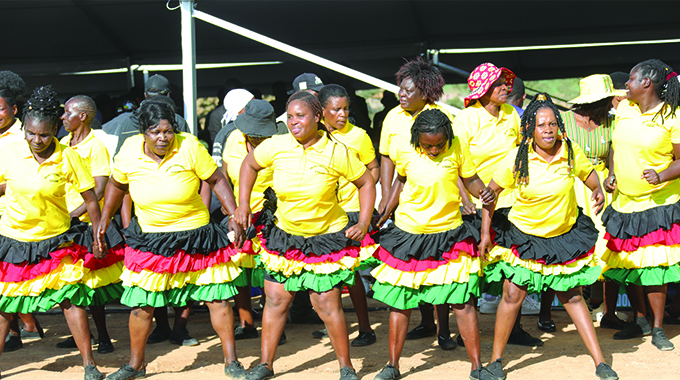
He said, through ongoing road infrastructure upgrades, the country will exploit its strategic geographical position, enhancing its role as a critical regional and continental trade link.
The seamless movement of people, goods, and services to boost integration, President Mnangagwa said, will be achieved through the use of local talent and resources, in line with the Second Republic’s mantra, “Nyika Inovakwa Nevene Vayo” (A country is built by its own people).
“Our unique geographical location positions Zimbabwe as a critical link between major markets, facilitating the movement of people, goods, and services. This is essential for advancing both regional and continental integration.
“Through the ‘Road Corridors Approach’, our efforts in upgrading road infrastructure are bearing fruit. The North-South Corridor, Beira Development Corridor, and Limpopo Corridor are the anchors of our connectivity as a land-linked and transit country. To this end, my Government is implementing a broad array of initiatives to reduce transit times.
“These include infrastructure such as the Trabablas Interchange, which lies along the North-South Corridor. Similarly, upgrades to the Harare-Beitbridge and Shurugwi-Mhandamabwe roads, among others, align with this vision. The construction of the Beitbridge-Bulawayo-Victoria Falls Road, Bulawayo-Nkayi Road, and Harare-Chirundu Road remains a priority. Additionally, my administration is modernising and streamlining customs procedures and border management,” said President Mnangagwa.
He commended the contractor, Tefoma, and the local workforce for completing the Trabablas Interchange using domestic resources and expertise.
“Your trust in our vision and willingness to partner with us is appreciated. I also applaud the engineers, planners, skilled artisans, construction workers, and all who dedicated their expertise and labour to bring this vision to life.
These abundant skills in our great motherland, Zimbabwe, should now be deployed for the modernisation of infrastructure across the entire SADC region and the African continent.
“Beyond its economic value, this project has created jobs and empowered local contractors, while also showcasing Zimbabwe’s engineering prowess. Over 2 000 workers, including youth and women, were directly employed on this project. Furthermore, the ripple effects on downstream industries were significant, with most materials sourced and manufactured locally,” said President Mnangagwa.
The President said the project was evidence that the ruling Zanu-PF party delivers on its promises.
“The Second Republic is decisively advancing the transformation of our national infrastructure, with benefits accruing to all sectors of the economy and improving the quality of life for our people. Zanu-PF promises, and Zanu-PF delivers. We are delivering. This is real — here in Zimbabwe, we have done it. All the ‘Doubting Thomases’ are invited to come and see. Let us be proud of who we are and what we can achieve,” he said.
He emphasised that infrastructure development is key to achieving Vision 2030, adding that national development priorities are mindful of the growing population, urbanisation, and increasing demand for quality services.
“In this regard, transport infrastructure was identified as one of the critical enablers for economic growth, development, industrialisation, and modernisation. It is also central to accessibility to goods and key services, leading to an overall improvement in the quality of life for our citizens,” he said.
President Mnangagwa noted that economic growth and increased activity in various sectors have placed pressure on roads, resulting in congestion, accidents, and frustrating delays.
“To address this, my Government developed a comprehensive, long-term strategy to transform our transport system to make it more efficient, sustainable, and people-centred. This multi-pronged approach focuses on improving existing infrastructure, upgrading public transport, and promoting behavioural change among road users and transport stakeholders.
“One project under this strategy was the construction of this state-of-the-art interchange. With its completion, we expect a transformation in travel, reduced congestion, and improved connectivity — not only for local transport but also along the North-South Corridor.”
He said the Trabablas Interchange is part of a broader Government plan to ease congestion in cities by widening major roads in central business districts and constructing appropriate interchanges at key intersections.
Two additional interchanges will be constructed at Simon Mazorodze and Willowvale Roads, and at Simon Mazorodze and Remembrance Drive.
“Additionally, four interchanges will be constructed at Mabvuku Junction, Harare Drive/Mutare Road, Harare Drive/Liberation Legacy Way, Nemakonde Way/Harare Drive, Sam Nujoma/Harare Drive, Westgate Traffic Circle, Kuwadzana Traffic Circle, and Churchill/Liberation Way. Nine junctions will be upgraded as part of the Joshua Nkomo Road (RGM International Airport Road) upgrade to grade-separated structures,” he said.
“In addition, smart traffic management systems are now in place and will be deployed to optimise traffic flow through intelligent systems. The rollout of these systems must be publicised to encourage greater discipline on our roads. These projects are expected to significantly improve Harare’s transport infrastructure and facilitate smoother traffic flow, contributing to economic growth,” the President said.
He urged ministries and Government departments to collaborate under the Whole-of-Government and Society Approach.
President Mnangagwa also commended local communities for their resilience during the construction period, acknowledging the disruptions to daily life, business, and travel.
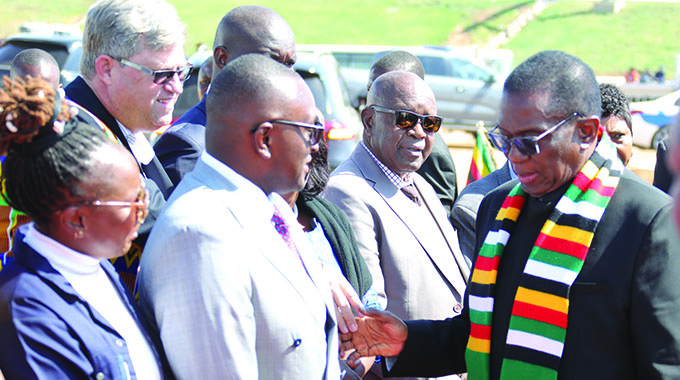
“Your co-operation, patience, and understanding have been instrumental in helping my Government bring this interchange to reality. It is my fervent hope that the benefits brought about by this project will serve as a lasting reward for your resilience and support. Let us continue to build our country, Zimbabwe, brick by brick, stone upon stone,” he said.
He called for the proper use and maintenance of the interchange.
“As we commission this interchange, let us also remember that infrastructure is only as good as how we maintain and utilise it. I urge all road users to adhere to traffic rules, drive responsibly, and take pride in this and other national assets across our country. I challenge us to protect all our vital infrastructure from vandalism so that it serves our people for generations to come,” said President Mnangagwa.
He revealed that the name “Trabablas” was derived from one of his revolutionary names during the liberation struggle — Trabablas Bricados Dzokerai Mabhunu.
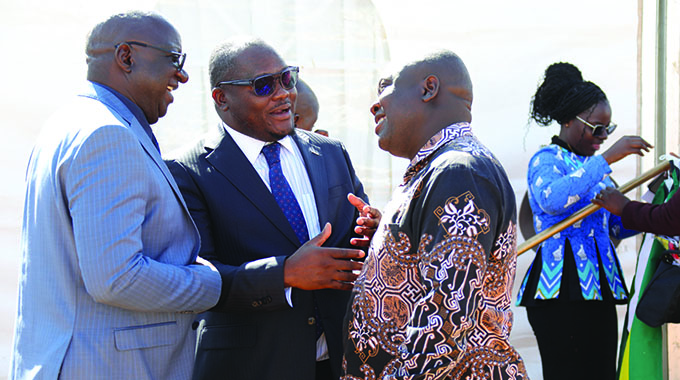
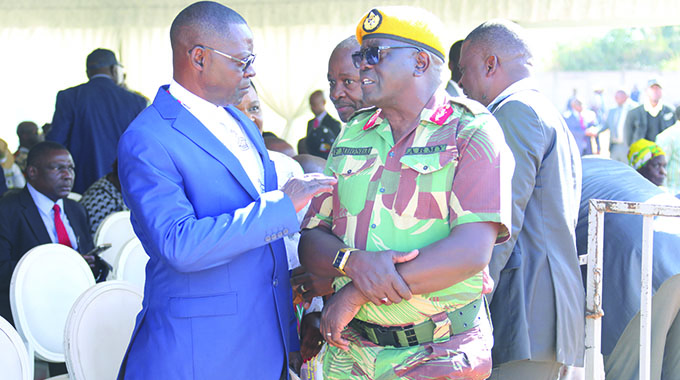
The event was attended by several Government Ministers, Members of Parliament, captains of industry, Zanu-PF Politburo members and lower structures, senior Government officials, and other dignitaries.