Vusumuzi Dube
Yolanda Mlilo, Sunday news reporter
THE Tobacco Industry and Marketing Board (Timb) has launched a new Sustainable Tobacco Programme (STP) to address environmental and social challenges within the tobacco industry.
The initiative aims to promote sustainable tobacco production, improve the livelihoods of tobacco farmers and minimise negative impacts on the environment.
Timb’s re-branding and commitment to sustainability come in response to concerns about deforestation and child labour within the industry.
The new programme will focus on implementing best agricultural practices, enhancing the socio-economic conditions of tobacco growers and their communities and eradicating harmful practices such as deforestation and child labour.
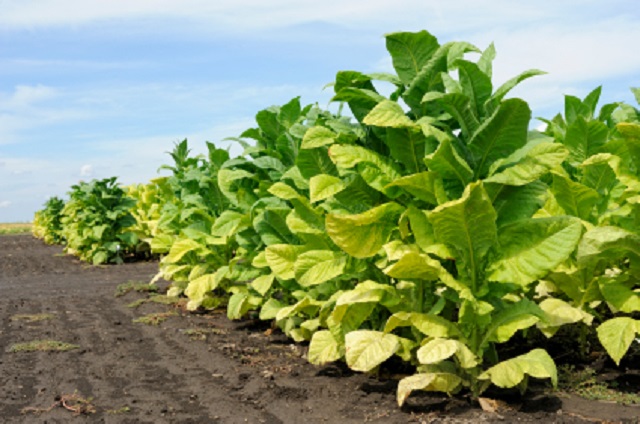
In a statement, Timb revealed that the STP will focus on the efficient production of quality tobacco, under conditions that limit the negative impact on the environment, in a manner that improves the socio-economic conditions of the people and their communities in the tobacco production areas.
The board emphasised their commitment to dealing with social and environmental issues caused by farming the gold leaf.
“Timb takes the environment and social issues associated with the production and marketing of tobacco very seriously. Timb recently re-branded to re-imagine, reinvent and rethink the tobacco value chain, to ensure sustainable tobacco production in Zimbabwe.
“The persistence of deforestation as well as child and forced labour in tobacco production is unacceptable. The need to curb these negative practices renewed Timb’s commitment to drive action to eliminate all negative practices in tobacco production,” reads the statement.
The board noted that there was a need to curb these negative practices through their renewed commitment to drive action to eliminate all negative practices in tobacco production.
“Sustainable tobacco production is an industry-wide initiative developed through the STP, an international initiative by tobacco merchants with other industry players to bring together best practices from across the industry and drive continuous improvement. It helps to drive standards in agricultural practices, environmental management, key social and human rights areas.
“Timb is also increasingly creating awareness on sustainability topics through empowerment-based on-site training of farmers and farmworkers. These trainings are aimed at enhancing the capabilities of farmers and farmworkers to produce good quality tobacco that is economically viable with reduced negative impact on the environment,” reads the statement.
Timb further urged tobacco growers to run their farming operations as proper businesses, noting that each grower should follow proper business practices where their ledger includes costs for labour and sustainable curing fuels.
The board said this dissuades tobacco growers from cutting down indigenous trees as well as employing child and forced labour in the fields.

“Every tobacco grower is also encouraged to establish a woodlot on their land, of at least 0.3 hectares of wood per every hectare of tobacco grown. This is because it takes more than fifteen years for an indigenous Musasa tree to reach reasonable maturity yet it only takes seven years for some eucalyptus tree varieties to reach the same stage,” reads the statement.
Meanwhile, Timb revealed that they were working with the Sustainable Afforestation Association (SAA) to establish eucalyptus plantations, with over 20 000 hectares of plantations having been established.
“Several other afforestation programs are ongoing so that in due time these woodlots are used to cure tobacco, preserving the national forests and the environment. In working towards curbing deforestation, tobacco contractors have also been mandated to give growers coal and wood from sustainable woodlots as curing fuels.
“It is the role of all stakeholders in the tobacco industry to promote sustainability as it will sufficiently improve workplace safety, health conditions, environmental conservation and income for farm workers, livelihoods and eventually support the national economy for positive growth,” reads the statement.


 Online Reporter