Judith Phiri / Theseus Shambare, Zimpapers Reporters
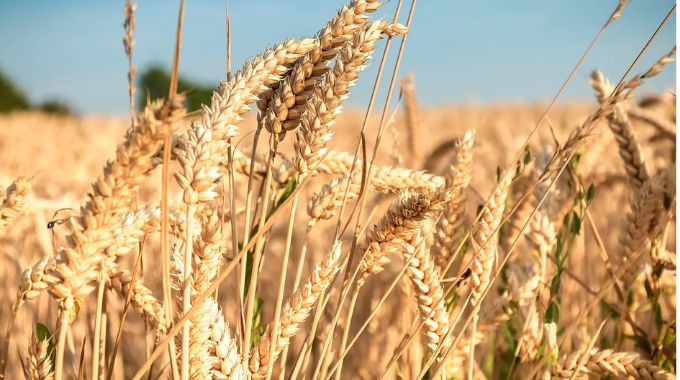
ZIMBABWE has achieved another record winter wheat harvest, with farmers having reaped 670 981 tonnes by last Wednesday, surpassing last year’s record of 640 000 tonnes and strengthening the country’s food security position ahead of an anticipated El Niño-affected 2026/2027 summer cropping season.
The latest harvest, which is about 31 000 tonnes above the previous record, consolidates Zimbabwe’s wheat self-sufficiency and provides a critical buffer against potential production shortfalls during the coming summer season.
The milestone comes as Government intensifies efforts to build the Strategic Grain Reserve (SGR) to 450 000 tonnes by December this year before increasing stocks to 600 000 tonnes by October 2027.
According to the Ministry of Agriculture, Mechanisation and Water Resources Development’s weekly harvesting report, 127 518 hectares of the 130 316ha planted had been harvested by November 4, representing about 98 percent of the national crop.
The national average yield stood at 5,3 tonnes per hectare.
Mashonaland West accounted for the largest share of production at 217 285 tonnes, followed by Mashonaland Central with 143 235 tonnes and Mashonaland East with 131 892 tonnes.
Permanent Secretary in the Ministry of Agriculture, Mechanisation and Water Resources Development Professor Obert Jiri said harvesting was nearing completion, with Government expecting the exercise to be concluded over the weekend before verification of the final figures.
“We have seen quite some good progress across the provinces as wheat is being harvested. So far we are almost there, almost 98 percent finished in terms of harvesting. We have done more than 127 000 hectares of the 130 000 hectares that we have planted.
“Most provinces are 99 point something percent. The biggest gap is obviously Mashonaland West where we still have some 2 000 or so hectares that need to be harvested. Some pockets in Masvingo, mainly these are irrigation schemes as well as some irrigation schemes in Matabeleland South and Matabeleland North, but these are now small hectares which need to be harvested,” he said.
Prof Jiri said the verification exercise would also account for wheat retained by smallholder farmers for household consumption, in addition to deliveries to the Grain Marketing Board (GMB) and private buyers. “So when we track this harvesting, certainly there are hectares which will be delivered to the off takers, GMB, private contractors, but there is also quite a large chunk of wheat which will be retained for use by smallholder farmers particularly.
“You will see that in Mashonaland East, in Manicaland where there are more of these smallholder farmers, there we need to really verify some of the harvested hectares,” he added.
The permanent secretary said favourable weather conditions and adequate harvesting machinery had helped farmers complete the exercise with minimal losses.
“So far, so good in terms of combining capacity, we were on top of the situation. In terms of the harvesting itself, we are good. As you know, it’s dry, so there have not been problems of wheat being rained out, except that which happened in Masvingo, which did not really damage a lot of the wheat.”
He said about 65 hectares affected by rains in Masvingo had been recovered, with no economically significant losses recorded.
Beyond the commercial farming sector, institutional farms operated by universities, prisons, the military and the Agricultural and Rural Development Authority (ARDA) are also contributing to national wheat production.
Prof Jiri said institutional farming had become an important component of Government’s production planning, with universities and other institutions increasingly producing wheat for their own consumption and processing it into flour and bread.
“We also have these institutional farms that are very critical in our production. So when we do our production planning, we certainly include the prison farms, army farms, ARDA estates and university farms. All those become a very critical cog in our wheat agenda.
“We know that institutions use the wheat for bread. Most of them, the University of Zimbabwe (UZ), for example, already have their wheat that they use to produce their own bread. So they produce their wheat, they mill it into flour and then they bake it into their own bread,” he said.
He said Government wanted more institutions to establish small milling plants and bakeries to process their own wheat, reduce costs and strengthen local value addition.
“That is what we expect most institutions to have, these small milling plants, these small bakeries to ensure that they utilise what they produce. We have seen the Marondera University of Science and Technology (MUST) also went big in producing wheat as well, and they are expanding in that regard.”
Prof Jiri also cited investment in water infrastructure by Midlands State University (MSU), which has constructed a nine-million-cubic-metre dam to support irrigation on 800 hectares.
Prison farms are also contributing to the programme, with Government providing inputs to support production for the food requirements of inmates, while surplus wheat is delivered to the GMB.
“The excess they then deliver to the Grain Marketing Board (GMB) and so far, that programme has worked on very well. Obviously, we work together with ARDA to ensure that the agronomic side, there is no challenge.
“With the prisons providing labour and the need for them to ensure that they get small milling plants and small bakeries to ensure they are able to cut down on costs of provision of food, that is what we want. We also take into account production at these institutions, which is critical as we go forward as Government.”
Zimbabwe Commercial Farmers Union (ZCFU) president Dr Shadreck Makombe attributed the exceptional performance to the availability of key agricultural production enablers, including reliable electricity and water supplies and improved access to mechanisation.
“We have experienced the best season ever this year. All the key drivers were available. No electricity outages, no water challenges. Mechanisation was on point, from tractor availability to combine harvesters,” he said.
Dr Makombe also cited the absence of major quelea bird infestations, saying reaction teams were prepared to respond to reported cases.
Strategic Grain Reserve 200ha Plus Club chairperson Mr Tichaona Mapfoche said Government support through ARDA had enabled contracted farmers to access the resources needed to sustain production.
“Having been contracted by ARDA, we had all the required resources in place to drive our season,” he said.
“There is no reason for us not delivering to the Grain Marketing Board.”
Prof Jiri said the record harvest would strengthen Government’s efforts to build strategic reserves and ensure adequate domestic supplies for millers and processors.
The Government is prioritising the use of locally produced wheat, with any surplus remaining after domestic requirements and strategic reserve needs potentially channelled to livestock feed manufacturers.
Proceeds from the sale of surplus wheat could then help finance the procurement of hard wheat used in premium bread production, supporting local agro-processing and reducing pressure on foreign currency.
“These developments demonstrate the growing resilience and productive capacity of our agriculture sector,” said Prof Jiri.
“We remain optimistic that the final harvest figures will further consolidate Zimbabwe’s position in wheat self-sufficiency.”
He added: “This approach will enable us to extract maximum value from our domestic harvest, support local agro-processing industries, strengthen livestock production and reduce unnecessary pressure on foreign currency.”