Online Reporter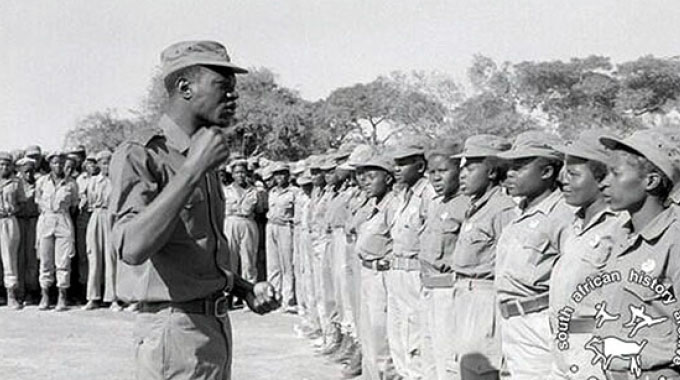
Anashe Mpamombe, Correspondent
As Zimbabwe prepares to commemorate Heroes Day, a sacred occasion that pays tribute to the men and women who sacrificed everything for our national independence, it is vital that we broaden our appreciation of what heroism truly means.
While the gallant liberation war fighters, who fought in the trenches of Mozambique, Zambia, and Tanzania remain central to our national story, there is also another generation less spoken of but equally heroic — that lit the very torch of resistance in the 1950s.
These were the young nationalists whose political bravery and ideological clarity set Zimbabwe on the long road to freedom.
Heroes Day will be commemorated at the iconic National Heroes Acre in Harare, where those accorded the highest national honours are interred.
There will be simultaneous celebrations across all provinces as the country reflects on its hard-won sovereignty. It is a time to salute the sacrifices of the past and to inspire the responsibilities of the present, especially among the youth.
The heroes of the armed struggle are rightly celebrated. Their courage, discipline and sacrifice remain unmatched. But they did not emerge from a vacuum. Their revolutionary consciousness was shaped by the early political movements that began with the formation of Zimbabwe’s first national political party in 1957, the Southern Rhodesian African National Congress (SRANC), later simply called the ANC.
This party was born out of unity between the City Youth League in Salisbury (now Harare) and the African National Council in Bulawayo. It was led by Dr Joshua Mqabuko Nkomo, a towering figure in the liberation narrative.
These young activists, many still in their twenties, rejected colonial rule, racist laws and land dispossession. Inspired by the independence of Ghana earlier that year, they called for African self-rule and restoration of land, dignity, and voice to the indigenous people.

They boldly challenged oppressive colonial policies such as the Land Husbandry Act of 1951, which forcibly reduced land sizes for Africans, limited the number of cattle they could own, and stripped chiefs of their authority. These policies sought to destroy African economic independence and cultural authority.
The youth resisted through protests, boycotts, and grassroots mobilisation. But in February 1959, the colonial regime responded with a state of emergency, banning the ANC under the Unlawful Organisations Act and arresting over 500 political leaders. Yet, like true patriots, the nationalists regrouped in January 1960 under the National Democratic Party (NDP), still led by Dr Nkomo.
They made an unequivocal demand for majority rule under universal suffrage. Their boldness shook the colonial establishment to its core.
Even as the NDP was banned in December 1961 following mass protests and violent crackdowns, the struggle continued with the formation of Zapu and, later in 1963, Zanu, under Reverend Ndabaningi Sithole, with leaders like Cdes Robert Mugabe, Leopold Takawira, and a young revolutionary named Emmerson Dambudzo Mnangagwa, who would one day become the country’s President.
These founding movements and the men and women who built them, laid the groundwork for the armed struggle. And when that phase came, it was informed not just by ideology but by deep spiritual conviction.

Our liberation war fighters knew that emotional upsets, betrayal, and hardship were part of the struggle, but they turned to African spirituality for strength. They believed in the guidance of ancestral spirits, most notably Mbuya Nehanda and Sekuru Kaguvi, and relied on certain animals, birds, taboos, and traditional medicines to guard them through the darkest hours in the bush.
This blend of political resolve and spiritual resilience makes the Zimbabwean liberation story truly unique and sacred.
Indeed, Heroes Day in Zimbabwe is no ordinary national holiday. It is a solemn moment that pays homage to those who fought and paved the way for a brighter future.
Zimbabwe’s heroes are not only revered within our borders; they stand as icons of freedom, resilience, and African pride across the continent.
Names like Joshua Nkomo, Herbert Chitepo, and Josiah Tongogara are celebrated across Africa, not just for their battlefield strategies, but for their unwavering commitment to justice and liberation. Their legacy continues to inspire freedom fighters and Pan-African thinkers from Cape to Cairo.
Today, Zanu-PF, the party that led Zimbabwe to independence in 1980, remains the custodian of that legacy. Under the leadership of President Mnangagwa, himself a liberation war veteran and long-time political detainee, the Second Republic is focused on empowering the youth, promoting national unity, and modernising the economy in line with Vision 2030.
As the President has often reminded us, “The youth are not tomorrow’s leaders; they are today’s builders.”
It is therefore essential that young Zimbabweans reconnect with the legacy of 1957. That generation did not wait for perfect conditions. They created conditions. They were arrested, beaten, and banned but never silenced.
Today’s youth have far greater access to education, digital tools, and economic platforms. What is needed now is not more comfort, but more commitment. The baton has been passed. The flame must not die.
Being a hero in our time may no longer require going to war. But it does require defending the gains of independence.
It means farming with purpose, teaching with passion, coding with patriotism, starting businesses that create jobs, and upholding ethics in every profession.
It means refusing to be divided, just as the youth of 1957 came together across towns and ethnicities to form a national vision.
Our youth must resist tribalism, regionalism, and foreign cultural infiltration. The only true identity that matters is that of being Zimbabwean.
Let Heroes Day serve as a clarion call. Let it be a day not just of memory, but of mobilisation. Let us teach our children about the SRANC, the NDP, Zapu and Zanu not as acronyms of the past, but as milestones on our path to freedom.
Let us honour the fallen not just with speeches, but with service as well. Let us wear our flag not just on our sleeves, but in our hearts as well.
Because the story of Zimbabwe is still being written, and the next chapter belongs to those brave enough to continue the work of those who came before us.