admin
admin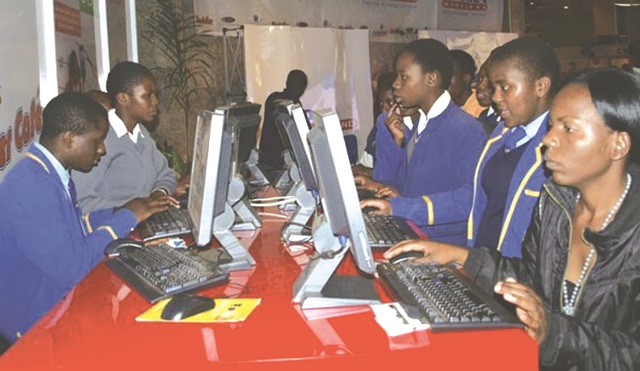

Monica Cheru-Mpambawashe, Creative Editor
Developing world moving to 4th generation industrial revolution
STEM students eligible for tertiary programmes to jump from 2 000 in 2015 intakes to 5 000 for 2018 intakes
Zimdef creating critical mass of STEM skilled manpower
Higher learning institutions to move from rote learning for certification to empowering students to come up with innovations of commercial and practical value
ZIMBABWE Manpower Development Fund (Zimdef) is supporting over 10 000 A-level learners studying STEM subjects as it intensifies its push to create a base of skilled manpower that can solve problems facing the nation in the present and future.
The fund has spent $9 142 000 dollars on the programme so far.
“So far we have fully paid fees for 5 064 Upper 6 students who have processed their applications. We are hoping that the others will come through. We are in the final stages of paying for 2017 intake learners who are in Lower 6 and we have a figure of plus/minus 5 000 with the registration still going on,” said Zimdef CEO Mr Frederick Mandizvidza.
He emphasised that this is not a social welfare net for disadvantaged learners but a merit-based system that rewards those with an aptitude in Maths and Science.
“The STEM Initiative is neither a project for financial assistance nor is it just about predicting the future of jobs in Zimbabwe.
It is a human capital development strategy that underpins Zimbabwe Agenda for Sustainable Socio-Economic Transformation (Zim Asset),” he said.
Mr Mandizvidza said the fund is investing in the economy of the country which needs a deep pool of individuals equipped with skills to use cutting edge technology to innovate for growth, problem solving and new developments.
“The STEM Initiative’s goal is to create a dynamic future for Zimbabwe by creating a critical mass of scientific mindsets that are also empowered to create industries and markets of the future.”
Mr Mandizvidza said the Ministry of Higher and Tertiary Education, Science and Technology Development came up with the STEM initiative to support A-level students studying Mathematics and Sciences after realising that universities in the country were fighting to fill up classes for the 2000 A-level STEM graduates available at the end of 2014.
This was out of a total of 30 000 students qualifying for university places out of a total of 316 000 who sat for their A-level exams. Some institutions had to drop their STEM programmes because there was insufficient uptake.
“When we talk about STEM, it is not just the ordinary teaching of Science and Maths. These have always been there. The hype now is that we are focusing on intergrating technologies of today, making science a key component in creating solutions for problems of today and the future through technology,” said Mr Mandizvidza.
He said the country’s economic blueprint — Zim Asset needs people with skills to enable industrialisation that will turn the economy around.
“Modernisation and industrialisation of the economy will not happen on its own without a STEM education. What we are doing with this support framework is to create numbers of people with skills that will allow them to become catalysts of industrialisation. If we rest on our laurels today, we will drift into extinction.”
He said it was with the background of cognisance that President Mugabe came up with an industrialisation strategy for Sadc which he then escalated to the rest of Africa:
“It was not a coincidence but a calling of the times.”
According to a periodic report on the programme, the success of the STEM Initiative will be measured against the quality scientific thinkers who will passionately create new technologies, future jobs, new industries, and practical solutions to current and upcoming problems.


 Online Reporter