Online Reporter
Rutendo Nyeve, Victoria Falls Reporter
THE Zimbabwe Foundation for Education with Production (Zimfep) schools stole the limelight at the recent National Disability Expo in Victoria Falls, showcasing remarkable resourcefulness and a strong commitment to inclusivity. Learners from the group presented cutting-edge innovations aimed at bridging the disability gap.
Among the standout projects were an Inclusive Alert System (IAS) for the deaf, developed by learners from JZ Moyo High School, and a voice-activated smart wheelchair engineered by learners from Chindunduma 1 High School.
These inventions highlight how Zimfep institutions — originally established during the liberation struggle — are now at the forefront of promoting inclusive education under the Second Republic.
The history of Zimfep schools is deeply rooted in Zimbabwe’s liberation movement. They were founded to educate children of freedom fighters and refugees who had fled to Mozambique and Zambia, with a strong emphasis on self-reliance and practical skills training.
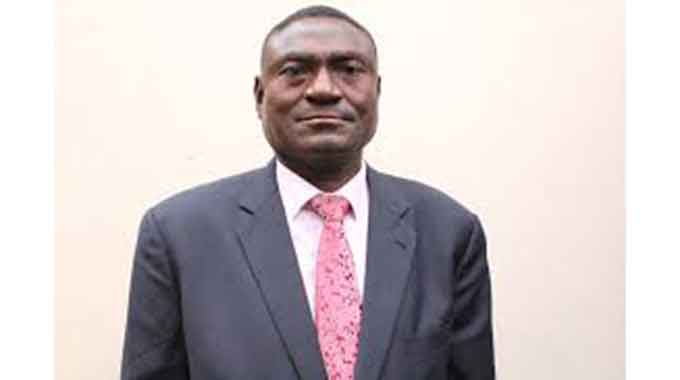
Zimfep Director of Coordination, Mr Gideon Chiukira, explained the evolution of these schools.
“Our schools began during the liberation struggle in Mozambique and Zambia. Many children, some as young as nine or 10, crossed the borders and could not be trained as fighters.
“The leadership saw the need to educate them. For instance, Mavudzi School was established in Cheche Province near a river called Mavudzi. JZ Moyo School also started in Zambia at ZIPRA camps — JZ1, JZ2, and JZ3. When they returned to Zimbabwe, JZ1 became George Silundika, JZ2 became Fatima, and JZ3 became JZ Moyo High School in Matabeleland South,” he said.
After independence, the schools faced challenges, including political divisions that hindered progress. However, under the Second Republic, the Government has revitalised Zimfep, transforming it into a hub for innovation and skills development.
“When the new dispensation came in, the Zanu-PF party decided to revitalise the concept. President Mnangagwa initiated the empowerment drive by donating 60 tonnes of fertiliser and seed to Zimfep. We began farming and had a bumper harvest that year. We then expanded into piggery and other agricultural projects,” said Mr Chiukira.
Today, Zimfep supports over 250 learners from marginalised communities across the country, with Matabeleland North being the largest beneficiary. The foundation also sponsors the Secretary’s Merit Awards for the Ministry of Primary and Secondary Education, donating pigs and chicks to schools to support agricultural initiatives.
At the National Disability Expo, 16-year-old Sibusiso Sibanda, a Form Four pupil at JZ Moyo High School in Gwanda, demonstrated the Inclusive Alert System (IAS) — a groundbreaking innovation designed to assist hearing-impaired learners.
“JZ Moyo High School is an inclusive institution that caters for learners with hearing impairments. These students face challenges in being alerted, especially in emergencies or when the school siren rings.
“We developed the IAS to address this. It uses a sensor that, when triggered by a siren, sends a signal to a bracelet worn by the student, causing it to vibrate,” said Mr Chiukira.
The bracelet is programmed to respond to different siren patterns: two vibrations for the assembly siren, one for lesson changes, and four for fire alerts.
“The IAS uses radio frequency transmitters to send signals. This project ensures that learners with disabilities feel fully integrated and share the same resources as others,” he said.
Meanwhile, Wesley Majonga (19) and Tracy Makwenda (14) from Chindunduma 1 High School showcased their voice-controlled smart wheelchair, designed to assist individuals with severe physical impairments.
“We developed a smart wheelchair that uses voice recognition for movement. We realised that some people with physical impairments may not have use of their hands or legs, making it difficult to operate a standard wheelchair.
With this innovation, users can simply say ‘forward’, ‘backward’, or ‘stop’, and the wheelchair responds accordingly,” said Mr Chiukira.
This innovation has the potential to revolutionise mobility for people with disabilities, offering them greater independence.
Under the Second Republic, Zimfep schools have undergone a remarkable transformation — from institutions born out of necessity to centres of excellence in innovation and inclusivity.
“With Government support, we are preserving our liberation heritage while shaping the future of Zimbabwean education. We are now focused on empowering students with skills that promote self-reliance. From agriculture to technology, our learners are proving that disability is not inability,” said Mr Chiukira.
With learners like Sibanda, Majonga, and Makwenda leading the way, Zimfep schools are demonstrating that Zimbabwe’s future lies in innovation, inclusivity, and education with production. — @nyeve14