admin
admin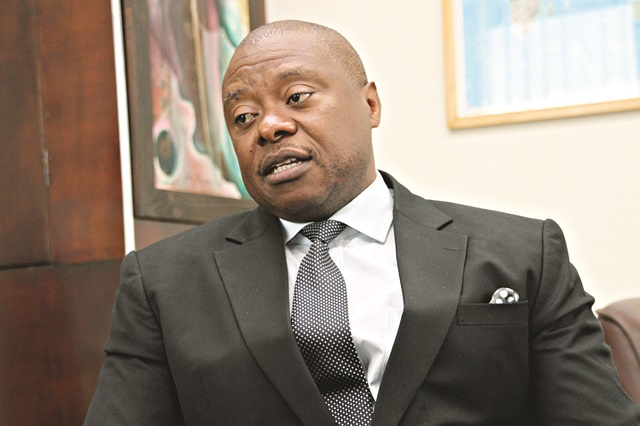

ZIMPAPERS (1980) Limited chief executive officer Pikirayi Deketeke recently won the Top Chief Executive Officer of the year Megafest Business Award.
The award was in recognition of his astute leadership in stewarding the country’s biggest media entity and making sure it remains afloat amid the acute economic challenges the country is facing.
In an interview with Senior Writer, Lovemore Ranga Mataire (LRM), Deketeke (PD) speaks on his family, the inspiration behind his indefatigable spirit, personal philosophy and the company’s prospects for the future.
LRM: Congratulations for being awarded the top award in recognition of your exceptional leadership. Many people would be interested to know a bit about the person behind the Zimpapers CEO. Who is Pikirayi Deketeke?
PD: Pikirayi is a family man. I am a Christian first and foremost, married to Marlene with four kids, three girls and one boy. I grew up in Highfield (in Harare). So I am your typical township boy with serious rural leanings.
LRM: Can you explain what you mean when you say you have serious rural leanings and yet at the same time being a township boy?
PD: Well, when we were growing up, the village was always part of our life. Even though we grew up in Highfield every holiday my parents made sure that we spent the holidays in Mutoko before they migrated to Murewa. But all our people are in Mutoko. I am a strong believer in Christian principles. I believe the greatest CEO who ever lived was Jesus Christ. How he marshalled a group of twelve men to change the whole world long after his death. So that also enables me as a father and as a business leader to lead my family and the organisation I work for along the same principles.
LRM: You speak so fondly of your parents. Are they still alive?
PD: My old man passed away but my mom is still alive.
LRM: Any inspiration from your parents in terms of how you manage your life and the business?
PD: Yes. My father’s story always encourages me all the time. Here is a guy whose whole life was in the village as a young boy. He decides he wants a break and leaves his parents behind with almost something like a knapsack. Hits the road for Harare to look for greener pastures and the next time he came back to the village he was driving his own car.
He had worked as a cook and eventually got a driver’s licence and became a commercial driver, a truck driver and during those days that constituted probably the lower middle class because he was able to buy his own car, his own house in Highfield and also start a family. My mum too is quite an inspiration. She is an old woman but since the passing of the old man, she managed to buy a second investment house in Highfield.
Bought herself a car from her own savings and rental income.
LRM: So how big is your family then?
PD: We were eight, five boys and three girls. Unfortunately, one girl passed away.
LRM: Do you think growing up in such a big family made you a better person in terms of relating with the wider world?
PD: I think people at that time had bigger families. I remember growing up like everyone else. But because my old man was the first of his generation to come to Harare, get a job and buy a house; it was never just the eight of us. He had his own brothers, his relatives and my mother’s relatives. The house was always full of people. I actually always yearned to be alone and for my own peace.
One thing though that my old man insisted on when we were growing up was that school holidays were not just time to play and have fun. We would go to the rural areas and we would work on the land. During the years of the struggle, it became difficult for us to go to the village. I remember one school holiday in Mutoko and we had to be relocated to a protected village called a “Keep” before he pulled us out of that to Harare. We abandoned the village for that period.
So we would do some farming activities in the city (Highfield). I used to hate it. Paweekend wakatakura badza wakananga kumunda. But it sort of inculcated a spirit of hard work that whatever it is that you want you need to work for it. As a result there was never lack in our family. We grew our own maize even though we were in the city. We had somewhere to grow a crop of maize and harvested quite handsomely.
LRM: Mr Deketeke, I am sure there were other career opportunities available for you at that time. Why did you opt for journalism?
PD: I loved writing. I loved journalism and always admired those who worked for newspapers. So even in school my favourite subject was English literature like every other journalist. So I have always had the attraction and also liked the possibility of travel, seeing new places, writing about those new places, experiencing new cultures, which I think is what drives many journalists.
So the ability to be able to tell your own story in your own words was to me the attraction. Maybe of interest is the fact that when I told my father that I wanted to do journalism – he asked me if I was ok? This was around 1985 thereabout. His question was if The Herald couldn’t give me a job where else would I go and work? In hindsight he was right because I haven’t left the Zimpapers group.
LRM: Having joined this company just after seven years of independence to this day, one can say you have literally grown with the company. Briefly take us through your experience since the time you joined.
PD: Having started at The Sunday Mail one of the things that I felt was a bit of restlessness. I remember when I was the then News Editor and I saw some South African and English newspapers and immediately realised that we needed to do something about our publications so they could be more exciting. I remember at that time convincing the then Editor Pascal Mukondiwa to approach the company’s management with the idea of revamping the newspaper and start sectionalising it so that we could have different sections with travel, business and others in order to reach out to different audiences.
Although the change did not come immediately, I remember having quite a bit of a war with some of the colleagues who felt it wasn’t my place to be proposing such changes and it was certainly beyond my pay grade to be asking them to work during weekends to produce the dummy for a new look Sunday Mail. But there was one sub editor who was also a believer and believed in what I was suggesting and he would also come on Sunday or Monday, sit with me and just go through different newspapers, do a bit of research and work around the dummies.
LRM: I am still keen on your actual migration from journalism to business. Did you see it coming or it was just a natural progression?
PD: Not at all, it was more the need for change in terms of the way we were doing business and what was happening in the rest of the media world that sort of propelled me to try out new things. When I became Editor of The Herald, one of the things that we decided to do was to turn the business section from a weekly Thursday edition to a daily pull-out because business was happening every day. The stock market was trading everyday and I argued that why shouldn’t we have a business section that talks to the business community on a daily basis.
So we needed to change that and we did change that. We also noticed that there were certain segments that were not reading us as they had little interest in the big political, economic or sport stories. People were beginning to talk more around social stories. So we then saw the need to introduce some changes starting with the Saturday paper by introducing a popular market pull-out that we called City.Com. The idea was now to start appealing to communities that were not reading us. When I was appointed Editor in Chief, one of the first things I did was to convert City.Com into a fully-fledged newspaper because of that need to continuously connect with our audiences. We had to keep an ear to the ground to find out where our audiences were and what they were looking for and what platforms we could use to reach out to them. Although my brief was largely editorial, looking for new content opportunities came naturally to me.
So for me it has always been the content. This is what we do best. This is what we know, telling stories in whatever format. When Government appointed me to the Broadcasting Authority of Zimbabwe board, it gave me exposure to the world of broadcasting. So after leaving the BAZ board and the opportunity came enabling newspaper companies to also own broadcast media, I was able to persuade my then CEO, Justin Mutasa and the Zimpapers board to diversify into broadcasting. So I have always had this interest to grow new business or establish new content possibilities and embrace new challenges. One of these challenges was a task by Government to launch a new regional publication that would be owned by Sadc member countries to tell the region’s story from the perspective of the region and its people as opposed to stereotype international news agency reports that were more often biased. This marked the birth of The Southern Times through a joint venture between Zimpapers and Namibia’s New Era. The publication is now more than 10 years old and is sold in several Sadc countries.
LRM: Were you then aware that you were making history or some kind of trendsetter as one of the first journalists to move from journalism or editorial to managing the business?
PD: I don’t know whether there is anyone who says I am going to make history. For me really it has always been a privilege to have an opportunity to fulfil the things you believe in passionately and most importantly that there is a team that is willing to work with you and support what you think should be done in terms of your industry. While the credit is often given to an individual such as the top CEO award, the history is made by the people around you, your bosses and your subordinates.
We could not have done Southern Times if there wasn’t a strong team. We could have fallen flat as the paper was driven every weekend to Namibia. We could not have migrated into social content successfully with H-Metro without people who were passionate about writing social stories. I am sure there have been lots of projects that have been launched and people fail to make them thrive because they did not have strong teams around them. So really the credit goes to the guys who were willing to take up the mantle and run with the ideas.
LRM: How are the challenges different from the time you were in editorial?
PD: The big challenge is how to deal with a media industry that is fast migrating from the traditional print business to digital and other media formats at a time when our economy is going through one of its toughest times. It is navigating that terrain to ensure that we continue to remain relevant to content consumers and that we are profitable to the multitudes of investors who invest in our shares as well as safeguarding as many jobs as possible by creating new content platforms, revamping current ones, and so on.
LRM: What about the challenge of being at the helm of one of Zimbabwe’s largest media companies? Isn’t that daunting?
PD: I don’t take the task for granted because you carry with the job the expectations of shareholders, customers, fellow employees, among other stakeholders. Having a general idea of what needs to be done and who can do it better has had a calming effect. I have teams that are around me that are able to deliver and continue to do a good job. So it’s that team around you that makes it possible and makes the challenge less daunting.
You can go home after work and be assured that The Herald, Chronicle or H-Metro will come out tomorrow with something that will excite the market on a daily basis while the same is true for our weeklies or our radio stations. Having the right people with the right skills pushing the content agenda is crucial. The same holds true for our commercial printing business where the team at Natprint has been able to turnaround the fortunes of a company that was almost going under into a profitable business entity.
LRM: How have you managed to stay afloat in an environment where companies including media houses are struggling to survive?
PD: I can’t say we are any better but yes we are profitable. The challenges are enormous, our copy sales are not doing well, and advertising is slowing down. So the challenge is how do we stay afloat, how do we make sure that people are reading our content and companies are giving us commercial printing work. In this regard innovation has been an ongoing exercise. This is why we introduced suburban newspapers which are free sheets that people will be able to read hyper-local content, stories about their own communities, what is happening in and around them, their schools, local sports, malls and where they go and buy things, crime and so on.
So that thrust on hyper local content in Zimpapers has made us relevant to communities while on a broader scale the national papers continue being relevant by telling the story of the country and what is happening around people, as truthfully as possible. When the readership and listenership surveys are done, the results clearly indicate that most people still want to read our newspapers or listen to our radio stations and advertisers tend to go where the eyeballs are. In a way this has made us survive. But at the same time we are also managing our costs.
LRM: In general terms what is the future of the media industry in Zimbabwe?
PD: I believe very strongly that the media industry has a bright future in this country but media companies have to be alive to the rapid changes taking place in the industry. Digital media for us is a big thing and we are continuously pushing audio, video and other content on new media platforms. We want to be on people’s mobile phones, we want to be on their tablets and their computers or their radios and television sets with our content. So technology is a big part of what we do. Our traditional business of commercial printing at NatPrint, we have tried to renew it as much as possible in technology to make sure that we are the dominant player in printing books, labels, packaging and so on.
LRM: In other words you are saying the future of the media industry is in digital?
PD: We still believe print is not dead. It will be with us for years to come and we will continue investing in our print products as well as our journalism. However, digital is emerging very strongly and we need to play a significant part in digital media. We have various teams that are dedicated towards digital media and this is why at the highest level we have a Chief Technology Officer, who is a technologist just to make sure we are not irrelevant. We also have innovation teams that are working full time in coming up with products that speak to our different audiences, which speak to the millennium generation which is digital savvy who do not want to read your newspaper but want to read online, on mobile or on a platform of their choice. So we are investing in digital.
LRM: What does winning the top executive award mean to you, your family and the business?
PD: I think it’s not about winning awards; it has never been about that. But maybe as a team this may be an encouragement that we are on the right path. There is no leader who can make it on his own. It is the teams around you, who know what they are doing, who have made it worthwhile being at this company. You may have a vision yes, but unless the people around you are not able to translate that dream into reality and products, it will continue being just a dream. I am fortunate to have a good team around me throughout the entire organisation who believe in the things that we have set for ourselves. In an environment where the economy is going through serious challenges, some people may think it’s naïve to be celebrating achievements.
It is not all doom and gloom. There are companies that are doing well and we all have to learn to adjust to the new realities of doing business. The challenge is for each one of us to say it’s possible in this environment to be able to achieve some success and our economy begins to transform. We need to make a difference and eventually turn around our nation. The award is simply an affirmation that it can be done and we can keep hope alive.



 Online Reporter