Online Reporter
Sikhumbuzo Moyo, [email protected]
THE Zimbabwe Parks and Wildlife Management Authority (ZimParks) has called for increased investment in modern technology to effectively combat well-coordinated wildlife crime syndicates operating both locally and internationally.
ZimParks noted that wildlife crime is a highly lucrative illicit business, generating billions of dollars annually, and driven by sophisticated criminal networks, making enforcement efforts increasingly complex.
The call was made during a recent two-day multi-stakeholder engagement workshop held in Bulawayo and organised by the Environmental Management Agency (EMA).
The workshop brought together key stakeholders, including the National Prosecuting Authority (NPA) and members of the judiciary, to address challenges in the investigation, prosecution and adjudication of environmental crimes, with a particular focus on the Matabeleland region.
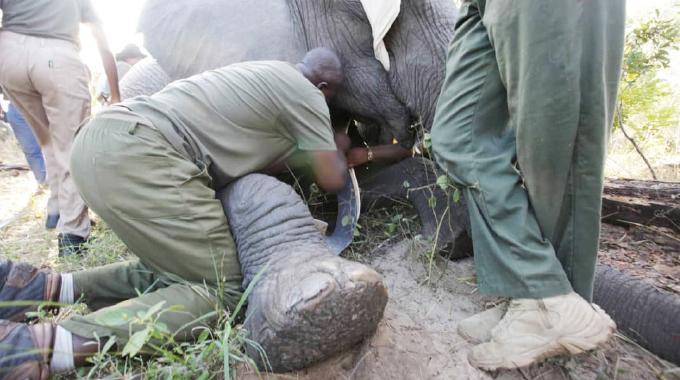
Speaking at the meeting, ZimParks chief investigator for wildlife crime, Mr Everisto Simayo, said Zimbabwe has not been spared from rampant poaching, illegal wildlife trade and other related crimes, resulting in the loss of millions of dollars through the destruction of the country’s rich biodiversity.
“ZimParks continues to lobby for strengthened political will, enhanced stakeholder participation and improved technological support through the use of drones, surveillance cameras and canine units, while also collaborating closely with conservation partners,” said Mr Simayo.
He said the authority’s ability to respond effectively to wildlife crime was hampered by shortages of personnel, funding and transport, while the absence of in-house forensic laboratories significantly delays DNA analysis.
Mr Simayo explained that DNA profiling plays a critical role in wildlife forensics, particularly in cases where the physical characteristics of seized samples are unclear.
He said DNA analysis assists in species identification and can link seized wildlife products to specific animals. This evidence is crucial in tracking suspects and strengthening prosecutions.
Mr Simayo added that DNA analysis is also used to determine the origin of confiscated wildlife products such as ivory and rhino horn.
Mr Simayo further raised concern over the lack of quarantine facilities, which are essential for isolating and monitoring injured or diseased animals to prevent the spread of infections and ensure proper health assessments before relocation or release.
He also noted delays in the finalisation of wildlife crime cases, despite the availability of witnesses and exhibits.
Mr Simayo said delays negatively affect case outcomes. He noted that witnesses may relocate or pass away, while exhibits can deteriorate, be misplaced or improperly stored.
“We therefore wish that these cases be finalised at the earliest possible time. We also note that wildlife offenders are not given maximum penalties for deterrence,” he said.
Mr Simayo said penalties imposed by courts were often not deterrent enough, undermining efforts to suppress illegal wildlife trade.
“Inasmuch as we appeal for the imposition of maximum penalties as provided for by law, there is still a general failure to fully appreciate the true value of wildlife and its contribution to the economy,” he said.
Mr Simayo further expressed concern over repeat offenders being granted bail, even in cases involving offences that carry mandatory custodial sentences.
“If an offender is being prosecuted for the offence that carries a custodial sentence of a minimum of nine years and a maximum of 20 years, they normally abuse bail conditions or simply abscond,” said Mr Simayo.
To ensure a co-ordinated approach among stakeholders, he said ZimParks has been conducting continuous sensitisation workshops with the NPA and the judiciary.
ZimParks is a parastatal established under the Parks and Wildlife Act (Chapter 20:14) of 1996 and operates countrywide through a decentralised structure comprising eight operational regions, including the North-West Matabeleland and Matopo regions. The authority is the custodian of Zimbabwe’s wildlife heritage on both State and private land.