Online Reporter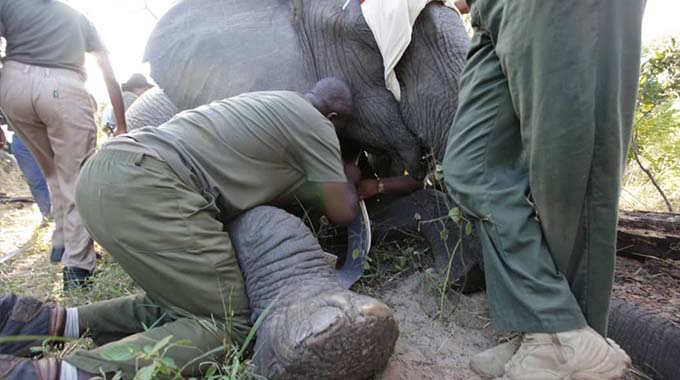
Rutendo Nyeve
THE Zimbabwe Parks and Wildlife Management Authority (ZimParks), in partnership with the International Fund for Animal Welfare (IFAW), has stepped up efforts to reduce human wildlife conflict by deploying advanced technology to monitor elephant movements near Hwange National Park.
As part of the initiative, GPS-enabled satellite collars were fitted to eight strategically selected African savannah elephants that frequently roam close to the park and surrounding communities. The 10-day collaring operation, which concluded yesterday, was conducted jointly by ZimParks and IFAW. This latest exercise brings the total number of elephants collared by the two organisations since early 2024 to 16.
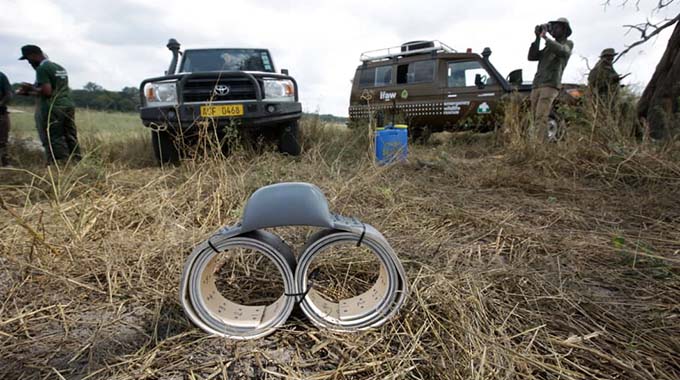
The GPS collars are integrated with the Earth Ranger system, a real-time monitoring platform that enables conservationists and rangers to track elephant movements around the clock. The system provides timely data that can help anticipate and respond to potential human-elephant conflicts as elephants move through populated areas. Each collared elephant typically belongs to a herd of around 10 individuals, meaning the data may reflect the behaviour and movement of up to 200 elephants.
ZimParks Director-General, Professor Edson Gandiwa, said the operation demonstrates the authority’s commitment to science-based conservation.
“Together with our partner, IFAW, we strongly believe that conservation should be grounded in solid science. We are confident that this initiative will ensure conservation decisions are informed by robust scientific data, enabling more effective protection strategies and promoting harmonious coexistence between people and wildlife,” he said.
Mr Phillip Kuvawoga, Senior Director for Conservation Programmes at IFAW, said the operation supports the organisation’s broader ‘Room to Roam’ initiative, which aims to reconnect fragmented habitats.
“The Hwange-Matetsi-Zambezi landscape is a key area for our initiative, which seeks to restore wildlife corridors. With the data from these GPS collars, we can focus on safeguarding critical spaces for elephants and developing targeted interventions to mitigate human-wildlife conflict,” he said.
The collaring exercise will also contribute to assessing the potential impact of the ongoing Gwayi-Shangani Dam construction, located less than 20km from Hwange National Park. Experts believe the dam could significantly alter elephant movement patterns in the region.
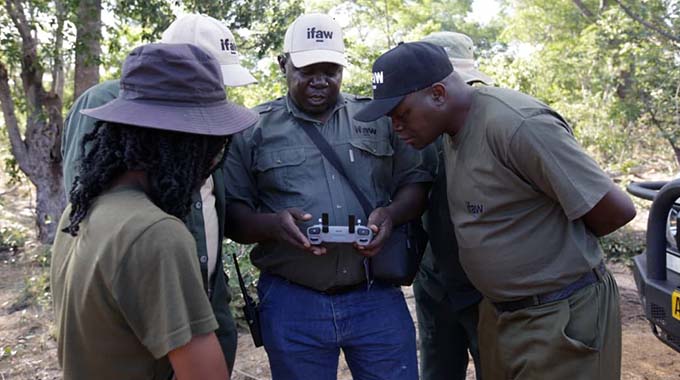
ZimParks terrestrial ecologist based in Hwange, Mr Kudakwashe Mawere, said the GPS collars have revolutionised elephant tracking and monitoring in both protected and settled areas.
“This technology has transformed how we track elephant movements across landscapes. It enables the establishment of early warning systems that reduce human-wildlife interactions by relaying timely information.
“This will lead to a decrease in human-wildlife conflict and promote co-existence. It also enhances sustainable conservation, allowing us to better understand the real-time spatial and temporal use of habitats and land across various landscapes,” he said.
Mr Mawere added that the data would help identify elephant corridors, reconnect fragmented ecosystems, and strengthen community conservation by enabling rapid response to alerts.
IFAW’s Field Operations Manager, Mr Arnold Tshipa, said the GPS data will also assist with resource planning and improving human-wildlife co-existence.
“The collaring data, monitored through the Earth Ranger system, allows us to send alerts to trained community guardians.
“These guardians can warn residents when elephants are approaching, helping to prevent dangerous encounters. It also informs us where to focus investments for improving coexistence,” he said.
The data will be crucial for ZimParks and IFAW in managing human-wildlife conflict in the densely populated areas bordering the 14 600 square kilometre Hwange National Park.
It will also provide valuable insights for policymakers, conservationists, and communities about elephant behaviour and habitat use across the Hwange-Matetsi-Zambezi landscape.