Chronicle Editor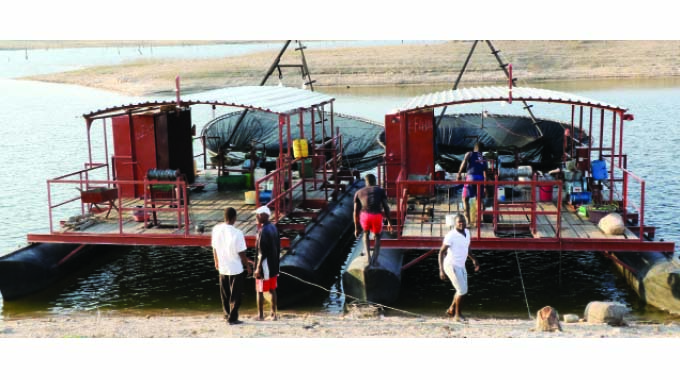
Leonard Ncube, Victoria Falls Reporter
THREE weeks of long nights in water and one week out of water is the monthly routine for kapenta fishermen on Lake Kariba.
The catch nowadays is generally low owing to various reasons such as climate change, overfishing and fishermen’s lack of capacity.
To help control the over-harvesting of fish, Zimbabwe Parks and Wildlife Management Authority (Zimparks) and their Zambian counterparts introduced a Full Moon Calendar which suspends all rig fishing in the river during the last seven days of each month in Zimbabwe and last 10 days of the month in Zambia.
During the break, fishermen visit their families or do other jobs to complement what they get from the kapenta fishing business.
Most of the fishermen on the lake leave their wives and children to work on the fields as they are in the water for the greater part of the year.
A few are, however, staying with their families at the camps dotted along the great lake.
Lake Kariba is divided into five basins in terms of fishing.
These are Basin 1, which stretches from Sebungwe mouth near Mlibizi in Binga and covers Simatelele up to Binga beach closer to the aerodrome, from where Basin 2 starts and ends on the other side of Binga Centre at Chete Park.
Basin 3 starts from Chete through Mujele, Kamakuyu, Sengwa Island up to Narrow Gorge where Basin 4 begins at Chalala while Basin 5 is right in Kariba.
Each basin is allocated a number of rigs as a way of maintaining order in the industry and preventing overfishing.
The fishing rigs are operated by either organisations, individuals or fishing cooperatives.
Last year President Mnangagwa donated 17 fishing rigs to chiefs, women and youths in Binga as part of the Government’s empowerment initiatives and these have been spread across the five basins.
Kapenta fishing has become less attractive these days as fishermen spend long nights on the lake with low catches.
A recent visit to the docking area in Binga by a Chronicle news crew showed that there were over 30 rigs on the edge of the river, with a few people guarding the property while many were said to be away.
It was a full moon when fishing is prohibited to allow breeding.
Boats only entered water last Saturday to start another cycle of long nights.
Mr Thompson Mumpande, who operates a family boat, said business is at its lowest.
“Sometimes we just dock and guard the boats because the expenses are way more than what we catch. There are many boats now competing for the few kapenta in the lake and we hope stocks will increase this rainy season since water levels have gone up,” said Mr Mumpande.
He said nowadays a boat can harvest a maximum of five bags per month, which does not cover the monthly expenses.
Mr Phinias Mumpande who was guarding his employer’s boat said the fishing expedition starts at 5PM until 6AM when they dock at the nearest island to dry whatever they would have caught and wait for the next night.
“Sometimes when we don’t catch anything. I go home to do other work because I have a family to feed. Kapenta fishing is slowly becoming unsustainable,” he said.
Chairperson of the Binga Fisheries Association, which comprises those who operate between Basins 1 to 3, Mr Bernard Munsaka, who is also vice president of the Zimbabwe Kapenta Producers Association, said a rig can harvest eight by 30kg bags of kapenta per month.
This does not cover monthly expenses which include permit fees, fuel, salt for drying the fish, food and salaries for crew and fishermen, transport and other expenses.
Zimparks charges US$1 200 per year per boat and the fees are spread over the year.
“We resumed fishing for the month on Saturday, but water levels have gone too high especially in Basins 1 and 2. Basin 3 is still better because the river is not as muddy as in Basin 1 and 2.
“Fishing is our source of income and we have situations whereby those from closed basins can be transferred to others which is okay because they need money to pay for permits and take care of their families. Fishing is now unsustainable because there are now too many boats and few kapenta,” said Mr Munsaka.
The BaTonga have since time immemorial anchored their lives on farming on the banks of the Zambezi River and catching fish for relish and trade as a way of earning a living.

As a result of climate change, the river gets low during the dry season and catches drop.
Low fishing season is usually between August and December when water levels are low.
The fishermen want Government to intervene and closely monitor invasion of prohibited areas especially by Zambians whom they accuse of fishing in breeding zones.
“We submit returns every month and we expect Government to protect us,” said Mr Munsaka.
“The boat takes more than a week on water and comes back to refuel and goes for a similar period when it will come back to dock for a week during full moon. The highest catch can be eight bags per month during a good season.”
He said while Zimbabwean fishermen abide by regulations not to use less than 8mm nets and not to fish in breeding areas, Zambians always flout the rules resulting in haphazard fishing.
Kapenta is a delicacy eaten by most Zimbabweans and is also served as a snack in hotels. It is a very healthy food with rich protein and low levels of saturated fat. – @ncubeleon



 Online Reporter