admin
admin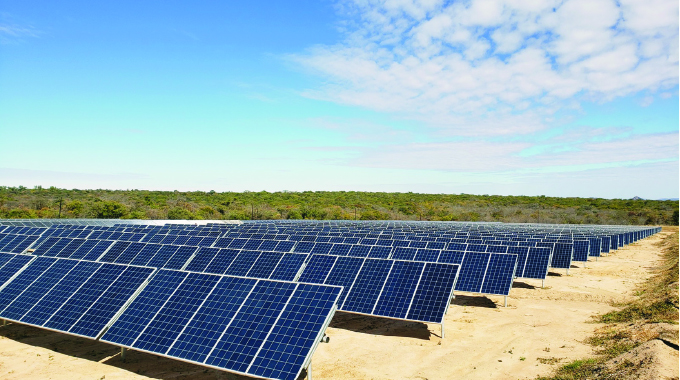
Walter Nymukondiwa Mashonaland West Bureau Chief
The first phase of Zimplats 185MW PV Solar plant, producing 35MW under construction at a cost of US$37 million will start generating power by end May, while connection and power banking agreements are being finalised with ZETDC.
Under the power banking agreement, power generated during Zimplats’ off peak periods, usually during the day, is fed into the national grid while production at Kariba South Power Station is scaled down to save water.
Low water levels in Lake Kariba have led to reduced hydroelectric power generation, significantly cutting production to around 250MW of power from installed capacity of 1050MW.
Zimplats would then get commensurate power during their peak periods when they need to use more electricity, thereby making Kariba a power storage unit.
Speaking during Mashonaland West Provincial Affairs and Devolution Minister Marian Chombo’s tour of the solar plant in Selous, Zimplats chief technical officer Engineer Amend Chiduma said all was on course for commissioning of the plant by end of May.
“We are elated to the new policies that are coming up in terms of how Independent Power Producers (IPPs) can also be able to trade power,” said Eng Chiduma.
“Like now we are doing a banking arrangement with Zesa so that when we are generating excess power to our needs, ZPC can save water. The dam will function as a storage unit so that they increase water usage when they need to cover for the electricity that we would have given them.”
He said the insulation levels in the area were very high leading to high yield capacity, only comparable to an area Namibia.
Zimplats plans phased implementation of the project until they reach target production of 185MW by around 2028 when current projects, including expansion of the smelter, concentrator and other mine extensions.
The solar plant sits on 109ha, with over 10 000 PV solar panels, which have a yield of 550 Watts per square metre and six inverters.
With improvements in the yield of solar panels, now at around 700W per square metre, the land used in subsequent phases will reduce.
Zimplats is exploring agro-voltaic to promote dual use of the land for agriculture and solar power generation, including planting stavia or raising sheep in the field.
Minister Chombo commended Zimplats for playing its part in promoting socio-economic development through their operations and construction of the solar project.



 Online Reporter