Online Reporter
Thupeyo Muleya, Beitbridge Bureau
THE Zimbabwe Revenue Authority (Zimra) has noted improved revenue collections for the first six months of this year.
The tax collector attributed this positive performance to enhanced compliance and sustained implementation of strategic initiatives such as the Block Management System and post-clearance audits.
Zimra Commissioner General, Ms Regina Chinamasa, said the development had set the revenue collector well on course to collecting a net revenue of US$7,2 billion it was targeting this year.
The Commissioner-General told the Parliamentary Portfolio Committee on Budget, Finance, Economic Development and Investment Promotion last week that Zimra remains firmly on track to meet its 2025 annual revenue target.
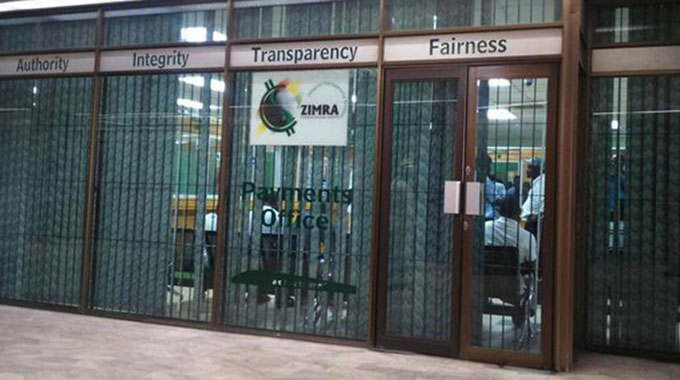
Already, the tax authority had achieved US$3,21 billion in net collections by mid-year against a target of US$3,13 billion.
“We are witnessing encouraging compliance trends in the informal sector, thanks to the Block Management System introduced in 2024,” said Ms Chinamasa.
“Our regional kiosk facilities are empowering SMEs without access to digital platforms and ensuring inclusivity in our tax net.”
She further noted that the revenue collector was targeting a tax-to-Gross Domestic Product (GDP) ratio of 18 percent in 2025, although the recently released rebased GDP statistics for 2024 indicate a lower ratio for last year.
“In line with sentiments from key development partners, tax collections should rise following the increase in GDP,” added Ms Chinamasa. The Commissioner-General acknowledged that the legacy debts of up to US$800 million continue to constrain Zimra’s operational flexibility.
During the engagement, Ms Chinamasa outlined the authority’s performance and key strategies being deployed to bolster revenue mobilisation.
The committee, chaired by Dr Energy Mutodi, engaged the Zimra delegation on fiscal, operational, and policy implementation matters impacting national revenue collection.
On customs operations, she reported that the deployment of drones at Beitbridge, Plumtree and Forbes border posts had enhanced surveillance and yielded significant interceptions.
Ms Chinamasa also stressed the need to fully integrate all border agencies into the Zimbabwe Electronic Single Window, to improve efficiency and reduce cargo and passenger dwell times.
The concept was introduced in 2022 as part of measures to enhance efficient clearance of legitimate traffic and trade facilitation at the country’s ports of entry.
The objective of the model is to improve trade facilitation and to achieve efficiency to boost revenue collection, enforcement of trade laws, social protection and providing business intelligence to the Government.
Zimra, as the lead agency, is rolling out the project in phases and providing the co-ordination and harmonisation of clearance processes and introduced the concept at Beitbridge on May 16 last year. There are 22 border agencies at major ports, including Beitbridge, whose operations are being merged and streamlined.
The facility enhances the Government’s ease of doing business mantra as outlined in the Trading Across Borders concept.
“Zimra is also having funding constraints for digitalisation, legislative misalignment on wealth tax, and the urgent need to modernise customs infrastructure,” said Ms Chinamasa.
Responding to the presentation, Dr Mutodi underscored Zimra’s critical role in national development and affirmed the committee’s commitment to strengthening the authority’s capacity.
“As a committee, we need to support and capacitate Zimra given its strategic role in the country’s revenue collection matrix. Our oversight role entails ensuring effective policy implementation at that entity, hence our vested interest,” he said.
The committee also resolved to undertake a nationwide tour of major border posts, beginning with Beitbridge, to gain first-hand insight into Zimra’ operations, infrastructure needs and digitalisation efforts. —@tupeyo