Online Reporter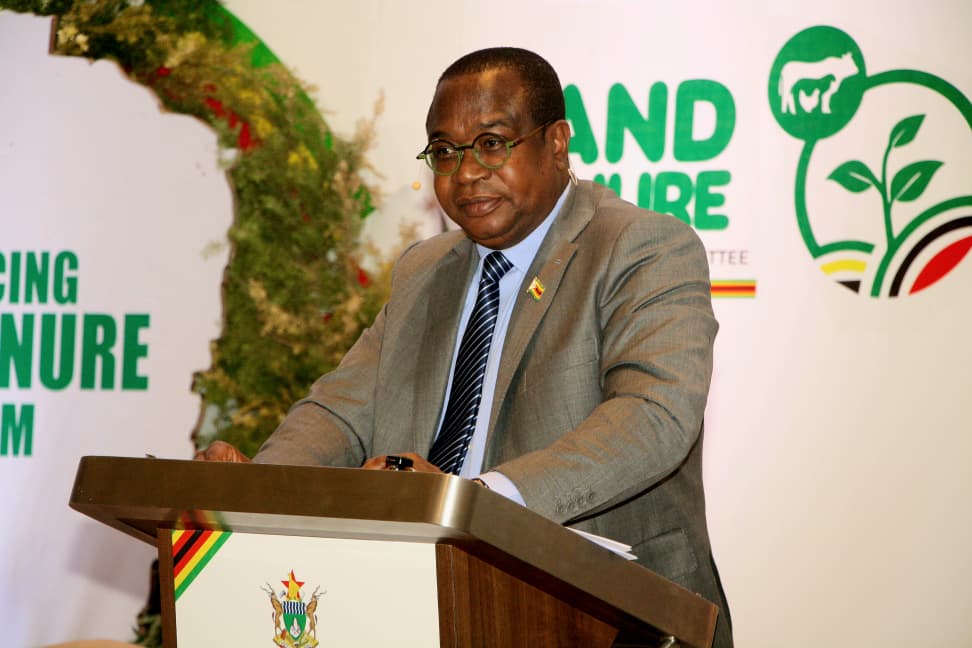
Michael Tome
Business Reporter
Finance, Economic Development and Investment Promotion Minister Mthuli Ncube has challenged the Zimbabwe Revenue Authority to continue enhancing mechanisms to plug revenue leakages and strengthen compliance, as Government seeks to broaden the tax base and raise the country’s tax-to-GDP ratio from about 17 percent to 22 percent by 2030.
Speaking at ZIMRA’s Silver Jubilee celebrations yesterday, Prof Ncube said the revenue authority would be central to Government’s efforts to mobilise domestic resources and finance national development priorities under Vision 2030.
He said ZIMRA’s next phase should be defined by improved compliance, reduced revenue leakages, and a tax system that was simpler, fairer, and more predictable for businesses and taxpayers.
“As Zimbabwe advances towards Vision 2030, Government expects ZIMRA to broaden the tax base, strengthen compliance, reduce revenue leakages, and make compliance simpler, fairer, and more predictable.
“Our ambition is to raise the tax-to-GDP ratio to 22 percent by 2030. Currently, we are at about 17 percent. This is consistent with our national development objectives and regional convergence ambitions,” said Minister Ncube.
However, Prof Ncube said achieving the target could not be left to ZIMRA alone, noting that Treasury also had a responsibility to ensure that tax policies supported revenue mobilisation.
“I would not just put this on ZIMRA’s lap alone. It is also a function of the policies —tax policies — that we introduce as Treasury, which will support ZIMRA to get to that 22 percent of GDP target in terms of revenue,” he said. He said economic expansion should translate into a broader and more sustainable revenue base, giving Government greater capacity to fund infrastructure, social services, and other national priorities.
“As our economy expands, ZIMRA must rise with it. A growing economy must produce a growing revenue base, because a stronger revenue base gives Government greater capacity to finance national priorities and development,” Prof Ncube said.
The Minister said strengthening domestic resource mobilisation had become increasingly important, as developing countries faced limited access to affordable external financing, higher financial costs, and a shrinking pool of development assistance.
“In this environment, domestic resource mobilisation is not simply a revenue administration objective; rather, it is an essential pillar of economic sovereignty and national resilience,” he said.
Meanwhile, ZIMRA Board chairman Anthony Mandiwanza said the authority had evolved significantly over its 25-year history, growing from collecting millions of dollars in its formative years to mobilising billions in revenue.
He said the growth reflected both the expansion of the economy and the increasing responsibilities entrusted to the revenue authority.
“From collecting millions of dollars in its formative years, the authority today mobilises billions in revenue, reflecting both the growth of the public economy and the expanding responsibilities entrusted to ZIMRA,” Mr Mandiwanza said.
He said ZIMRA had consistently responded to the demands placed upon it by surpassing revenue targets, strengthening domestic resource mobilisation, and supporting economic activity through trade facilitation.
The board chairman said the authority’s contribution to the economy extended beyond revenue collection, with efficient trade facilitation remaining critical to supporting businesses and economic growth.
ZIMRA Commissioner-General Regina Chinamasa said the authority would continue working to strengthen public confidence while ensuring fairness and professionalism in the administration of the tax system.
“ZIMRA must remain an institution that commands public confidence—firm where the law requires firmness, fair in its administration, professional in its conduct, and responsive in its service,” Ms Chinamasa said.
The remarks come as Government continues to emphasise domestic resource mobilisation as a key pillar of fiscal sustainability, amid efforts to reduce dependence on borrowing and strengthen the capacity of the economy to finance its own development.