admin
admin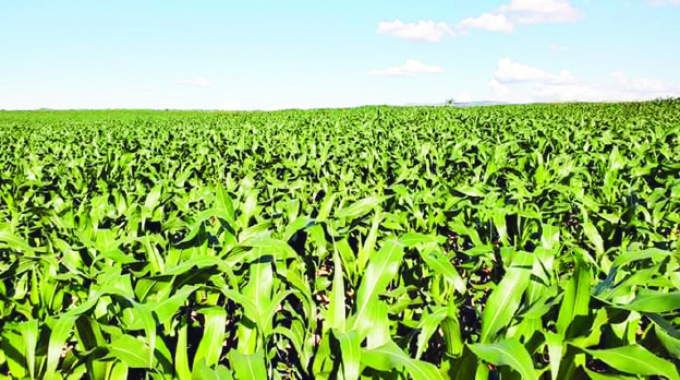
Sifelani Tsiko-Agric, Environment & Innovations Editor
Zimbabwe’s agricultural systems struck the audience at the just-ended 12th Africa Green Revolution Forum (AGRF), a premier forum for driving the food and agriculture agenda on the continent, as vibrant and transforming.
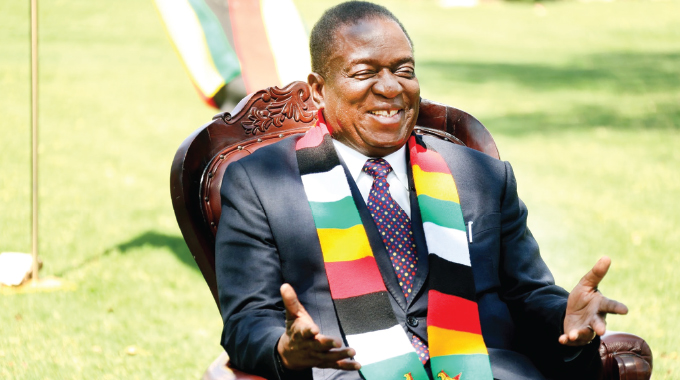
President Mnangagwa’s candid and constructive messages on the successful recalibration of the country’s agricultural systems drew him a standing ovation from everyone in Kigali, Rwanda.
The country’s agricultural revolution is drawing attention to various regional and international groupings which are now keen to learn more from a nation which has gone for more than two decades under debilitating illegal sanctions and how it is transforming its food systems to become self-sufficient.
First, President Mnangagwa was invited to the Africa Green Revolution Forum (AGRF) leaders’ summit after Rwanda’s Minister of Foreign Affairs and Co-operation Dr Vincent Biruta toured Zimbabwe and was hugely impressed by the country’s winter irrigation programme.
Secondly, delegates were also keen to learn how the country’s economic and political reforms were paying off — something which has led to massive infrastructural development — roads, dam construction and the modernisation of the country’s agricultural sector despite the nation having poor access to international credit lines.
The modernisation of the country’s agricultural production apparatus was particularly important for the delegates at this summit which sought to explore ways to make Africa food self-sufficient.
Thirdly, a high point at the summit was when former UK Prime Minister Tony Blair hailed President Mnangagwa for his leadership and commitment in fighting hunger on the continent.
Blair, who was UK Prime Minister from 1997 to 2007 and took a tougher stance against Zimbabwe after the country embarked on the land reform programme, made a rare recognition of the President that sets the tone for improving UK–Zimbabwe relations.
“The President of Zimbabwe made a very important point a moment ago. He does so much work for agriculture or for the continent of Africa.
”Thanks a lot for leadership, it means a lot to everyone,” Blair told delegates at a high-level plenary session of the agricultural summit.
The agricultural revolution taking place in Zimbabwe stole the limelight, helping the country’s aggressive global charm-offensive to lure new investors and build new relations to modernise the sector.
“Zimbabwe was the principal focus for the summit to lead discussions on the modernisation of agriculture. We were selected, there was consensus by the forum that we need to hear from Zimbabwe on the modernisation of agriculture in Africa,” President Mnangagwa said on arrival in Harare.
“We were happy that we have been recognised that we have made strides; successful strides in this direction as a country. I believe we discharged our duty in regard to that issue.
“But beyond that, we had various engagements with Rwanda on our own bilateral relations and of course with Niger, again. Niger is anxious to learn, deeply, about how we have turned around our agriculture. They would want the same for themselves.”
The geo-political conflict between Russia and Ukraine had left many African countries exposed, particularly those that relied heavily on imports of wheat, fertilisers and other commodities.
“The geo-political conflict between Russia and Ukraine has exacerbated a looming food crisis in Africa, as a result of the rise in global prices of food, fuel and fertiliser,” the President said. “This presents opportunities for the continent to be food secure while building resilience and sustainability.”
He told delegates about the success of the Pfumvudza/Intwasa agricultural programme targeting smallholder farmers and the winter wheat irrigation programme.
“In Zimbabwe, we have cultivated a record 80 000 hectares of winter wheat and we expect to produce over 400 000 tonnes against our national demand of 360 000 tonnes,” President Mnangagwa said.
“For the upcoming summer, we plan to cultivate 1,9 million hectares of maize and we expect to produce 3,2 million tonnes of maize against a national requirement of 2,2 million tonnes.”
President Mohamed Bazoum of Niger was keen to learn more about how Zimbabwe had moved to modernise its agricultural systems.
Delegates and various individuals and organisations sought to understand how Zimbabwe was moving to regain its regional breadbasket status, despite entrenched prejudices which had seen many critics looking down upon the country.
Zimbabwe is riding on the crest wave of agricultural success on the back of improved capacity building initiatives, massive dam construction projects and modernisation of its agricultural systems.
At the summit, President Mnangagwa invited investors to come and tap opportunities in the country’s agricultural sector.
Zimbabwe’s agricultural sector offered investors an opportunity to invest in food processing, value addition, mechanisation, distribution and cold chain installations, large-scale poultry farming, floriculture, beef farming targeting export markets, milk and milk products processing and irrigation for production of high value crops.
The country’s transforming agricultural model was increasingly being seen as soft power that counter lingering resentment by the UK, US and other western countries towards Zimbabwe.
It is also something that is helping to restore credibility, shift attitude and intent and to build relationships with the West.
President Mnangagwa’s engagements in Rwanda displayed refreshing honesty rarely seen in diplomatic settings.
He presented a clear vision and values for the future of a resilient Zimbabwean agricultural sector.
The President struck the right notes and it is not premature to judge that he reset relations with the continent and the UK which imposed sanctions against Zimbabwe.
President Mnangagwa’s historic handshake with Blair – no doubt erased the sour taste of the era of strained ties between Zimbabwe and the UK.
Agriculture took an unexpected, but significant, step forward during the latest round of Africa Green Revolution Forum, as African countries, regional and international organisations as well as Blair – got on the same page with Zimbabwe’s resilient agricultural systems and how this could be replicated elsewhere on the continent to fight hunger and poverty.
Well-functioning agricultural systems in tune with farmers’ needs will be crucial for this change, towards more resilient farming in Africa.
Hopefully, Zimbabwe’s agricultural experiences will pave the way for additional strategies that will assist farmers around Africa and the world develop a sustainable, food-secure future.
Zimbabwe has adopted practical initiatives to grow and modernise the agricultural sector along with other sectors of the economy.
Multi-pronged interventions are already paying off.
President Mnangagwa says the country’s economic growth is predicated on agriculture – the mainstay.
While reiterating that the principles that led to land reform cannot be “challenged” or “reversed,” he called for a “commitment to the utilisation of the land for national food security and for the recovery of our economy.”
He has been at the forefront of spearheading initiatives to improve productivity among smallholder farmers through improved access to agricultural inputs, improved technologies, access to finance, linking smallholder farmers with markets, improving infrastructure and improving skills for better jobs across the agriculture value chain.
And, sharing Zimbabwe’s successful agricultural model can help to make Africa to feed itself.



 Online Reporter