admin
admin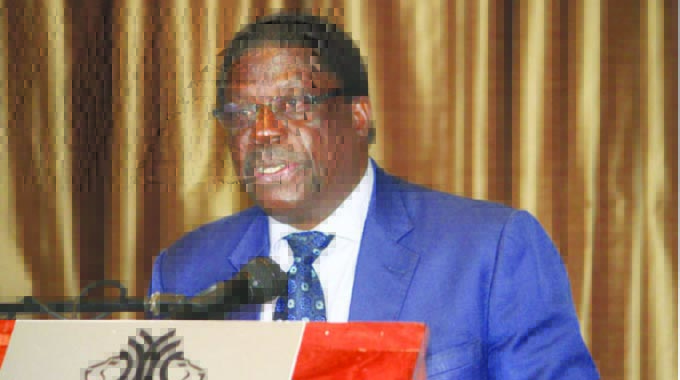
Joseph Madzimure
Interview
The SADC Industrialisation Strategy and Roadmap was formulated in the context of existing national and regional policies. It was at the SADC Heads of State and Government meeting in Victoria Falls, Zimbabwe where the “SADC Strategy for Economic Transformation: Leveraging the Region’s Diverse Resources for Sustainable Economic and Social Development through Beneficiation and Value Addition” theme was first enunciated in August 2014. It was this summit that directed that industrialisation takes centre stage in SADC’s regional integration agenda. To this end, the summit mandated the Ministerial Task Force on Regional Economic Integration to develop a strategy and roadmap for industrialisation of the region. During that time, Dr Mike Bimha was Zimbabwe’s Minister of Industry and Commerce. In order to get a historical perspective of the region’s industrialisation agenda, Zimpapers Politics Hub Writer, Joseph Madzimure (JM) recently had a chat with the former Industry and Commerce Minister, Dr Mike Bimha (MB).
JM: Zimbabwe is hosting the SADC Industrialisation Week ahead of the SADC summit of Heads of State and Government. Can you give us a brief background on how the issue of industrialisation was officially taken on board by the regional body?
MB: The SADC Industrialisation Week, which precedes the summit started yesterday.
Just going back a few years ago, Zimbabwe took the SADC chairmanship in 2014, Victoria Falls. Prior to that there were a lot of meetings at official and ministerial levels in an effort to try and find a common purpose for SADC. Prior to that, there were a number of countries who were calling upon SADC countries to open up and remove obstacles on trade, remove tariffs so that they could flood our market.
JM: How was the idea of opening up borders to encourage trade received by the participating countries?
MB: A few countries, Zimbabwe included, felt that this was unfair and that if we allowed ourselves to be a dumping ground of other countries’ products we would not develop.
There was this new thinking that we must encourage industrialisation, we must encourage local production of goods, we should encourage the buying of local goods so that our industries can grow, so that we can have a plain field which is fair. We had a meeting of officials which ended in a deadlock, we could not agree on the way forward and this was then referred to our meeting which was a ministerial meeting.
Unfortunately, we could not get any break through and the matter was then escalated to the Heads of State and Government and that was the meeting held in Victoria Falls when we took over the chairmanship in 2014.
J.M: Since the SADC ministers of industry meeting ended in a deadlock, what was the response of the Heads of State and Government?
MB: After a lengthy meeting of the Heads of States, it was then decided by all the Heads of State and Government during that time that we should now focus on industrialisation and that industrialisation had to be a permanent item on the agenda of SADC.
Prior to any summit of SADC there must be an industrialisation week and obviously the ministers were then tasked to come up with the SADC industrialisation framework and strategy.
Most of the meetings were held here in Harare and we also had the opportunity of participating in the ministerial meeting on crafting the industrialisation strategy and framework. This strategy and framework was as a result of work from Government, private sector, as well as the academia.
At the end, we came with what we know today as a SADC Industrialisation Strategy and Framework.
The foundation has been laid, what we need now is the way forward.
JM: In your view, who should be on the forefront in terms of implementation?
MB: In my view and my appeal is that our private sector in SADC and in Zimbabwe in particular, must now run with industrialisation in terms of implementation. They should run with it, with the Government really behind to support them. When people want to talk about industrialisation they normally want to ask what Government has to do for us to industrialise. It should be the other way round that the private sector must take the lead then obviously Government is there to facilitate and to make sure that there is total support by all arms of the Government to make sure that industrialisation does go through.
The private sector should take the SADC Industrialisation Week as a platform to share experiences and explore opportunities to drive the economy.
With Zimbabwe geared towards achieving an upper-middle-income status by 2030, the private sector now has a crucial opportunity to capitalise on the upcoming SADC Summit and the 7th annual SADC Industrialisation Week (SIW) currently underway which will run until August 2, 2024.
Achieving Zimbabwe’s Vision 2030, a national development plan aimed at transforming the country into an upper-middle-income economy by 2030, will position the country as a more competitive player in regional and international trade, attracting vital investment and boosting exports.
Participants will share experiences, explore opportunities, and collaborate on strategies to drive industrialisation and economic transformation.
JM: As Zanu PF, how do you come in?
MB: As a party, if we look at our manifesto, if you look at a number of resolutions made at the various conferences, the issue of industrialisation has always taken a centre stage.
As a party, we want to support our private sector so that all players drive this industrialisation strategy.
JM: Do you get support from other regional organisations on the issue of industrialisation?
MB: We found that much of it was adopted by COMESA and also some aspects of it were also taken on board by the African Union.
It is something that we should be proud of as Zimbabweans. The Government must drive with full force and I think what the Vision 2030 in itself supports industrialisation.
Vision 2030 has more to do with industrialisation, modernisation and innovation among other issues. Now that President Mnangagwa will assume the chairmanship, we must be seen to be taking the lead to drive industrialisation to greater heights.
J.M: Thank you so much Dr Bimha.


 Online Reporter