

 Online Reporter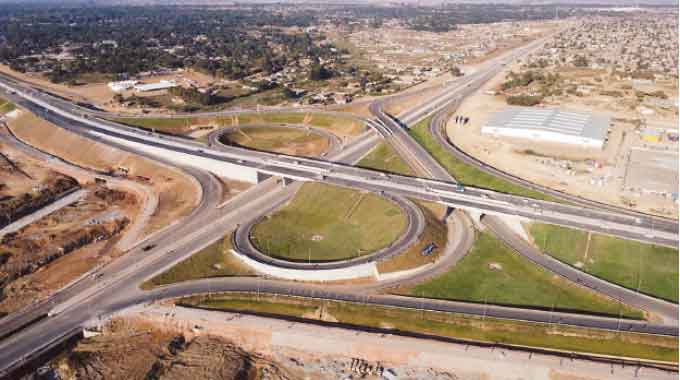
Macdenias Moyo
DESPITE a concerted campaign by certain media outlets, opposition elements and some social media influencers to obscure the Second Republic’s successes, President Mnangagwa’s transformative agenda remains visible across the national landscape.
To ignore the administration’s socio-economic milestones is to overlook a fundamental restructuring of Zimbabwe’s trajectory toward Vision 2030.
They recycle narratives of collapse and despair, hoping to convince Zimbabweans that their Government has done little to improve lives.
Yet when one looks beyond rhetoric and examines the facts — especially those presented by global institutions such as the World Bank, the International Monetary Fund (IMF) and even global media like Forbes, a very different picture emerges.
Zimbabwe’s economy is growing, its infrastructure is being modernised and its key sectors are showing resilience and expansion. The truth is that many of the complaints voiced in urban areas, particularly about potholes and poor roads in suburbs and ghettos, are misplaced. Under the Urban Councils Act (Chapter 29:15), responsibility for maintaining local roads lies squarely with municipal authorities, not the central government or ZINARA.
Most of these councils are controlled by opposition councillors elected under the CCC ticket. Instead of delivering, many of these councillors have turned into land barons, enriching themselves while neglecting service delivery.
These opposition leaders resurface only during election seasons, armed with slogans but no record of meaningful contribution. Some, like Fadzai Mahere, abandoned their parliamentary seats without consulting voters. Nelson Chamisa himself has perfected the art of disappearing between elections, only to return when the feeding trough beckons. This is not leadership — it is opportunism.
Meanwhile, the Government under President Mnangagwa has been working consistently to deliver on its promise of transforming Zimbabwe into an upper middle-income economy by 2030. The World Bank’s Zimbabwe Economic update of December 2025 stated: “Zimbabwe’s economy is projected to rebound strongly in 2025 with an estimated 6,6 percent GDP growth due to robust growth in agriculture, services and continued investments in mining and steel.
This growth outpaces many peers in the Sub-Saharan Africa region.” In its Global Economic Prospects of January 2026, the Bank added: “Growth in Zimbabwe sharply increased in 2025, driven by a rebound in agriculture and investments in the extractive industries, which helped lift industrial output.”
The IMF’s 2025 Article IV Consultation echoed this optimism, noting: “Despite lingering policy challenges, Zimbabwe is experiencing a degree of macroeconomic stability.
The halting of quasi-fiscal operations and tighter policies have helped significantly reduce inflation and exchange rate pressures.” In October 2025, the IMF projected: “Zimbabwe’s economy will grow 6 percent this year, a sharp rebound from last year’s drought-hit 1,7 percent expansion, credited to higher agricultural production, record gold prices and resilient remittance flows.”
These are not partisan claims, but they are independent assessments from the world’s most respected financial institutions. In October 2025, Forbes Magazine named Zimbabwe the Number One Country to Visit in 2025. The publication praised Victoria Falls, Hwange and Zimbabwe’s unique cultural heritage, describing the accolade as “a powerful vote of confidence in Brand Zimbabwe and its tourism revival.” Tourism and Hospitality Industry Minister Barbara Rwodzi hailed the recognition as proof that Zimbabwe’s “Open for Business” policy is resonating globally.
This recognition places Zimbabwe at the forefront of global tourism, attracting investment and visitors alike. Zimbabwe’s agricultural sector has rebounded impressively. Maize and wheat production have surged thanks to government input schemes and irrigation projects. Tobacco exports continue to bring in foreign currency, while horticulture is expanding into new markets. The revival of agriculture is not just about food security but it is about reclaiming Zimbabwe’s historic status as the breadbasket of Africa.
Mining has become the backbone of Zimbabwe’s economic resurgence. Gold output has risen, lithium projects are attracting global investors and iron and steel industries are being revitalised.
Kwekwe, long known as the country’s industrial hub, is experiencing renewed activity, with new investments breathing life into its factories and mines. Zimbabwe is positioning itself as a key supplier of lithium, a mineral critical for electric vehicle batteries, placing the nation at the centre of the global energy transition.
Infrastructure development is perhaps the most visible sign of progress. Highways are being resurfaced, bridges rebuilt and new roads constructed. ZINARA allocated ZiG11,6 billion for rehabilitation in 2025, while Government launched a US$3 billion highway overhaul targeting major routes such as Harare–Chirundu and Beitbridge–Bulawayo–Victoria Falls. In Kwekwe, local entrepreneurs are complementing Government efforts. Mr Shepherd “Sekuru Magodora” Chahwanda is investing US$90 million in state-of-the-art buildings in the CBD and surrounding areas.
His flagship project, the Chahwanda Stadium, is a modern 10 000-seater facility that promises to transform sports and entertainment in the Midlands. Such projects demonstrate confidence in the economy and contribute directly to employment creation. Other business leaders, have also embarked on ambitious infrastructure projects, from stadiums to housing developments, further reshaping Zimbabwe’s urban landscape.
The contrast could not be clearer. While opposition councillors squander opportunities and enrich themselves, the central Government is implementing clear, structured policies under Vision 2030. These policies are attracting investment, stabilising the currency and reducing unemployment. Opposition leaders, meanwhile, continue to call for sanctions, sabotaging the economy in pursuit of political relevance. Their rhetoric thrives on painting Zimbabwe as a pariah, but the reality is that Zimbabwe has remained resolute, steadily regaining its breadbasket status and strengthening its currency.
The ZiG has shown resilience against the US dollar and new companies are opening, creating jobs for thousands of Zimbabweans. In Harare, opposition-led councils have failed to provide clean water, manage waste, or maintain roads. Residents are left to endure sewage bursts and uncollected garbage while councillors focus on amassing land. In Bulawayo, similar neglect has seen water shortages persist, with council leadership more concerned with political grandstanding than service delivery.
Contrast this with Government-led projects: the rehabilitation of the Beitbridge Border Post into a modern gateway, the expansion of Robert Gabriel Mugabe International Airport and the commissioning of new power projects to stabilise electricity supply. These are tangible, measurable achievements that improve lives and attract investment.
Zimbabwe’s story under President Mnangagwa is one of resilience, growth and transformation. The opposition may continue to peddle narratives of failure, but the facts from the World Bank, IMF and Forbes confirm that Zimbabwe is among Africa’s fastest-growing economies and now the world’s top tourist destination. Agriculture is thriving, mining is expanding, tourism is rebounding and infrastructure is being modernised. Local entrepreneurs are investing millions, reshaping cities, while global institutions confirm that Zimbabwe is on a path to recovery. The challenge now lies in ensuring that urban councils are held accountable for service delivery, while the central Government continues to drive national development. Zimbabweans are beginning to see through the opposition’s rhetoric and recognise that progress is being made. The path to Vision 2030 is clear and Zimbabwe is well on its way to becoming an upper middle-income economy.



