Online Reporter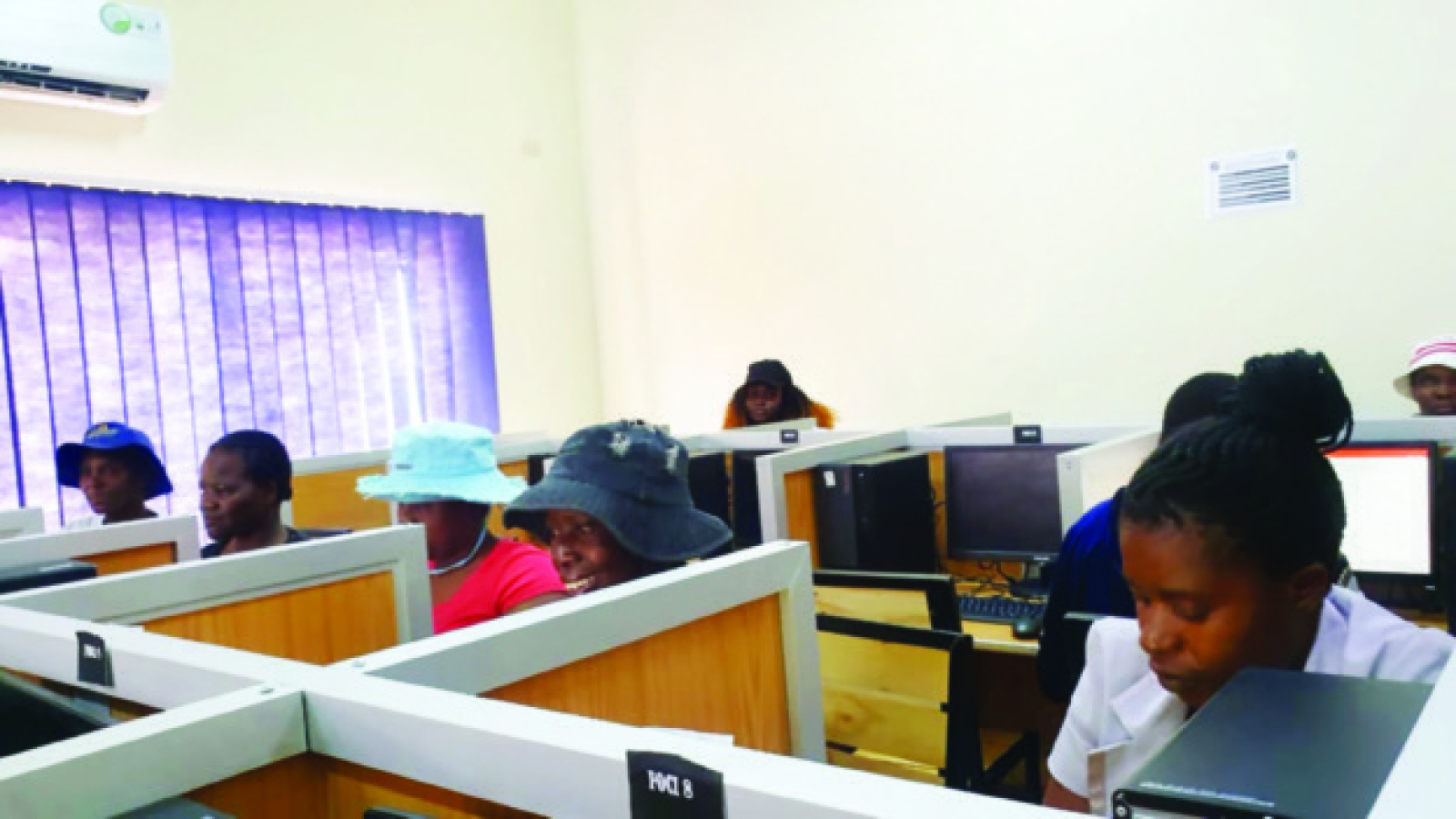
Ivan Zhakata-Features Correspondent
Beyond the dusty roads of Marondera, nestled in a quiet part of town, stands a correctional institution unlike any other in Africa.
From the outside, it could easily be mistaken for a vocational training centre or a small college campus. Women move freely in civilian clothes, chatting in groups or attending classes.
There are no looming guard towers, no barred windows, no heavy clang of steel doors.
This is the Marondera Female Open Correctional Institution — the first of its kind in Zimbabwe and on the African continent.
Opened on June 2, 2021, by the First Lady Dr Auxillia Mnangagwa who is also the patron, the facility represents a bold shift from punitive imprisonment to restorative rehabilitation.
Superintendent Jubilee Madenga, the officer-in-charge, said the institution was designed with women’s unique circumstances in mind.
“Our mantra here is to rehabilitate the ladies so that they are able to stand on their feet when they leave,” she said.
“This is not a closed prison, we do things differently. The women wear their own clothes, we wear civilian clothes too, and that helps us meet them at the same level for counselling and rehabilitation.”
Unlike conventional prisons where inmates are stripped of identity and dignity, Marondera’s open prison recognises the specific realities that drive many women into crime.
“Most of our inmates are first offenders. Many committed crimes of passion, often linked to domestic disputes or family pressures.
“Unlike men, who sometimes commit crimes because of peer pressure, most of our women were trying to feed families or reacting to situations of betrayal. Here, we give them the tools to rebuild,” Supt Madenga said.
The institution houses 50 women, though it currently accommodates 45.
Entry is selective: an inmate must be a first offender, have valid identification, maintain family ties and their offence must qualify under the criteria.
Life inside the facility is structured to prepare women for life beyond prison walls.
Inmates are granted five-day home leave every month, during which they reconnect with family under supervised arrangements. They are allowed to use mobile phones to maintain ties with loved ones, and even bring supplementary food from home. Some moments almost erase the harsh label of “prison.” Inmates cook together, attend classes and share jokes in between sewing or computer lessons.
“When I came here, I thought my life was over. But I have learnt computer skills and catering and I believe I will open my own business when I leave,” said 32-year-old Rudo Moyo, serving time for theft.
“In a closed prison, I felt like just a number. Here, I am treated like a person.
“I even go home to see my children every month. That keeps me alive,” shared Tariro Chatira, a first offender.
For Nomsa Kapeta, who was convicted after a fight with her husband, the open prison represents a second chance. “It was a crime of passion. I never thought I would end up here.
“But now I am learning tailoring, and I know when I leave, I will no longer depend on anyone. I will stand on my own.”
Others, like Chipo Maphosa, said the biggest transformation has been emotional.
“The counselling has healed me. I came here broken, angry and ashamed.
“Now I see myself differently. Prison has become my beginning, not my end.”
A turning point came in May 2025, when the institution launched a vocational training centre with support from the Postal and Telecommunications Regulatory Authority of Zimbabwe (POTRAZ). The facility now runs courses in catering, hairdressing, tailoring, aquaculture, and — crucially — computer literacy.
Supt Madenga said the digital training has been transformative.
“The computer lab has played a very big role here. Our women are not being left behind in the digital age.
“They are learning skills that align with the President’s vision of leaving no one behind. Even our officers are benefiting,” she said.
Dr Gift Machengete, director-general of POTRAZ, described Marondera as a blueprint for what “digital centres” should look like across the country.
“This is no longer just a correctional facility. It is a digital centre where real services happen.
“From internet access to practical training, to life skills that matter. What is happening here is what we expect our Community Information Centres across Zimbabwe to evolve into,” he said.
The pioneering model has caught the eye of the region.
Officials from Zambia, Malawi, Botswana, and Namibia have visited the institution to learn from its experience with a view to replicating the model in their own countries.
For SADC nations experiencing overcrowded prisons and the high cost of incarceration, the Marondera Female Open Institution experiment offers a promising alternative — one that emphasises rehabilitation, reduces recidivism and lowers the social cost of imprisonment.
One of the core philosophies of the open prison is maintaining family bonds.
Research shows that when inmates stay connected to their families, their chances of successful reintegration increase significantly.
For women — who are often primary caregivers — the ability to go home monthly is especially important. “Every time I see my children, I am reminded why I must never come back here,” said Chatira.
The institution also acknowledged the cultural and emotional dimensions of women’s experiences. Unlike the dehumanising atmosphere of a closed prison, Marondera Female Open Institution seeks to preserve dignity while fostering responsibility.
As the afternoon sun casts long shadows across the compound, inmates in the tailoring workshop hum softly as sewing machines whir. In another room, women tap on computer keyboards, their eyes fixed on screens.
Outside, others tend to small aquaculture projects.
This is not the image of a prison that many would expect.
Yet, for Zimbabwe and Africa, it may represent the future.
“When our women leave here, they must leave with skills, confidence, and dignity. That is our mission. If we achieve that, then prison has done its work,” Supt Madenga said.
The Marondera Female Open Correctional Institution is not just rewriting the story of incarceration in Zimbabwe.
It is setting a continental precedent, proving that even behind prison walls, hope, dignity and opportunity can flourish.