Online Reporter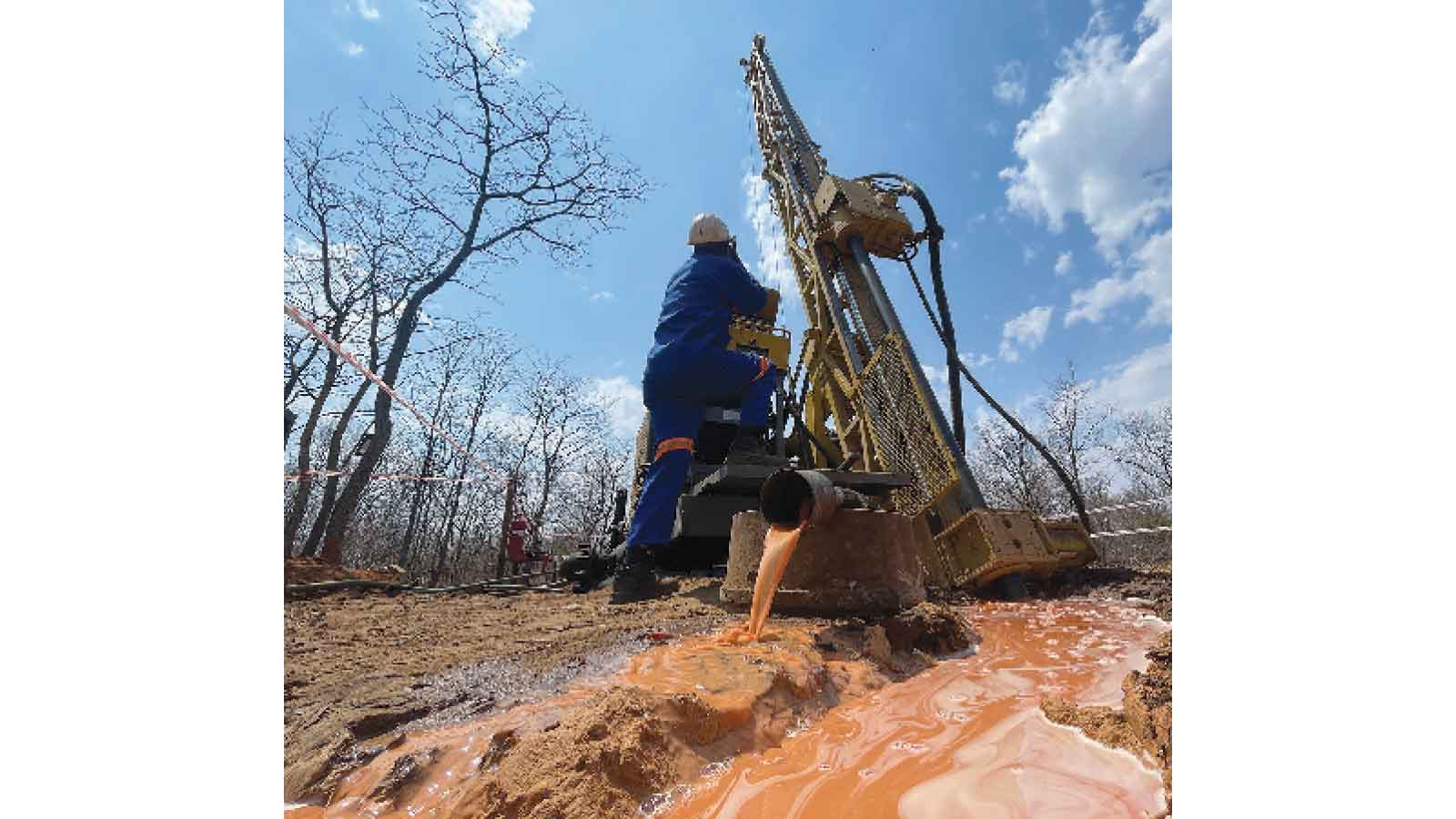
Tapiwanashe Mangwiro
Zimbabwe’s gold mining industry is on the cusp of another major asset breakthrough after United Kingdom-based Ariana Resources announced a 42 percent jump in ore reserves for its Dokwe Gold Project in Tsholotsho, Matabeleland North.
This would significantly boost Zimbabwe’s gold production and elevate the project to the same production level as the country’s largest brownfield gold assets.
It is one of several developing green and brownfield field projects across the country.
Bullion is the country’s largest foreign currency earner, with receipts reaching a record US$4,61 billion in 2025, helping the country to a US$16,2 billion foreign currency earnings haul.
This is key for Zimbabwe’s economic stability, given the country’s structured ZiG currency is gold and forex-backed.
The southern African nation has set a national gold production target of 50 tonnes for 2026, building upon a historic 46.7 tonnes achieved in 2025.
Ariana’s revised study results paint an ambitious picture for the project, with the company projecting over one million ounces of gold production over the life of the mine and a project value exceeding US$1 billion before tax.
Dokwe, located about 110 kilometres west-northwest of Bulawayo, was first discovered in 2002 and consists of two deposits, Dokwe North and Dokwe Central.
The latest study proposes a 20-year operation split into two phases.
The first phase would involve open-pit mining over 12 years, producing around 80 000 ounces of gold annually, to put it at the same threshold as Zimbabwe’s biggest gold mine, before moving into an 8-year processing phase using stockpiled ore.
Blanket Mine, operated by Victoria Falls Stock Exchange-listed Caledonia Mining Corporation and situated near Gwanda, is currently the biggest operating gold mine in Zimbabwe, producing around 80 000 ounces annually. However, the Bilboes Gold Project, also owned by Caledonia, is undergoing a massive expansion to become the country’s largest gold mine by 2029.
Peak production is expected to reach 100 000 ounces per year.
Elsewhere, London-listed Kavango Resources’ 100 percent-owned Hillside Gold Project in Filabusi, Matabeleland South, recently announced significant high-grade gold intercepts. Ariana Resources managing director, Dr Kerim Sener, said the updated study represented a defining moment for the company.
“This is a major milestone for the Company as it progresses its DFS (Definitive Feasibility Study), which is due for delivery in Q1 of financial year 2027,” he said.
“With the total ore reserve significantly increasing by 42 percent to 1,13 million ounces, this is a genuinely outstanding result and sets the scene for a significantly expanded mining and processing rate, which yields an NPV10 in excess of US$1 billion.”
The company said the amount of mineable gold at Dokwe North has increased sharply, with ore reserves now standing at 1,13 million ounces, while total resources at Dokwe North and Central have risen to 1,6 million ounces.
The revised figures were boosted by optimisation work completed with Whittle Consulting in 2025, which recommended increasing processing capacity from 1,5 million tonnes per year to 2,5 million tonnes annually.
Dr Sener said the optimisation work had fundamentally improved the economics of the project.
“The PFS update brings together a revised Mineral Resource Estimate, the SOS completed with Whittle Consulting in 2025 and an update to project input parameters enabling an increase to our Ore Reserves at Dokwe North,” he said.
“The results provide further impetus to test other strategic opportunities identified in the SOS as we progress Dokwe into production.”
The study estimates the project could generate almost US$2 billion in earnings before interest, tax, depreciation and amortisation over its lifespan.
At a gold price assumption of US$4 250 per ounce, the project’s pre-tax value is estimated at US$1,06 billion, with payback expected about one year after production begins.
The company estimates it will require approximately US$164 million to develop the mine, including construction and pre-production mining costs.
Still, Ariana says it is entering the next phase from a strong financial position.
The company currently holds around A$53 million in cash and investments and has no debt.
Dr Sener said work towards a definitive feasibility study, expected in early 2027, was already progressing quickly.
“The company is already ahead of schedule with its three-rig circa 3 700-metre diamond drilling programme at Dokwe, supported by the Xinhai Mining Group, to provide additional geotechnical and metallurgical data for the DFS,” he said.
He added that there was still room to grow the project further.
“There are immediate opportunities to further increase Ore Reserves through the conversion of Resources at Dokwe Central and recently reported extensions to Dokwe North and Dokwe Central identified in recent RC drilling,” Dr Sener said.
“Geotechnical drilling and the metallurgical testwork programme for the DFS are expected to lead to further improvements to the ore reserves during H2 2026.”
The company also revealed it had started engaging financiers and advisers regarding future project funding. Potential financing options include project debt, equity and royalty-based financing structures.
Ariana believes the project’s long mine life, projected cash flows and 100 percent ownership structure make it attractive to investors and lenders. The development comes as Zimbabwe continues pushing to expand gold output and attract fresh mining investment.
Gold remains the country’s top foreign currency earner, with authorities targeting increased production from both established and new mines.
If the Dokwe project proceeds into full-scale production, it could become one of the most significant new gold mining developments in Matabeleland North in recent years, bringing jobs, infrastructure upgrades and new economic activity to Tsholotsho and surrounding communities.