Online Reporter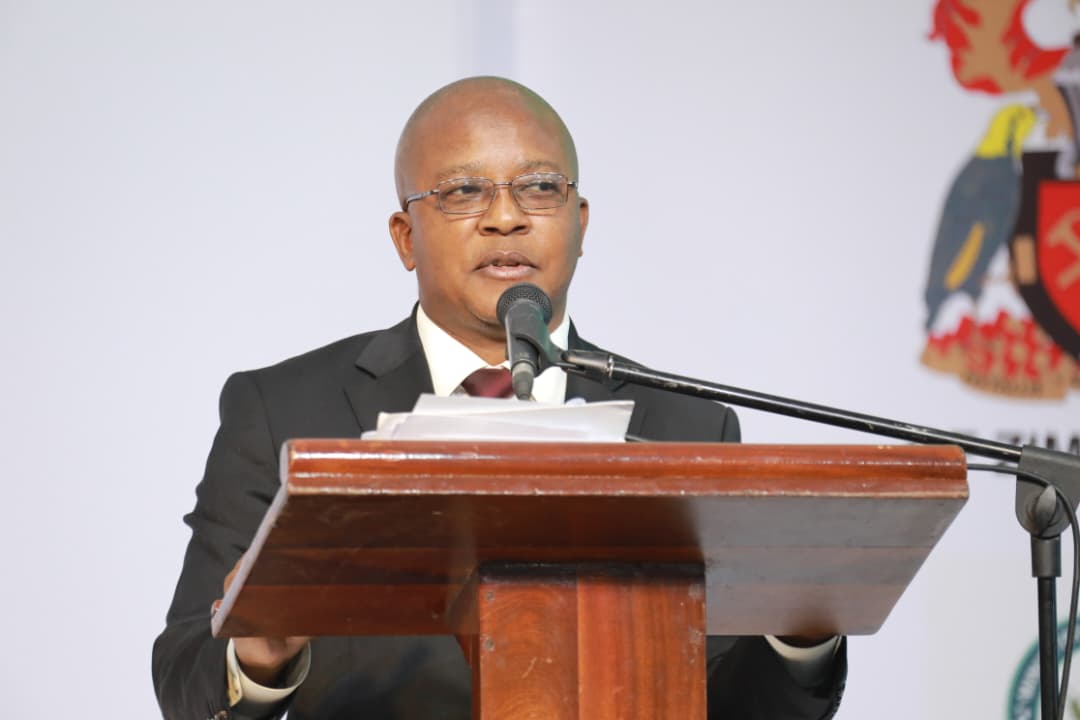
Kuda Bwititi in Beijing, China
LAST week, Zimbabwe participated at the 28th China Mining Conference and Exhibition in Tianjin, China, from September 10 to September 12.
The message from the oversubscribed conference was attractive as some of the topical issues included value addition and beneficiation, win-win partnerships, green technology and intelligent mining.
For a country endowed with lithium, platinum, gold, nickel, chrome and other strategic minerals, these issues go to the heart of the question of whether Zimbabwe will remain predominantly a supplier of raw materials or emerge as a serious participant in the higher-value stages of the global mineral economy.
The challenge, however, is ensuring that the country translates these goals into measurable economic and environmental gains at home.
Zimbabwe’s participation at the conference placed the country’s mineral ambitions within a much broader global debate of how resource-rich developing economies can turn their mineral wealth into industrial growth without repeating the environmental costs associated with traditional mining.
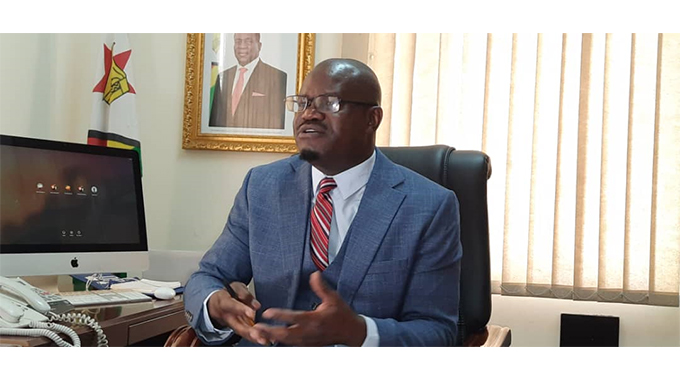
Led by Mines and Mining Development Minister Dr Polite Kambamura, Zimbabwe’s delegation used the high-profile gathering to reinforce a message that has increasingly become central to the country’s mining policy — investment must translate into local value addition, technology transfer, environmental sustainability and tangible economic benefits.
That message is particularly significant at a time when the global race for critical minerals is intensifying.
Lithium, platinum-group metals, nickel, copper and other strategic minerals are increasingly important to the energy transition, electric vehicles, battery storage and advanced manufacturing. Countries controlling these resources therefore have an opportunity to move higher up global value chains.
But possessing minerals alone is no longer enough. The question facing Zimbabwe, and much of Africa, is whether the continent will remain predominantly an exporter of mineral concentrates or become a centre for processing, refining and manufacturing.
The developments at the conference highlighted that the world is taking note of how Harare is seeking the latter. Chinese Vice Premier He Lifeng’s decision to cite Bikita Minerals and Prospect Lithium Zimbabwe as examples of successful China-Africa mining cooperation is important in that regard.
The two lithium projects illustrate the changing character of Zimbabwe’s mineral sector, particularly the government’s determination to encourage processing before minerals leave the country.
Prospect Lithium Zimbabwe, which operates the Arcadia mine in Goromonzi, recently dispatched Zimbabwe’s first export of locally produced lithium sulphate. Bikita Minerals, meanwhile, is developing a lithium sulphate plant in Masvingo province.
These developments represent more than individual company investments, but an emerging model in which Zimbabwe seeks to capture a greater portion of the value generated from its mineral resources.
For years, African countries have struggled with a structural imbalance in mining. Raw materials are extracted locally, exported and subsequently processed elsewhere, where much of the value is created and retained.
Local beneficiation offers a way of changing that equation.
However, beneficiation is capital-intensive and requires reliable electricity, infrastructure, skilled labour, technology, financing and access to markets. Zimbabwe therefore needs partners capable of supplying not just capital, but also the technology and expertise necessary to build competitive mineral-processing industries.
This is where China’s role becomes strategically important.
China has developed extensive capabilities across mining, mineral processing, engineering, equipment manufacturing and battery supply chains.
Its willingness to participate in Zimbabwe’s mining industry therefore offers an opportunity to connect the country’s mineral resources with technologies and industrial systems capable of processing them.
But the relationship will ultimately be judged by whether it delivers broad economic benefits.
The theme of this year’s conference — “Win-Win Cooperation, Green and Intelligent Development” — captured the changing expectations surrounding mining partnerships.
Investment cannot simply mean extracting more tonnes of ore. Modern mining increasingly demands greater efficiency, environmental accountability, technological sophistication and social responsibility.
In his remarks at the conference, Minister Kambamura emphasised on “green ethics” throughout the mining value chain as significant.
Green mining involves reducing waste, conserving water and energy, limiting environmental degradation and rehabilitating land affected by mining. Increasingly, it also involves using digital systems to monitor operations and detect environmental problems before they become costly or irreversible.
For Zimbabwe, the environmental dimension is especially important because mining activity occurs across diverse ecosystems and communities. Many cases have been told of the environmental degradation that has taken place across mining activities around the country with little reclamation.
The expansion of lithium and other mineral production brings economic opportunities, but it also creates pressures on land and water resources.
Without effective monitoring, the costs of environmental degradation can eventually be transferred from mining companies to communities and the State.
Technology could help address this challenge. The proposed use of drones for real-time monitoring of mining operations and environmental compliance is a practical example of how intelligent mining can strengthen regulation.
Instead of relying entirely on periodic physical inspections, authorities could increasingly use aerial surveillance, digital mapping and other technologies to monitor mine sites, track environmental changes and identify potential violations.
Such systems could also improve the efficiency of Government regulation.
This is particularly relevant as Zimbabwe seeks to formalise and develop its small-scale and artisanal mining sector, represented in Tianjin by Zimbabwe Miners Federation president Henrietta Rushwaya.
The small-scale sector provides livelihoods for tens of thousands of Zimbabweans and makes a significant contribution to mineral production.
Yet it also presents some of the country’s most difficult environmental and regulatory challenges.
Bringing smaller operators into a greener and more technologically sophisticated mining framework will require more than enforcement. It will require access to appropriate equipment, financing, geological information, technical expertise and formal markets.
China Mining’s Conference’s focus on intelligent equipment could therefore have relevance beyond large-scale mining companies.
The conference’s scale also demonstrated how rapidly the mining industry is changing.
More than 40 000 delegates from 60 countries attended, including 33 African mining ministers. The exhibition covered 65 000 square metres and featured 658 companies from 25 countries and regions.
For Zimbabwe, participation provided an opportunity to position itself as an investment destination while simultaneously negotiating the terms on which investment enters the country.
This distinction matters.
The competition for critical minerals means investors are increasingly looking for secure and reliable sources of supply. Resource-rich countries, in turn, have greater leverage to demand better terms, local processing, skills development and infrastructure.
Zimbabwe must use that leverage carefully. The country’s mineral wealth gives it bargaining power, but that power is not unlimited.
Other mineral-producing jurisdictions are competing for the same investment and technology.
Excessively restrictive policies could discourage capital, while overly generous concessions could leave Zimbabwe with insufficient economic benefits.
The objective should therefore be a genuine partnership in which investors earn competitive returns while Zimbabwe captures greater value through taxation, employment, infrastructure, technology transfer and downstream industries.
The “win-win” principle articulated at the Tianjin conference must ultimately be measured against these outcomes.
China’s stated respect for national sovereignty over mineral resources also aligns with Zimbabwe’s insistence that its minerals should support national development.
Green technology should consequently be viewed not merely as an environmental obligation but as part of a broader industrial strategy.
Cleaner and more efficient operations can reduce energy and water consumption, lower waste and improve productivity. Digital technologies can make mines more transparent and easier to regulate. Processing minerals domestically can create additional industries around mining rather than limiting economic activity to extraction.
The ultimate prize is therefore bigger than mining.
It is industrialisation.
Zimbabwe’s lithium ambitions offer an early indication of what this could look like. Processing lithium into higher-value products creates opportunities for chemical industries, battery materials and eventually battery manufacturing and related technologies.
The same principle can be applied across other minerals.
If Zimbabwe can progressively move from exploration to extraction, processing, refining and manufacturing, the mining sector can become a platform for wider economic transformation.
The challenge is ensuring that the green transition does not become another form of unequal globalisation in which Africa supplies the raw materials for the world’s energy revolution while importing the finished technologies at much higher prices.