Online Reporter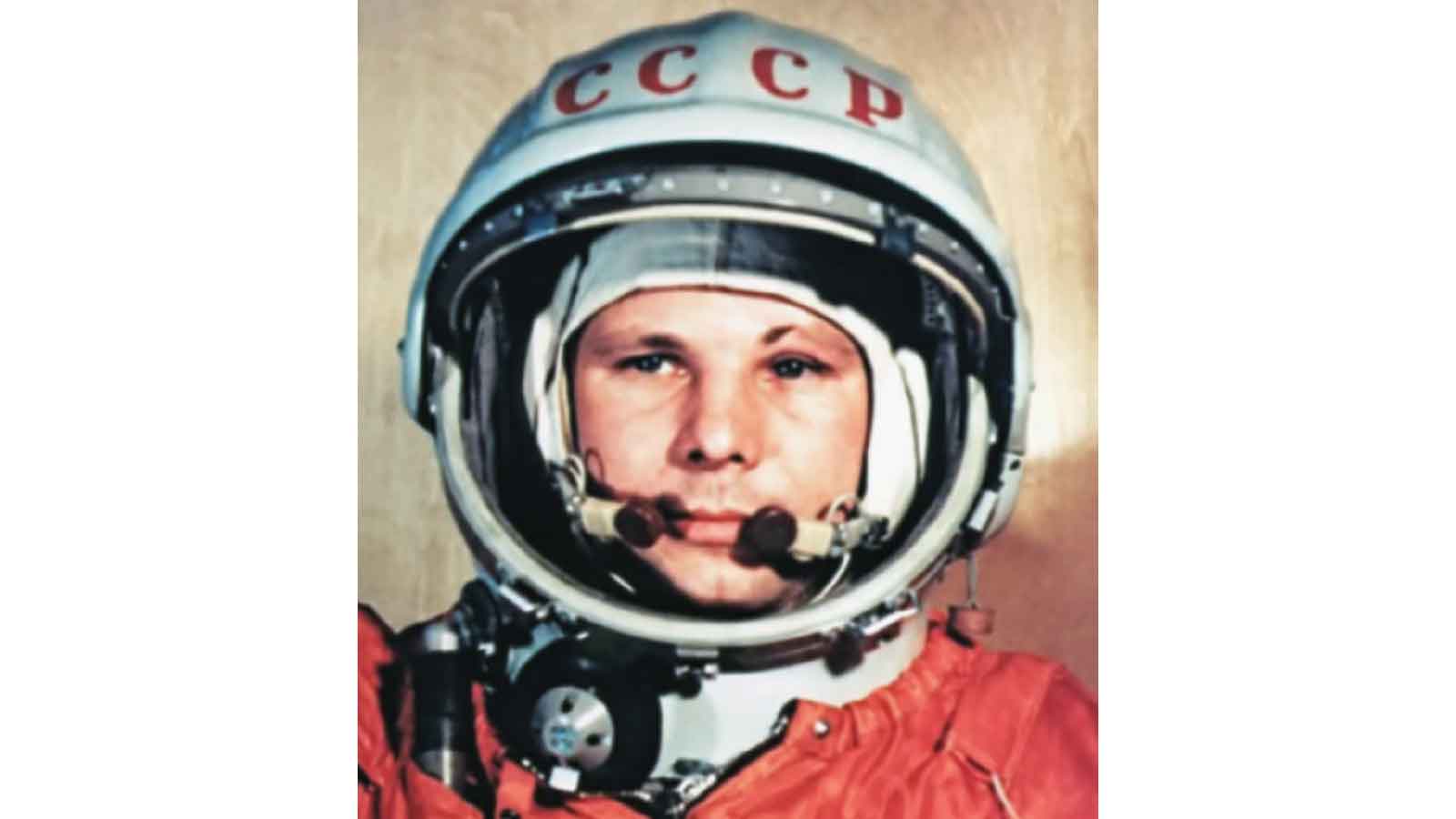
Special Correspondent and Russia Today
In 2024, Zimbabwe successfully launched its second Earth observation satellite, ZimSat-2, into orbit using a Russian rocket, marking a major milestone in the country’s space technology collaboration with Russia.
On November 5, 2024, at Vostochny Cosmodrome, Russia, Zimbabwe used a Soyuz-2.1b/Fregat-M rocket, to launch the ZimSat-2, designed and manufactured by Zimbabwean engineers from the Zimbabwe National Geospatial and Space Agency in collaboration with Southwest State University in Russia.
The satellite is designed for high-resolution multispectral imaging to aid in agriculture, mineral exploration, environmental monitoring, and disaster management. Russia has more than 65 years of space flight and this experience has benefited many countries.
Long before Yuri Gagarin’s historic flight, in 1961 generations of explorers, philosophers, and engineers were preparing Russia for its leap into space.
The conquest of frontiers and expansion into the unknown are often considered distinctly American pursuits. And indeed, it’s hard for modern people to grasp the monumental efforts undertaken by early settlers.
However, Russians share a similar passion for filling in blank spaces on maps. And when there were no uncharted territories left on Earth, they turned their gaze toward the stars.
April 12 is Cosmonautics Day in Russia — a day when every Russian can reconnect with their childhood dream of becoming a cosmonaut, and on streets and TV screens across the country, we once again see images of the first man in space, Yuri Gagarin.
In medieval times, Russian expansion often contradicted the wishes of the country’s rulers. Many of the pioneers settling in the country’s northern and southern frontiers were runaway serfs or simply sought a freer life.
The colonisation of Siberia even began against the wishes of Tsar Ivan IV, who was preoccupied with the Livonian War and was reluctant to divert attention eastward. However, the Stroganov merchant family financed an expedition beyond the Ural Mountains.
Soon, Moscow recognised the vast wealth that lay hidden in Siberia, and waves of settlers migrated there. Some sought riches, while others ventured farther to escape the growing imperial bureaucracy. These pioneers were often generously rewarded with money, trade monopolies, promotions, titles, and land.
When no unclaimed territories remained on earth, restless individuals turned their attention to the skies.
Most Russian philosophers showed little interest in politics or laws but passionately debated the nature of humanity and civilization. By the late 19th century, spurred by a surge of interest in physics and astronomy, many became interested in space. Thus, Russian cosmism emerged.
Its followers sought to understand humanity’s place in space and arrived at some optimistic conclusions:
Humans should not submit to nature but should explore and transform it to improve the world
Humanity will inevitably venture into space and inhabit the universe
Space exploration has the potential to make people better – they can unite for a common purpose, setting aside wars to pursue new worlds
Humans are part of the cosmos and should not fear the unknown
Some cosmists were captivated by the ultimate goal of conquering space: Defeating death and even ‘resurrecting ancestors.’ Others, including self-taught scientist Konstantin Tsiolkovsky, focused more on practical matters like the construction of rockets and space stations, believing that these ideas were not mere flights of fancy.
During a time when politics and materialism dominated intellectual discourse, cosmism remained less popular. However, cosmists had their followers. It is said that one of them visited Tsiolkovsky after the Civil War to discuss his engineering career and was encouraged by the scientist in his plans to build rockets.
This engineer was Sergey Korolev. Little did he know then that he would send the first man into space – a realm where no one had ventured before.
Stalinist industrialisation had many issues and brought a lot of unwarranted suffering. Yet it established the infrastructure necessary for rapidly mobilizing vast resources and tilted production capacities toward the military industry. As a result, when the space race began, the Soviet government was able to swiftly recover from post-war devastation and embark on ambitious new projects.
The space programme benefited from close collaboration with military projects. For example, when there was a need to build a new launch site to test the new R-7 intercontinental ballistic missile, designed to deliver a hydrogen bomb, engineers and generals quickly realized that they could develop space launch vehicles at the same location.
Thus, the world’s largest spaceport, Baikonur, was established. Located in a desolate area far from major population centres yet conveniently close to a railway, it provided ideal conditions for large-scale secret and potentially hazardous projects. Construction progressed rapidly: Within two years of breaking ground, Baikonur launched Sputnik-1, the first artificial Earth satellite, into orbit.
Sergey Korolev headed the programme. He began his scientific career in aircraft engineering but soon transitioned to rocket science. Like many top engineers of his time, he learned from internationally-renowned former imperial professors who remained in the Soviet Union. Specialists in his field were scarce, so after the war, he collaborated on many classified projects.
Korolev was inspired by the ideas of Tsiolkovsky and urged party officials to pursue space exploration. The obvious next step after the launch of Sputnik was to send a human into space. The USSR already possessed the resources, technology, and talented scientists for it, but lacked the cosmonaut.
A rigorous search across the nation commenced, following stringent criteria. Candidates had to have military training, impeccable health, and a very calm, resilient character.
Moreover, they had to be short and lightweight enough to fit in the capsule and conserve precious cargo weight in the rocket.
Ultimately, Korolev was presented with three candidates, the leading one being Yuri Gagarin — a 25-year-old senior lieutenant in the Soviet Air Force. He had a charming smile, loved sports, demonstrated initiative, and had good leadership qualities. Friends noted his enthusiasm for heroism and said his favourite word was ‘work’.
Time for preparation was limited; Korolev was informed that the Americans were also gearing up to send a man into space, and the Soviets needed to beat them. Scientists, engineers, and cosmonauts worked tirelessly but met the deadlines.
By April 1961, it became clear that history would soon be made at Baikonur.
Despite the initial success of space programs, many skeptics, both in the USSR and around the world, thought that a manned flight would end in catastrophe. The Soviet authorities were cautious. They prepared three statements for the media: One in case of a successful flight, one in case of an emergency landing, and one in case of tragedy.
On April 8, the mission for the space flight was officially approved, with Gagarin confirmed as the pilot. Two days later, an unofficial meeting took place between cosmonauts, engineers, and Soviet military leaders.