Chronicle Editor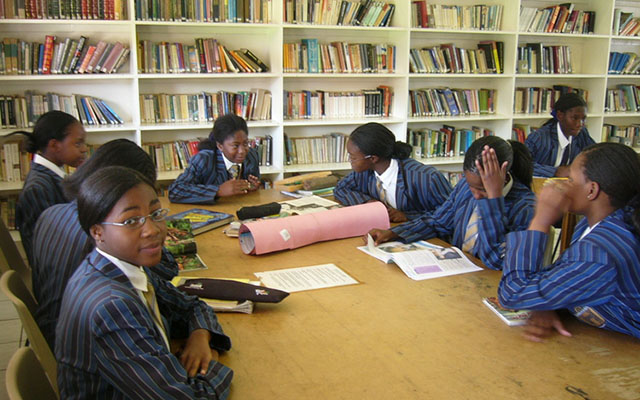
Musavengana Hove Correspondent
Since the introduction of the new education curriculum earlier this year, the Ministry of Primary and Secondary Education has never ceased to be a source of news: good and bad. For the record, Dr Lazarus Dokora has become a celebrity of sorts with people of variegated persuasions having conflicting perceptions about the Minister’s daring approach to the country’s education system.
Just last week this reporter bumped into a group of students from one of the so-called private colleges mushrooming in Harare’s central business district conducting interviews or what seemed to be a research at the premises of one of the premium technological up-starts in the town.
“Can high school students be competent enough to conduct a research that is well-grounded and vibrant such that it can be used to revolutionise our retail sector?” I quizzed myself. I felt challenged and it propelled me into digging deeper into the tasks and projects which are currently being implemented by the Zimbabwe School Examination Council (ZIimsec) as the examination board in collaboration with the Ministry of Primary and Secondary Education seek to walk the talk on the implementation of the new curriculum tipped by many as the panacea to Zimbabwe’s education system which was criticised for being too theoretical, shallow and Eurocentric.
The rational
According to documents from the examinations council, tasks and projects are part of continuous assessment where students are given time to showcase their skills and talents with a view to identify their areas of strength and weakness. Unlike in the bygone era where students had to be mentored for say four consecutive years for them to sit for an Ordinary Level subject and had the poor student’s performance assessed in a summative examination in less than 2 hours 30 minutes, the projects give students a fighting chance.
The new curriculum, among other things come in hand to address these bottlenecks and these Zimsec sanctioned tasks and projects are geared towards giving students ample time to grasp societal issues with a view to proffer solutions. Tasks are short-lived while projects are long-lived and students have to grasp a lot of research methods and methodologies before executions of tasks and projects. A Zimsec task paper for Advanced Level Literature in English at our disposal shows that students have to go out, conduct researches on various socio-economic issues in the country and come up with a story that reflects the truth on the ground and at the same time the student is obliged to demonstrate creativity and problem-solving skills.
There is no doubt these tasks expose students to real life challenges at a tender age, a development very welcome for our country which has been using a British education system which is foreign to our ethos.
Under this arrangement, the teacher has to be a facilitator just giving counsel as students manoeuvre their way. This is not to undermine the pre-and post-task moment where the torch-bearer has to first of all drill school students on research methods and their advantages. The teacher is also empowered to be the overall editor who approves the task and give it a clean bill of health or condemn it and order a re-start. Geography students have to be creative and innovative as well.
As part of their project, Form 3 students have to design and model a geographical instrument capable of being used in a fieldwork. Gone are the days when these students had to cram without demonstrating knowledge. Education is now about bragging over successful projects not a chain of As which are immaterial. It is no longer about knowing but it is time theory meet practice for the better of Zimbabwe. In the past, villagers armed with knowledge on how boreholes are drilled and maintained had to rely on engineers from their local councils for dysfunctional boreholes to be serviced, and through tasks and projects, this seemingly mammoth task can be easily done by students.
By giving students tasks and projects which constitute 30 percent of their exam mark, Zimsec seeks to ensure that students develop research skills at a tender age and when they get enrolled at tertiary institution, designing a questionnaire would be a joy rather than a nightmare. Our students are currently being given tasks and projects where they have to use various data gathering methods such as interviews and questionnaires. There is no iota of doubt that researching is the godfather of innovations. Our own Steve Jobs and Mark Zuckerburg have to be moulded now!
In our country, it is pathetic to note that students are only exposed to rigours of research at tertiary institutions and due to the ubiquitous nature of information in this technology age, these so-called projects are often plagiarised or stolen in its raw form from fellow students doing a similar programme at a sister university. Surely, should a nation expect a disruptive innovation to emerge from a generation of youths obsessed with copying and pasting? Zimbabwe has to start afresh, hence the launch of the new curriculum.
Temporary setbacks
While it is prudent to point out that tasks and projects are noble as they enable students to access the world, more has to be done to ensure the programme does not die a premature death. The Ministry of Primary and Secondary Education has to engage other Ministries that students are assisted with relevant information before they resort to internet. When companies are sceptical of releasing information even to accredited journalists, what more of mere Ordinary Level students?
Back to my students I introduced earlier in the story; frantic they are as they look for business documents to conduct their projects. There are Advanced Level accounting students looking for what the business empire considered to be classified information, company debtors! Denied access, the innocent, eager and hard working students had to walk away in shock. This new curriculum is a hard nut to crack, they grumbled.
Not to be overlooked is the need to have competent teachers who are in sync with the requirements of the new curriculum. The new curriculum is broad and teachers need to be competent enough, it is no longer a stroll in the park. Across all disciplines, teachers need to be well-vested with research skills from data gathering, presentation and analysis. It is no longer the sole duty of Mathematics, Sciences and Geography teachers to invest in research skills. Lastly, Zimbabweans have to be liberated from this attitude of politicising everything. Let us give our children the much needed power to arise and shine. With the new curriculum given the much-needed support by all and sundry, Zimbabwe must aim for the sky.
Musavengana Hove is a freelance journalist. [email protected]


 Online Reporter